
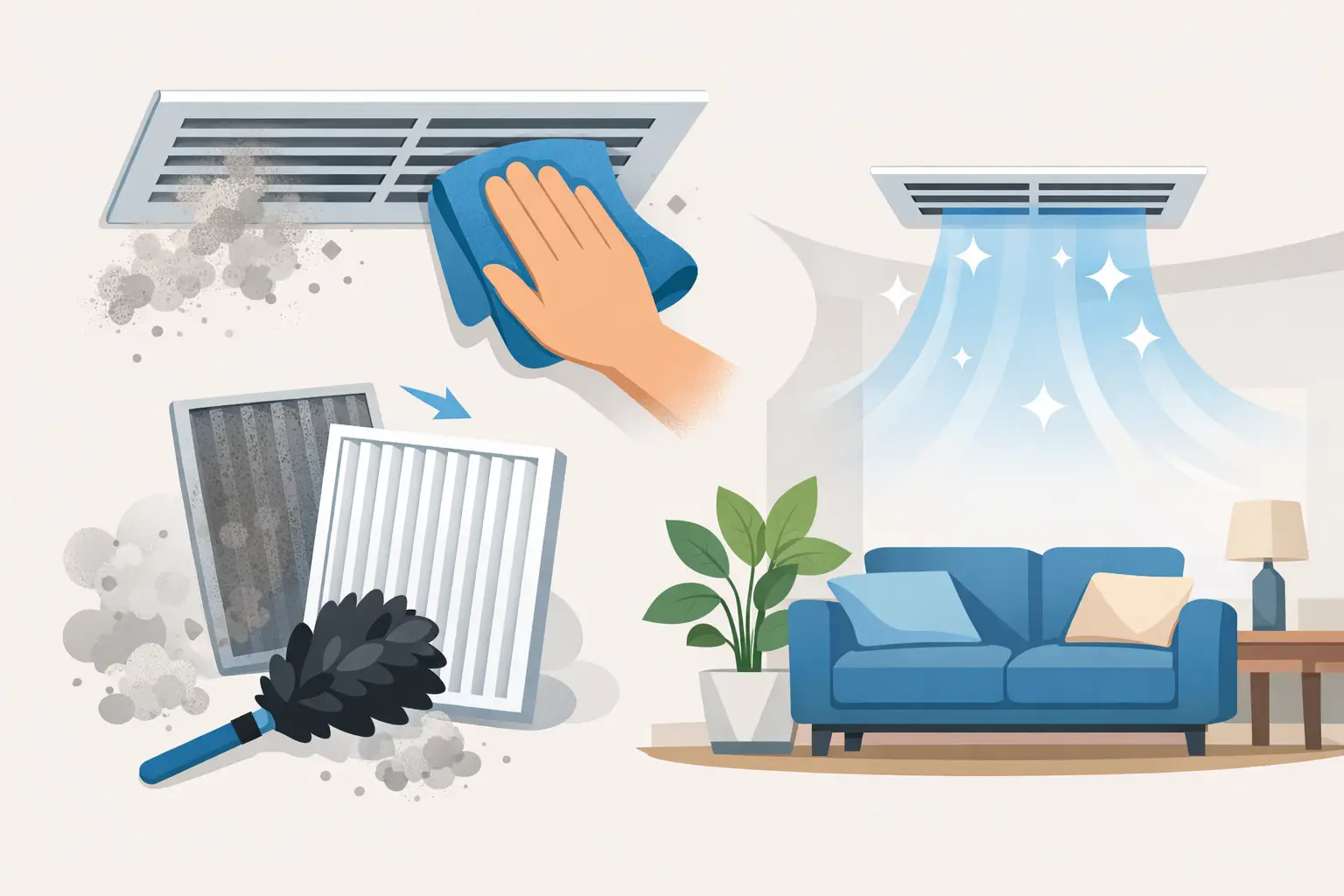
If you keep wiping down furniture only to see a fresh layer of dust a day later, your vents may be part of the problem. Knowing how to reduce dust from vents starts with understanding one simple fact: vents do not create dust on their own, but they can push built-up dust, debris, and dirty air through your home when the system is overdue for attention.
That is why this issue keeps coming back for so many homeowners and property managers. You vacuum, change the sheets, clean the floors, and still the dust shows up around supply vents, on ceiling fans, and across tabletops. In many cases, the HVAC system is circulating what is already sitting inside the ductwork, around the vent covers, or inside a clogged filter cabinet.
Why dust keeps blowing out of vents
Most homes collect dust from everyday living. Pet hair, lint, pollen, fabric fibers, dead skin cells, and outdoor dirt all find their way inside. Once that material enters the return side of the HVAC system, some of it gets trapped by the filter and some of it settles in the system over time.
If the filter is cheap, clogged, or not fitted correctly, more dust gets through. If ductwork has buildup, loose connections, or gaps, the system can pull in attic dust, insulation particles, or debris from crawl spaces. Then every heating or cooling cycle moves some of that material back into the rooms you just cleaned.
There is also a difference between normal household dust and a vent system that needs professional attention. A light amount of dust near vents can be ordinary. A visible puff of dust when the air kicks on, dark buildup around registers, or constant dust shortly after cleaning usually means the problem goes deeper than surface housekeeping.
How to reduce dust from vents without guessing
The best way to cut down vent dust is to deal with the full system, not just the vent cover. Homeowners often start by wiping the register and vacuuming around it, which helps, but that is only the visible part of the issue.
Start with the air filter. A dirty filter is one of the biggest reasons dust keeps moving through a home. Check it monthly and replace it on schedule based on the filter type, your system use, and whether you have pets or allergy concerns. A higher-quality filter can help, but there is a trade-off. Some high-MERV filters catch more particles, but if your system is not designed for them, they can restrict airflow. If you are unsure, it is better to ask a qualified HVAC or duct cleaning professional than guess and create a new problem.
Next, remove and clean your vent covers. Dust sticks to registers fast, especially in rooms with carpet or high traffic. Wash metal covers, dry them fully, and vacuum the area just inside the opening as far as you can safely reach. This improves appearance right away, but it will not remove debris sitting deeper in the line.
Then look at the areas around the vents. If furniture, rugs, or curtains block airflow, dust can settle faster and the system may work harder than it should. Good airflow will not eliminate dust, but poor airflow makes the problem worse.
When duct cleaning makes the biggest difference
If you have changed filters, cleaned vents, and still deal with heavy dust, the ductwork may be holding years of buildup. That is especially common in older homes, rental properties, homes with pets, or houses that have had remodeling work done.
Construction dust is a major culprit. Drywall dust, sawdust, and insulation particles can get pulled into the system and sit there long after the project is done. Every cycle can stir some of it back into the air. In that situation, surface cleaning around vents is usually not enough.
Professional air duct cleaning is often the most direct answer when the issue is inside the system itself. A proper service removes accumulated dust and debris from the ductwork, not just the register covers. It can also help reduce the material that keeps recirculating through your home.
This is where homeowners need to be practical. Not every home needs duct cleaning every year, and anyone promising that probably is not giving you straight advice. But if you are seeing visible dust from vents, dealing with musty air, moving into a home with an unknown maintenance history, or noticing buildup after renovation, a thorough cleaning can make a real difference.
Other causes of vent dust people miss
Sometimes the ducts are only part of the story. Leaky ductwork can pull in dirty air from places you do not want it coming from, including attics, wall cavities, garages, or crawl spaces. If dust returns quickly even after cleaning, leaks may be feeding the system more debris.
Humidity also matters. In dry conditions, light particles stay airborne longer and spread more easily. In a humid climate like the Carolinas, the balance is a little trickier because high humidity can contribute to other indoor air problems while low humidity can make dust feel constant. If your home is uncomfortable and dusty at the same time, it may be worth checking both HVAC performance and indoor moisture levels.
Dirty return vents are another overlooked issue. Supply vents blow conditioned air into rooms, while return vents pull air back into the system. If return grilles are coated in dust or blocked by furniture, the system may pull air less efficiently and move more dust around the house.
You should also consider your housekeeping tools. A worn-out vacuum or one with a poor filter can put fine dust right back into the air. If you are serious about reducing indoor dust, your cleaning equipment needs to help, not work against you.
Signs the problem is more than normal dust
A little dust is part of life. But some warning signs point to a vent system problem rather than routine cleaning needs.
If you see dark streaks around vents, smell stale air when the system starts, or notice dust collecting on surfaces within a day or two of cleaning, that is not something to ignore. The same goes for increased allergy symptoms indoors, especially when the HVAC system runs often.
For landlords and small commercial property operators, complaints from tenants about dusty air, dirty vents, or constant sneezing can be an early sign that the system needs attention. Keeping the ventilation system clean is not just about appearance. It supports indoor air quality and helps the property feel better maintained overall.
What helps long term
If you want lasting results, the goal is to reduce the dust source, improve filtration, and keep the system clean enough that it is not recirculating old buildup. That usually means staying consistent with filter changes, keeping vents and returns clear, sealing duct leaks when needed, and scheduling professional duct cleaning when buildup is obvious or airflow quality drops.
It also helps to keep up with regular home cleaning in the areas that feed the HVAC system the most. Floors, upholstery, pet zones, and return vent areas all contribute. You do not need a complicated maintenance plan. You need a few solid habits and a professional eye when the problem goes beyond what a vacuum and new filter can fix.
For many households, the biggest improvement comes from knowing when to stop fighting the symptoms and clean the system properly. Carolinas Air Duct Cleaning Service handles this kind of problem the way it should be handled – certified work, thorough cleaning, and no runaround.
How to reduce dust from vents before it gets worse
The best time to deal with vent dust is before it turns into a bigger air quality issue. If your system is pushing visible dust, if your home always feels dusty no matter how often you clean, or if your vents have not been professionally addressed in years, waiting usually does not solve it.
A cleaner HVAC system will not make your house dust-free forever. No honest company should promise that. But it can cut down on recirculated dust, help your home stay cleaner longer, and make the air feel fresher from room to room.
If your vents are part of the problem, the fix is usually straightforward. Clean what you can reach, replace the filter on time, and bring in certified help when the dust is coming from deeper inside the system. A clean vent system does more than look better. It helps your whole home feel cleaner every day.
Pingback: Air Duct Sanitizing vs Cleaning Explained – Carolinas Air Duct Cleaning Service
Pingback: How to Improve Indoor Airflow in Your Home – Carolinas Air Duct Cleaning Service