
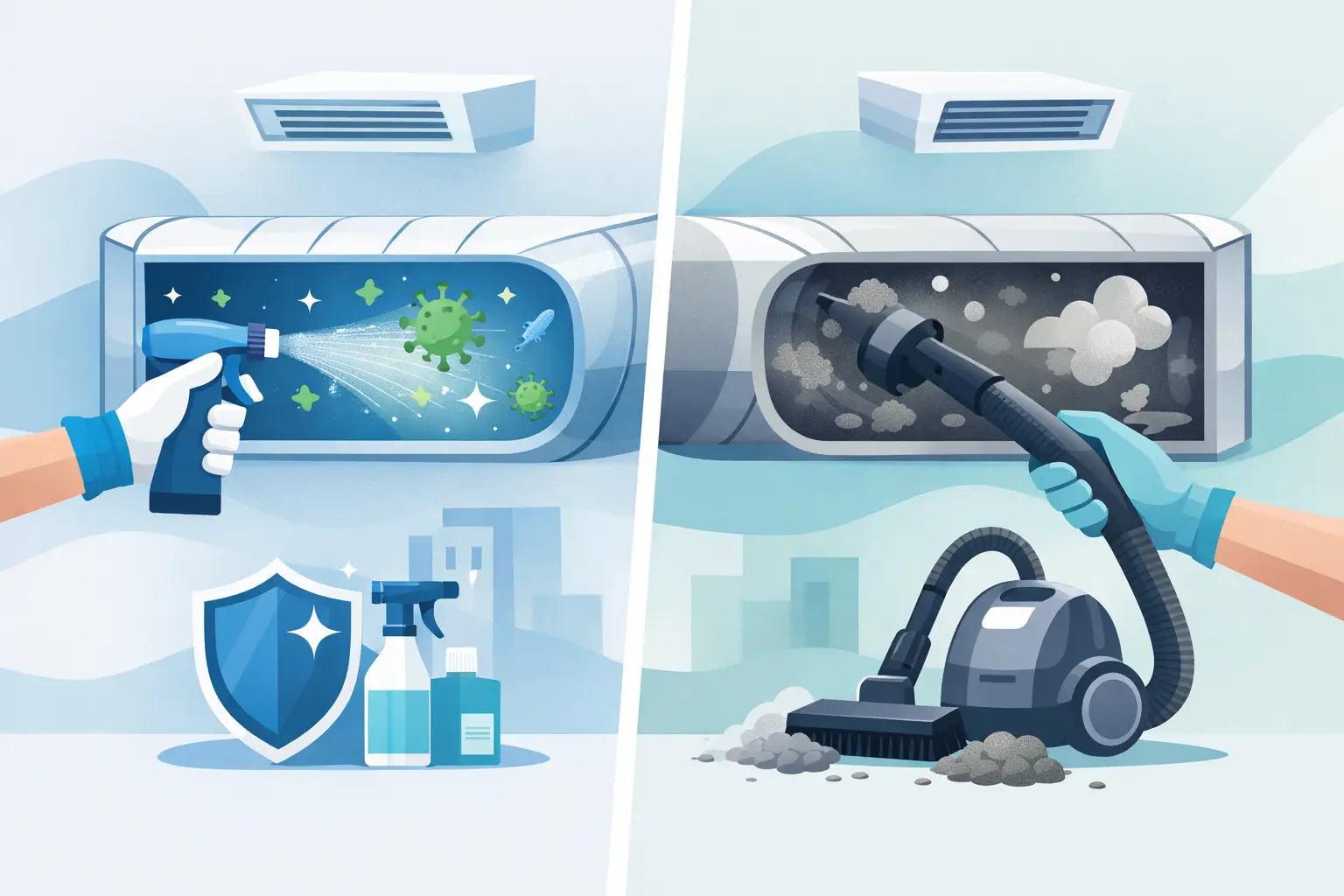
A dusty home, musty HVAC smell, or vents that blow visible debris can make anyone look for a quick fix. But when comparing air duct sanitizing vs cleaning, the right answer is usually not one or the other. They do different jobs, and a proper duct cleaning should come before any sanitizing treatment is considered.
Cleaning removes the dirt you can see and the buildup you cannot. Sanitizing is an optional treatment intended to address certain odor or microbial concerns after the system is clean. Knowing the difference helps homeowners, landlords, and small business owners pay for the service that actually fits the problem.
Air Duct Sanitizing vs Cleaning: The Main Difference
Air duct cleaning is the physical removal of dust, dirt, pet hair, construction debris, and other buildup from the HVAC duct system. A professional crew uses specialized vacuum equipment and agitation tools to loosen debris and pull it out of the system. The goal is simple: leave the ventilation system cleaner than it was before.
Air duct sanitizing is different. It involves applying an appropriate sanitizer or disinfecting product inside cleaned ductwork when there is a valid reason to do so. It does not remove dirt, heavy dust, or matted debris. It also cannot correct water leaks, poor drainage, damaged insulation, or an active mold problem.
Think of it this way: cleaning removes the mess. Sanitizing may be useful after the mess is removed, depending on what is causing the concern.
What Professional Air Duct Cleaning Should Address
A thorough cleaning is more than taking off a vent cover and vacuuming a few inches into the duct. The job should focus on the parts of the system where dust and debris collect and move through the home.
Depending on the system and service scope, this can include supply and return ducts, registers and grilles, accessible trunk lines, the blower compartment, and other accessible HVAC components. Certified technicians should explain what they can clean, what they find, and whether there are areas that need HVAC repair rather than cleaning.
Homeowners often call because they notice dust returning quickly after they clean, reduced airflow in certain rooms, or debris around the registers. These signs can point to dirty ductwork, but they can also come from a clogged filter, duct leaks, poor system design, or an HVAC issue. An honest inspection matters. Not every air-quality concern is solved by duct cleaning alone.
When cleaning is done right, the result is a cleaner system with less loose debris circulating through the ventilation path. It can also be a practical step after remodeling, when drywall dust and construction material may have entered the system.
When Air Duct Sanitizing May Make Sense
Sanitizing is not a routine add-on every home needs. It may be worth discussing when there is a specific concern, such as a persistent musty odor after cleaning, known contamination following a moisture event, or concerns about microbial growth that have been properly assessed.
The key word is specific. A technician should not recommend sanitizing simply because dust exists in the ducts. Dust is a cleaning issue. Spraying a product over dirty ductwork is not a substitute for removing the buildup first.
Sanitizing also has limits. If there is moisture inside the HVAC system, the source of that moisture must be fixed. That could involve a clogged condensate drain, an equipment problem, poor insulation, a roof leak, or another issue outside the duct-cleaning scope. Without correcting the moisture problem, odors and microbial growth may return.
For households with severe allergies, asthma, or immune-related health concerns, it is smart to speak with a medical professional about indoor air priorities. A clean HVAC system is good home maintenance, but no service company should promise that duct cleaning or sanitizing will cure health conditions.
What About Mold in the Ducts?
Mold should be handled carefully. What looks like mold may be ordinary dust, staining, or residue, and a professional should avoid making guesses. If active microbial growth is suspected, the cause needs attention before any treatment is applied.
In some cases, cleaning and targeted sanitation may be part of the solution. In others, damaged materials, wet insulation, or HVAC components may need repair or replacement. The right approach depends on the source, location, and extent of the problem.
Why Cleaning Comes First
Sanitizer works best on a clean surface. That is true in a kitchen, a bathroom, and inside an HVAC system. When dust, debris, or greasy buildup is left in place, a treatment cannot do the fundamental work of physically removing contamination from the ductwork.
Starting with cleaning also gives the technician a better view of the system. Once debris is removed, it is easier to identify damaged duct sections, signs of moisture, loose insulation, pest activity, or other problems that should not be ignored.
This is where homeowners should be cautious of low-price offers that promise to sanitize an entire system in minutes. A quality job takes proper equipment, access, and time. Fast is good when it comes with trained technicians and a clear process. Fast is not good when it means the work stops at the registers.
How to Decide Which Service You Need
For most homes, start with a professional duct cleaning if there is visible buildup, excessive household dust, post-renovation debris, dirty registers, or a system that has been neglected for years. Cleaning is the foundation because it removes the material sitting in the ducts.
Consider sanitizing only when there is a reason beyond ordinary dust. A lingering odor, a past water event, or a confirmed contamination concern may justify a conversation about the right treatment. Ask what product is being used, why it is recommended, and whether the source of the issue has been corrected.
It also helps to look beyond the ducts. Replace HVAC filters on schedule, keep return vents clear, manage indoor humidity, and have heating and cooling equipment serviced as needed. These steps support cleaner airflow between professional cleanings.
For landlords and property managers, the decision may be tied to turnover, renovation work, a history of smoking, pet buildup, or tenant complaints about odors. A documented inspection and straightforward recommendation can help avoid spending money on a service that does not solve the actual problem.
Questions to Ask Before Booking
Before you schedule, ask whether the company will clean the full accessible duct system or only the vents. Find out what equipment they use to remove debris, whether they inspect the blower area and returns, and whether sanitizing is optional or automatically included.
You should also ask what the technician expects to find based on your situation. A dependable company will give a clear answer without trying to scare you into unnecessary work. If sanitizing is recommended, they should explain the reason in plain language and tell you what it will and will not do.
Price matters, but so does scope. An affordable service should still include professional methods, careful work, and visible results. The cheapest advertised price can become expensive if the job is incomplete or padded with high-pressure add-ons after the crew arrives.
Cleaner Ducts, Straight Answers
Your HVAC system moves air through every room you use. Keeping that system clean is practical home maintenance, especially after renovations, during a move, or when dust and debris are building up. Sanitizing has a place in certain situations, but it is not a magic spray and it is never a replacement for proper cleaning.
If you are unsure what your home needs, ask for a straightforward inspection and a clear explanation before work begins. Carolinas Air Duct Cleaning Service believes the best result starts with certified technicians, thorough cleaning, and advice that fits the condition of your system.