
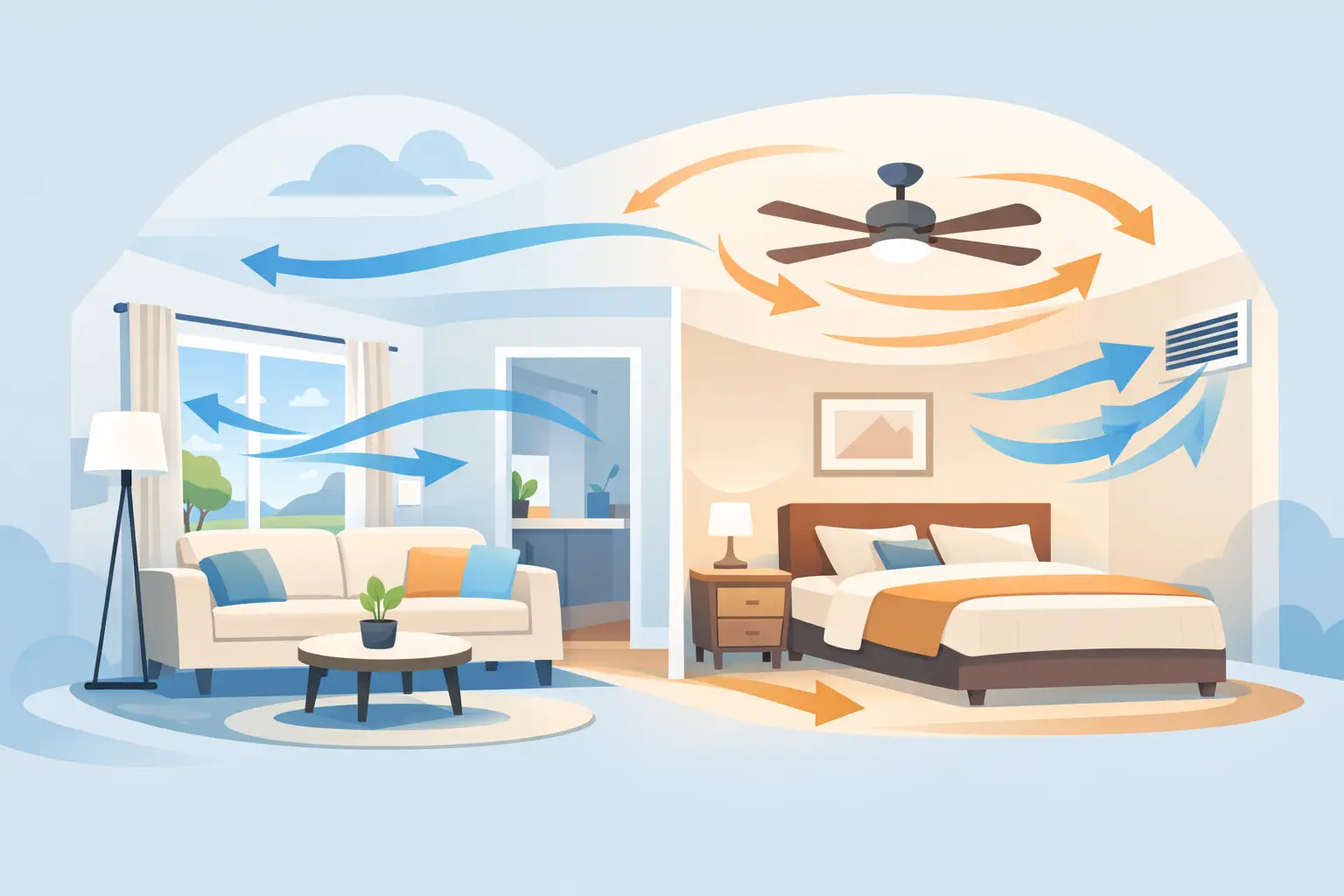
A room that feels stuffy while the rest of the house feels fine is more than an annoyance. Weak circulation can leave bedrooms hot, make dust settle faster, force your HVAC system to run longer, and make Carolina humidity feel even worse. Knowing how to improve indoor airflow starts with a few simple checks, then moves to professional help when the problem is inside the system.
How to Improve Indoor Airflow Without Guesswork
Airflow problems are often caused by something basic: a blocked vent, a clogged filter, a closed interior door, or furniture sitting in the wrong place. Start with the easy fixes before assuming your HVAC system needs a major repair.
Walk through your home while the heating or cooling system is running. Put your hand near each supply vent, which blows conditioned air into the room. You should feel a steady stream of air, even if the temperature varies slightly by room. Then locate the return vents, which pull air back to the HVAC system. Returns need clear space around them to do their job.
If a supply vent barely blows air or a return vent seems to have no pull, make a note of it. One weak room may point to a local obstruction or duct issue. Weak airflow throughout the house can point to a dirty filter, a blower problem, or restrictions in the duct system.
Change the HVAC filter on schedule
A dirty air filter is one of the most common reasons for reduced airflow. As it loads up with dust, pet hair, and other debris, your system has to work harder to pull air through it. That can reduce comfort, add strain to equipment, and leave certain rooms feeling stale.
Check the filter monthly, especially during heavy heating and cooling seasons. Many homes need a replacement every one to three months, but the right timing depends on the filter type, whether you have pets, how often the system runs, and the amount of dust in the home.
Do not assume that the most restrictive filter is always the best choice. High-efficiency filters can be useful when they are compatible with your system, but a filter that is too dense for the equipment may limit airflow. Use the filter rating recommended by your HVAC manufacturer or ask a qualified HVAC professional for guidance.
Open and clear supply and return vents
Closing vents in unused rooms may seem like a smart way to send more air elsewhere. In many central HVAC systems, it does not work that way. Closing too many vents can increase pressure in the ductwork and make the system less balanced. It may also create unnecessary strain on the equipment.
Keep most supply vents open and make sure they are not covered by rugs, curtains, storage bins, or furniture. A sofa placed directly over a floor register can cut off airflow to an entire section of a room. For ceiling vents, check that furniture and tall shelving are not blocking the air path below.
Return vents deserve the same attention. Do not place a bookcase, dresser, or large chair directly in front of one. Your HVAC system needs a clear route for air to return, be filtered, and circulate again.
Give air a path between rooms
A closed bedroom door can make a noticeable difference, particularly in homes with one central return vent. When the door is shut tightly, air supplied to the room may have a harder time finding its way back to the return. The result can be a bedroom that is too warm, too cold, or simply feels stale.
Try leaving interior doors open when practical. If privacy requires doors to stay closed, keep a reasonable gap beneath the door and make sure nearby return pathways are not blocked. Homes with persistent room-to-room pressure issues may need an HVAC contractor to evaluate door undercuts, transfer grilles, or return-air design.
Use Fans to Support, Not Replace, HVAC Airflow
Ceiling fans and portable fans can improve comfort quickly because moving air helps your body feel cooler. They do not lower the actual room temperature, but they can reduce the need to turn the thermostat down as far.
In warm weather, a ceiling fan should generally rotate counterclockwise when viewed from below. This pushes air downward and creates a cooling breeze. In cooler weather, a low-speed clockwise setting can help circulate warm air that collects near the ceiling without creating a draft.
For a room with weak circulation, place a portable fan so it moves air toward an open doorway or toward the center of the home. Pointing it directly at a return vent is not always the best answer. The goal is to help air travel through the room, not just move it around one corner.
Bathroom and kitchen exhaust fans also matter. Run the bathroom fan during showers and for a short time afterward to remove moisture. Use the kitchen exhaust fan when cooking. These steps help control humidity and odors, but they also pull indoor air outside, so avoid running them longer than needed when heating or cooling is on.
Watch Humidity, Especially in the Carolinas
Humidity changes the way a home feels. Even when the thermostat is set correctly, excess moisture can make rooms feel warm, sticky, and uncomfortable. It can also contribute to musty odors and encourage dust and debris to cling to surfaces.
A properly operating air conditioner removes some moisture during the cooling season. If your home stays damp, the issue may be oversized equipment that cycles off too quickly, a drainage concern, an open crawlspace or attic air leak, or simply high outdoor humidity. A portable or whole-home dehumidifier may help, depending on the cause and size of the space.
Do not open windows just because the house feels stale. On a mild, dry day, fresh outdoor air can be helpful. During a humid Carolina summer day, open windows may bring in more moisture and make the HVAC system work harder. Check outdoor conditions and use common sense.
Clean What You Can Reach, Then Address What You Cannot
Dust buildup around vent covers can affect appearance and may restrict airflow when it is heavy. Turn off the HVAC system, remove accessible register covers, and vacuum them carefully. Wipe the surrounding area and reinstall the cover once it is dry.
This is useful basic maintenance, but it is not the same as cleaning the duct system. Dust, construction debris, pet hair, and other buildup can collect deeper in ducts over time. A professional duct cleaning may be worth considering after a renovation, when moving into a previously occupied home, after signs of pest activity, or when visible debris is coming from registers.
Duct cleaning is not a cure for every airflow problem. A dirty filter, failing blower motor, damaged duct, poor duct design, or disconnected run may require a different repair. A dependable contractor should explain what they find instead of promising that one service solves every comfort issue.
Carolinas Air Duct Cleaning Service focuses on thorough, certified cleaning for homeowners and light commercial properties that need cleaner ventilation systems without unnecessary runaround. When buildup is part of the problem, proper equipment and trained technicians can clean areas that a household vacuum cannot reach.
Know When Weak Airflow Needs a Professional Inspection
Call for an HVAC evaluation if airflow suddenly drops, the system makes unusual noises, rooms are consistently far apart in temperature, or your energy bills rise without a clear reason. These can be signs of a mechanical issue rather than a simple cleaning need.
You should also have dryer vent concerns handled quickly. A dryer that takes longer to dry clothes, feels unusually hot, or leaves a burning smell may have a restricted vent. That is a safety issue, not a wait-and-see problem.
The best fix is the one that matches the cause. Keep filters fresh, vents clear, doors and returns unobstructed, and humidity under control. If the problem remains, have a qualified professional look at the system before small comfort issues turn into expensive repairs.