
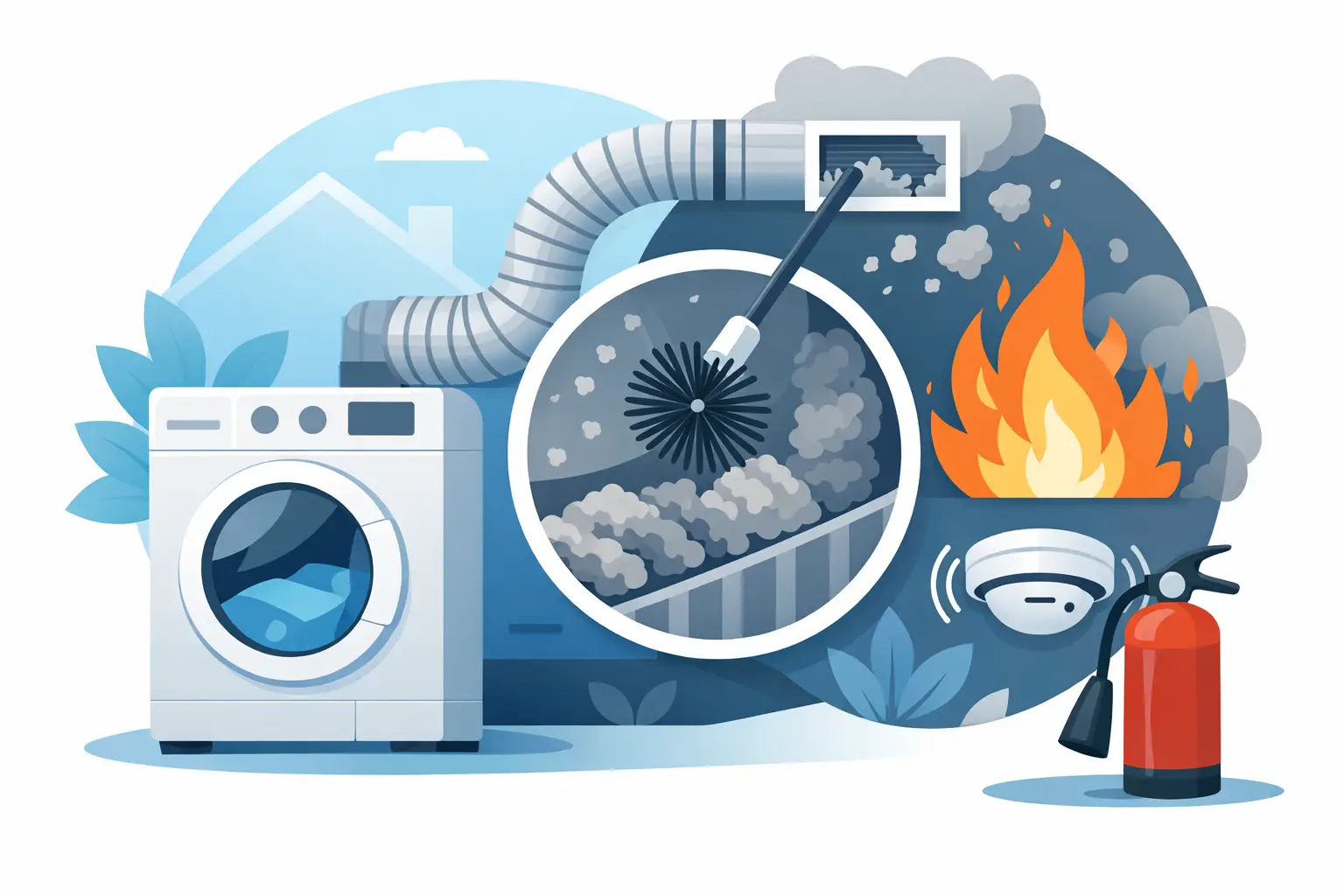
A dryer that takes two or three cycles to finish a load is not just wasting time. It can be warning you that lint is building up where it should not be. That is why dryer vent fire prevention cleaning matters for homeowners, landlords, and small property operators who want a safer home and a dryer that works the way it should.
Most people clean the lint trap and assume that is enough. It helps, but it does not remove the lint packed deeper in the vent line, behind the dryer, or at the exterior vent hood. Over time, that buildup restricts airflow, forces the dryer to run hotter, and creates the kind of condition that can lead to a fire. This is one of those home maintenance jobs that is easy to put off until the signs are obvious. By then, the system is already under strain.
Why dryer vent fire prevention cleaning matters
Dryers produce heat, moisture, and lint every time they run. If the vent line is clear, that material moves out of the house the way it should. If the line is clogged, the heat and lint stay trapped longer than they should. That combination is where the risk starts.
A blocked dryer vent does more than create a safety issue. It can also shorten the life of the appliance, raise energy use, and leave clothes damp after a full cycle. For busy households, that means more time, more wear on the machine, and more frustration. For landlords and small commercial properties, it can also mean preventable repair calls and unhappy tenants.
The good news is that this is a very manageable problem. Regular cleaning and inspection make a real difference. The key is knowing what basic maintenance can handle and when it makes sense to bring in a certified professional.
Common signs your dryer vent needs attention
Some warning signs are easy to spot. Others are easy to dismiss because the dryer still works, just not as well. If clothes are taking longer to dry, that is one of the clearest signs of restricted airflow. A hot laundry room is another. So is a dryer that feels unusually hot on the outside.
You may also notice a musty smell on clothes, more lint around the dryer area, or an exterior vent flap that does not open well when the dryer is running. In some homes, the vent line is longer or has multiple turns, which makes buildup more likely. That does not mean the setup is unsafe by default. It does mean the vent may need more regular attention.
If you ever smell something burning while the dryer is on, stop using it until the vent and appliance are checked. That is not a wait-and-see situation.
What homeowners can do between professional cleanings
There are a few simple habits that help reduce risk. Clean the lint screen after every load, not every few loads. Make sure the screen is fully dry and seated correctly before putting it back. Every few weeks, look behind the dryer for visible lint around the hose connection and around the floor.
It also helps to check the outside vent cover now and then. If it is stuck, crushed, or packed with lint, airflow is going to suffer. Keep the area around the vent opening clear of debris, nests, and overgrowth.
That said, basic upkeep has limits. Reaching deep into a vent line with a store-bought brush can help in some cases, especially on short, straight runs. On longer runs or systems with bends, it often leaves buildup behind. In some cases, improper cleaning can push lint deeper into the line or damage the vent connection. This is where experience matters.
When professional dryer vent fire prevention cleaning is the better move
Professional service is the safer choice when the dryer vent has not been cleaned in a long time, when drying times keep increasing, or when the vent system is hard to access. It also makes sense for rental properties, older homes, and small commercial laundry areas where the dryer gets heavy use.
A proper cleaning is not just about pulling a little lint from the transition hose. It means clearing the full vent path, checking airflow, and identifying problems that keep the system from venting correctly. That can include crushed ducting, poor connections, bird nests, or vent materials that should be replaced.
For many property owners, the real value is peace of mind. You want the job handled quickly, correctly, and without guesswork. A certified team can spot problems a homeowner may miss and make sure the vent is actually clean from end to end.
Dryer vent fire prevention cleaning and vent design
Not all dryer vent systems collect lint the same way. A short, straight vent usually performs better than a long vent with sharp turns. The longer the run, the harder the dryer has to work to push air and lint outside. That does not mean every long vent is a problem, but it does mean maintenance becomes more important.
Material matters too. Smooth metal ducting is generally a better choice than flexible plastic or foil-style material because it supports better airflow and is less likely to trap lint. If an older setup uses materials that are damaged or no longer a good fit for safety, cleaning alone may not solve the whole issue.
This is one of those it-depends situations. Some homes only need routine cleaning. Others benefit from small corrections to the vent path so the dryer can operate more safely and efficiently. A straightforward inspection can tell you which category your system falls into.
How often should a dryer vent be cleaned?
There is no single answer that fits every property. A household that runs the dryer once or twice a week will have different needs than a large family doing laundry every day. Pet hair, heavier fabrics, and long vent runs also increase lint buildup.
For many homes, an annual cleaning is a smart baseline. If the dryer sees heavy use, the vent may need service more often. Rental properties can be especially tricky because usage varies and basic maintenance is not always consistent between tenants.
If you are not sure when your vent was last cleaned, it is usually better to have it checked than to guess. Waiting until the dryer is obviously struggling means you have already lost efficiency and increased wear on the machine.
What a thorough service should accomplish
A proper dryer vent cleaning should leave the system with improved airflow and less lint throughout the full vent line. It should also confirm whether the outside exhaust is opening correctly and whether the vent connection is secure.
Just as important, the service should give you a clear picture of any issues that need attention. If the duct is crushed, disconnected, or routed poorly, that should be pointed out in plain language. You should not need a technical lecture. You should get a direct explanation of the problem and what needs to happen next.
That no-nonsense approach matters. Homeowners and property managers want results, not confusion. At Carolinas Air Duct Cleaning Service, that means certified work, practical recommendations, and a clean system done right.
Why putting it off costs more than you think
People usually delay dryer vent cleaning because the dryer still seems to be working. But reduced airflow quietly drives up the cost of using the machine. Loads take longer. Energy use climbs. Parts wear out faster. Then a maintenance issue turns into an appliance issue.
The bigger concern, of course, is safety. Lint is highly flammable. When it collects in a hot vent system, it creates a risk no homeowner wants to take lightly. Preventive cleaning is a simple service compared with the cost and stress of dealing with a fire, major repair, or water damage from excessive moisture trapped in the laundry area.
That is why this service is not just about cleanliness. It is about protecting your home, your time, and your equipment.
A smart step for safer laundry days
Dryer vent problems rarely fix themselves. They build slowly, then show up as longer dry times, excess heat, and unnecessary risk. Taking care of the vent before those issues pile up is one of the simplest ways to keep your home safer and your dryer running the way it should. If it has been a while since yours was checked, now is a good time to handle it and move on with one less thing to worry about.
Pingback: How to Know Dryer Vent Is Blocked – Carolinas Air Duct Cleaning Service
Pingback: Certified Dryer Vent Cleaning Service Explained – Carolinas Air Duct Cleaning Service
Pingback: When Professional Dryer Exhaust Cleaning Is Due – Carolinas Air Duct Cleaning Service
Pingback: How to Clean a Dryer Exhaust Line Safely – Carolinas Air Duct Cleaning Service
Pingback: Dryer Safety Maintenance Tips That Prevent Fires – Carolinas Air Duct Cleaning Service