
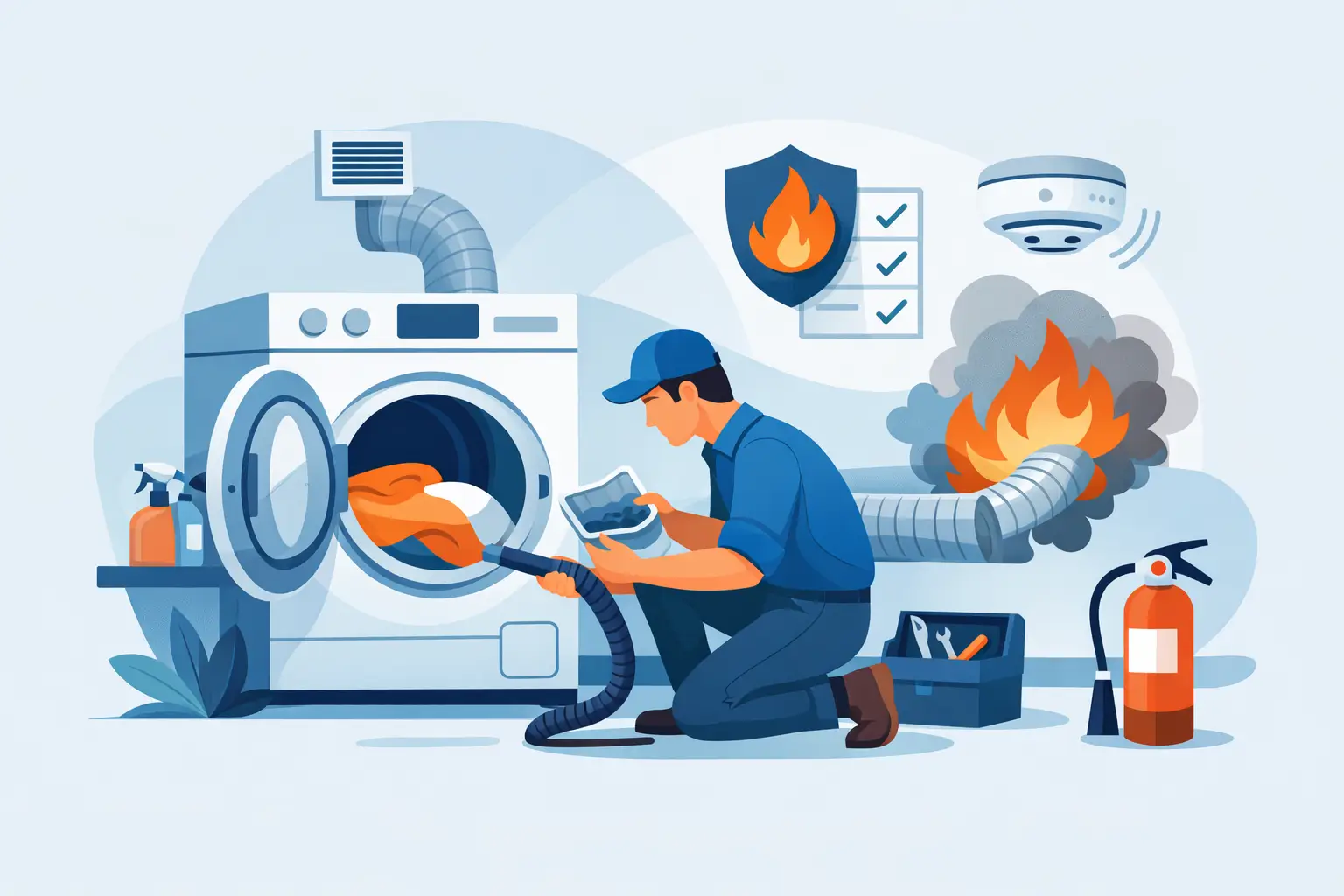
A dryer that suddenly needs two or three cycles is not just wasting time and power. It may be telling you that lint and moisture are no longer leaving your home the way they should. These dryer safety maintenance tips help homeowners, landlords, and small property operators reduce a common fire hazard before it becomes a costly problem.
Your lint screen matters, but it is only the first line of defense. Lint can collect inside the dryer cabinet, in the transition duct behind the machine, and throughout the vent line leading outside. A clean-looking laundry room can still have a restricted dryer vent.
Why Dryer Vent Maintenance Is a Safety Issue
Dryers produce heat, and every load sheds lint. When that lint builds up in the exhaust path, airflow drops. The dryer has to run longer to remove moisture, temperatures can rise, and the appliance experiences more strain. Lint is highly flammable, which is why a blocked or poorly maintained dryer vent should never be ignored.
The warning signs are usually practical and easy to spot. Clothes may take longer to dry. The laundry room may feel unusually warm or humid. You may notice a burning smell, excessive lint behind the dryer, or weak airflow at the outdoor vent hood. If the dryer shuts off during a cycle or feels hotter than normal, stop using it until the cause is checked.
For rental homes and small commercial properties, regular attention is even more important. Multiple residents, frequent laundry use, and limited access behind appliances can allow buildup to go unnoticed for far too long.
Dryer Safety Maintenance Tips for Every Load
The simplest habit is also one of the most effective: clean the lint screen before every load. Pull the screen out, remove the lint by hand, and return it securely. Do not wait until the screen looks completely covered. Even a thin layer can reduce airflow over time.
Every few months, wash the lint screen with warm water and mild dish soap. Dryer sheets and fabric softeners can leave behind a nearly invisible film that restricts airflow through the mesh. Gently scrub both sides with a soft brush, rinse well, and let it dry fully before reinstalling it.
Also look into the lint-screen housing with a flashlight. Loose lint can fall past the screen and collect below it. A vacuum attachment can remove reachable debris, but avoid pushing tools deep into the dryer where they could damage components or create a blockage.
Keep the area around the dryer clear. Boxes, cleaning supplies, clothing, and stored paper products do not belong against a heat-producing appliance. Leave enough room behind and around the dryer so the vent connection is not crushed when the machine is moved back into place.
Check the Vent Connection Behind the Dryer
The short duct that connects the dryer to the wall is easy to overlook because it is out of sight. It also has a major effect on airflow. Check it periodically for kinks, crushing, tears, loose connections, and lint buildup.
A smooth, rigid or semi-rigid metal transition duct is generally the safer choice. Thin plastic or foil-style flexible ducts can sag, tear, trap lint, and restrict airflow. They may be convenient to install, but convenience is not the same as safe performance. If your dryer has an older flexible plastic connector, replacing it is worth discussing with a qualified professional.
Use metal clamps rather than screws that extend into the duct. Screws can catch lint inside the vent line and create a point where buildup starts. The connection should be secure, but the duct should not be bent sharply or compressed against the wall.
If you need to pull the dryer away from the wall, move it slowly. A quick pull can disconnect the vent line without you noticing. Running a dryer with a disconnected vent can release heat, moisture, and lint into the laundry area.
Make Sure the Outside Vent Can Open
Go outside while the dryer is running and inspect the exterior vent hood. Its flap or louvers should open when air is moving through the system. Weak airflow, a flap that does not open, or lint stuck around the outlet can point to a restriction in the vent.
Clear visible lint from the exterior cover by hand. Keep shrubs, mulch, leaves, and stored items away from the outlet. In the Carolinas, pollen, seasonal debris, and insect nests can also affect the exterior termination. Never cover the vent hood with a screen unless it is specifically designed for dryer ventilation. Screens often trap lint and create the very blockage they are meant to prevent.
A properly working vent should discharge warm, moist air outdoors. If that air is ending up in an attic, crawl space, garage, or inside the home, the setup needs correction. Dryer exhaust must be vented outside.
Know When Cleaning the Lint Screen Is Not Enough
Homeowners can handle routine lint-screen care and visible exterior cleanup. Full dryer vent cleaning is different. The complete path may run through walls, ceilings, crawl spaces, or long stretches of ductwork before it reaches the outside. Buildup in those areas is not always visible and cannot always be reached safely with a household vacuum.
Professional cleaning is especially useful when drying times have increased, the vent route is long, the dryer is on an interior wall, or the system has several turns. Each bend slows airflow and gives lint more places to collect. Older homes and remodeled properties may also have improper materials, disconnected joints, or vent routes that need attention.
As a practical rule, have the dryer vent inspected and cleaned at least once a year. Some homes need service more often. A large household that runs laundry daily, a property with multiple units, or a home with pets may build up lint faster. The right schedule depends on usage and the design of the vent system, not just the calendar.
Carolinas Air Duct Cleaning Service provides professional dryer vent cleaning for homeowners and property operators who want the full vent path cleaned thoroughly, not just the lint screen wiped off.
Do Not Ignore These Dryer Warning Signs
Stop and arrange an inspection if you notice several of these problems at once:
- Clothes remain damp after a normal drying cycle.
- The dryer or laundry room becomes excessively hot.
- A burning odor appears while the dryer is operating.
- Lint is collecting behind the dryer or around the wall connection.
- The outside vent flap barely moves when the dryer runs.
- The dryer shuts off unexpectedly or displays an overheating message.
Not every issue means the vent is blocked. A failing heating element, thermostat, moisture sensor, or blower can also affect performance. Still, airflow should be checked first because a restricted vent is both a safety concern and a common cause of poor drying.
Safe Habits That Protect Your Dryer and Home
Do not run the dryer while you are asleep or away from the property. This is particularly relevant in busy households where laundry is started late at night. It may feel efficient, but a dryer problem is easier to catch early when someone is home and alert.
Avoid drying items that have been exposed to gasoline, solvents, cooking oil, paint thinner, or other flammable substances. Washing may not remove all residue. Follow garment-care labels, and air-dry questionable items outside when appropriate.
Pay attention after renovations or appliance replacement. A new dryer may have a different exhaust connection, and moving the unit can crush the duct behind it. If a contractor has worked near the laundry area, take a moment to confirm the vent is still connected and the exterior hood is clear.
For landlords and property managers, dryer vent maintenance belongs on the regular property checklist. Documenting inspections, responding to tenant reports about long drying times, and scheduling professional cleaning can help protect both residents and the building.
A dryer should dry clothes efficiently without making the laundry room hot, humid, or full of lint. If yours is working harder than it used to, treat that change as a maintenance signal. A clean, open vent is a straightforward way to support safer laundry days, lower strain on the appliance, and a cleaner home.