
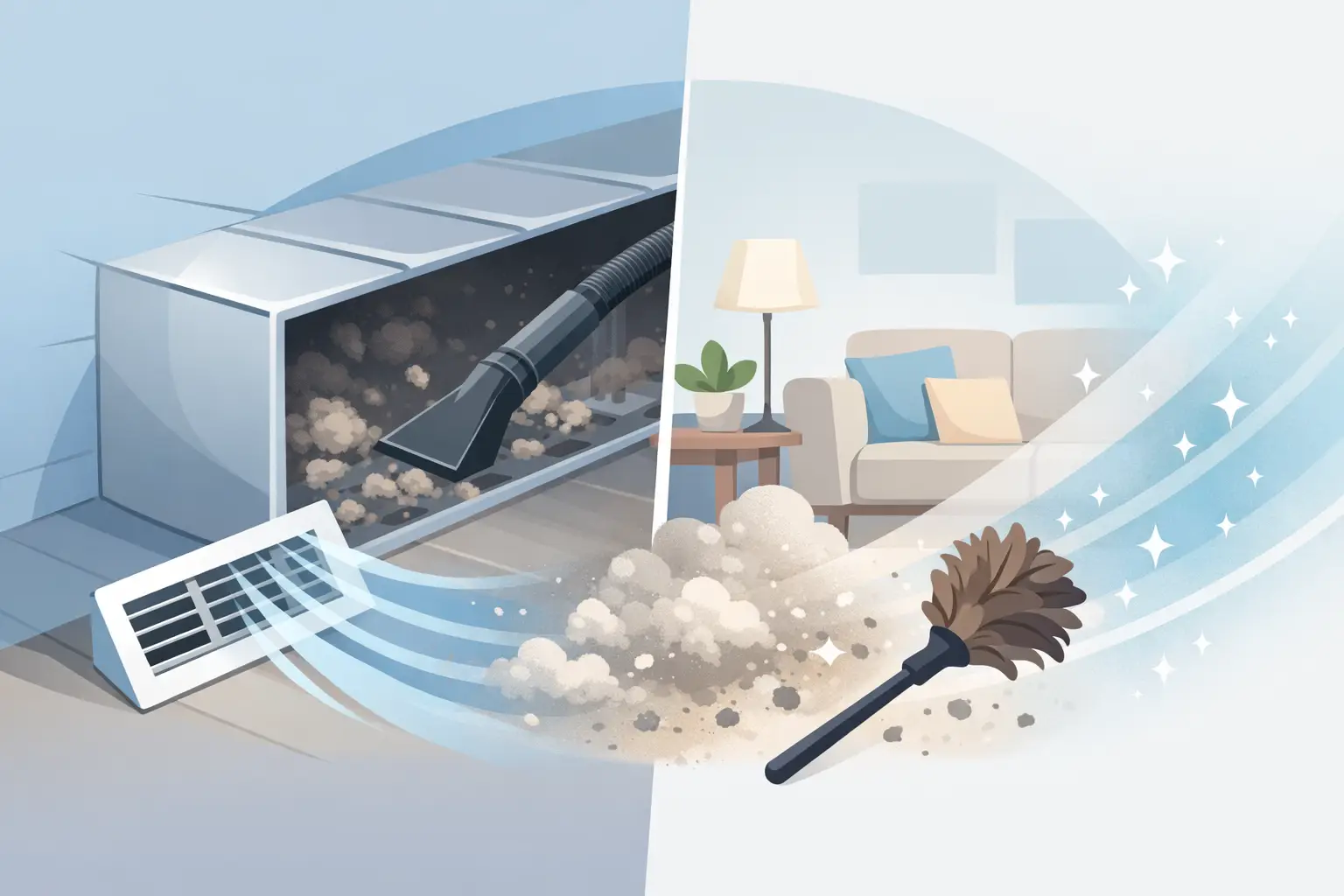
If you dust the furniture on Saturday and see a fresh layer by Tuesday, the HVAC system may be part of the problem. Does vent cleaning reduce household dust? Yes, it can reduce the dust that gets picked up and moved through your home’s ductwork. But it is not a magic fix for every dusty room. A thorough cleaning works best when dust, debris, and buildup inside the system are contributing to what you see around the house.
Your heating and cooling system moves a large volume of air every day. Along with that air comes ordinary household dust: skin cells, pet dander, lint, pollen, fibers from carpet and clothing, and dirt tracked in from outside. Some of it is caught by the filter. Some settles inside return vents, supply ducts, and HVAC components. When enough buildup is present, air movement can carry some of those particles back into living areas.
Does Vent Cleaning Reduce Household Dust in Real Homes?
Professional air duct cleaning can make a noticeable difference when the ducts contain a heavy amount of loose dust and debris. This is especially common after renovations, moving into a previously occupied home, completing a new construction project, dealing with shedding pets, or going years without HVAC maintenance.
A proper service removes buildup from the duct system rather than just cleaning the vent covers. Certified technicians use specialized equipment to loosen and collect debris from accessible supply and return ducts, registers, and key system components. The goal is straightforward: remove the material sitting inside the system so there is less of it available to circulate.
Many homeowners notice less dust around registers and on nearby surfaces after a cleaning. Some also find that their home smells fresher when the system runs. Results vary because every home has different sources of dust, different filter habits, and different duct conditions. Honest service means setting the right expectation: duct cleaning can reduce a source of indoor dust, but it cannot stop dust from entering a lived-in home.
Why Your House May Still Get Dusty
Even a spotless duct system cannot eliminate daily dust. People, pets, bedding, carpeting, upholstered furniture, open doors, and outdoor pollen all add particles to the air. In the Carolinas, seasonal pollen can make dust feel like a year-round battle, especially when windows are opened during pleasant weather.
A dirty or poorly fitted HVAC filter is another common issue. If air can slip around the edges of the filter, or if the filter is overloaded, the system may not capture particles as effectively as it should. Using the wrong filter type can also create problems. A very restrictive filter is not automatically better if the HVAC system is not designed for it.
Leaky ductwork can contribute as well. Return ducts with gaps or disconnected sections may pull dusty air from attics, crawl spaces, garages, or wall cavities. Cleaning removes existing buildup, but a duct leak may continue drawing in more dust afterward. That situation calls for repair along with cleaning.
Signs Your Vents May Need Professional Cleaning
Dust alone does not always mean you need air duct cleaning. A light coating on furniture is normal. The concern is when dust buildup feels excessive, returns quickly, or comes with other signs that the HVAC system needs attention.
Consider an inspection if you see visible dust blowing from supply vents, thick debris around registers, or heavy buildup inside a return vent. It also makes sense after a remodeling project, especially one involving drywall sanding, flooring work, or demolition. Construction dust is fine, widespread, and difficult for a standard filter to manage on its own.
Homes with pets, smokers, multiple occupants, or allergy-sensitive family members may benefit from more frequent attention. So may rental properties between tenants, where you do not know the condition of the system or the habits of previous occupants. If the home has had water damage, mold concerns, pest activity, or an HVAC breakdown, do not assume a basic cleaning is the whole answer. Those situations should be evaluated carefully so the underlying problem is handled correctly.
What a Thorough Cleaning Should Address
Good duct cleaning is not a quick pass over visible grilles. Removing and washing vent covers can improve appearance, but it does not remove the dust farther inside the system. A professional job should focus on the parts that move and collect air: supply runs, return runs, registers, and accessible HVAC areas where buildup is present.
The work should be done carefully to avoid damaging ductwork or leaving loosened debris behind. The technician should also be willing to explain what they found in plain language. You should not be pressured into unnecessary add-ons or vague claims that every health issue in the home comes from the ducts. A dependable company shows you the condition of the system, performs the agreed work thoroughly, and gives practical recommendations for keeping it cleaner.
For homes with dryer vent buildup, schedule that service separately as needed. Dryer vent cleaning does not reduce household dust in the same way air duct cleaning can, but it is essential home maintenance. Lint restricts airflow, makes the dryer work harder, and can become a fire risk. If clothes take multiple cycles to dry or the laundry room gets unusually hot, do not put it off.
Keep Dust Down After the Service
After ducts are cleaned, a few simple habits help protect the results. Replace HVAC filters on schedule based on the filter type, household conditions, and manufacturer guidance. Check that the filter fits securely and that the return grille stays clear of furniture, boxes, and pet beds.
Vacuum carpets and rugs regularly with a well-maintained vacuum, and clean pet bedding often if animals are in the home. During high-pollen periods, keep windows closed when practical and wipe down entry areas where outdoor dirt collects. These are not complicated tasks, but they reduce the amount of material the HVAC system has to handle.
If dust continues building up unusually fast after cleaning and filter changes, ask a qualified HVAC professional to check for duct leaks, equipment issues, or poor return-air setup. The answer may be a repair, not another cleaning.
A Cleaner System Is a Practical Starting Point
Air duct cleaning makes the most sense when there is real buildup in the ventilation system and a clear reason to remove it. It can help reduce the dust that has been sitting in the ducts, improve the cleanliness of the system, and give your home a better starting point for indoor air quality. It will not replace regular cleaning, a good filter, or needed duct repairs.
For homeowners and property managers who want the job handled correctly, Carolinas Air Duct Cleaning Service provides certified, professional cleaning with a focus on thorough results. If your vents look neglected, your home has been remodeled, or dust keeps coming back faster than it should, a professional inspection can give you a clear answer and a cleaner path forward.
Pingback: Residential Vent Cleaning Checklist for Homeowners – Carolinas Air Duct Cleaning Service