
If you pull a vent cover and see dust packed along the edges, the question usually comes fast: how does air duct cleaning work, and is it really worth doing? Fair question. Most people never see the inside of their ductwork, but that system moves air through your whole home or building every day. When dust, debris, pet hair, and buildup collect inside, the right cleaning can make a real difference in cleanliness, airflow, and indoor air quality.
Air duct cleaning is not just someone sticking a vacuum hose into a vent for a few minutes. A proper job is a full-system cleaning. That means trained technicians clean the supply ducts, return ducts, vents, and key HVAC components that move air through the system. Done right, it is thorough, controlled, and designed to remove contamination without making a mess in your home.
How does air duct cleaning work in a real home?
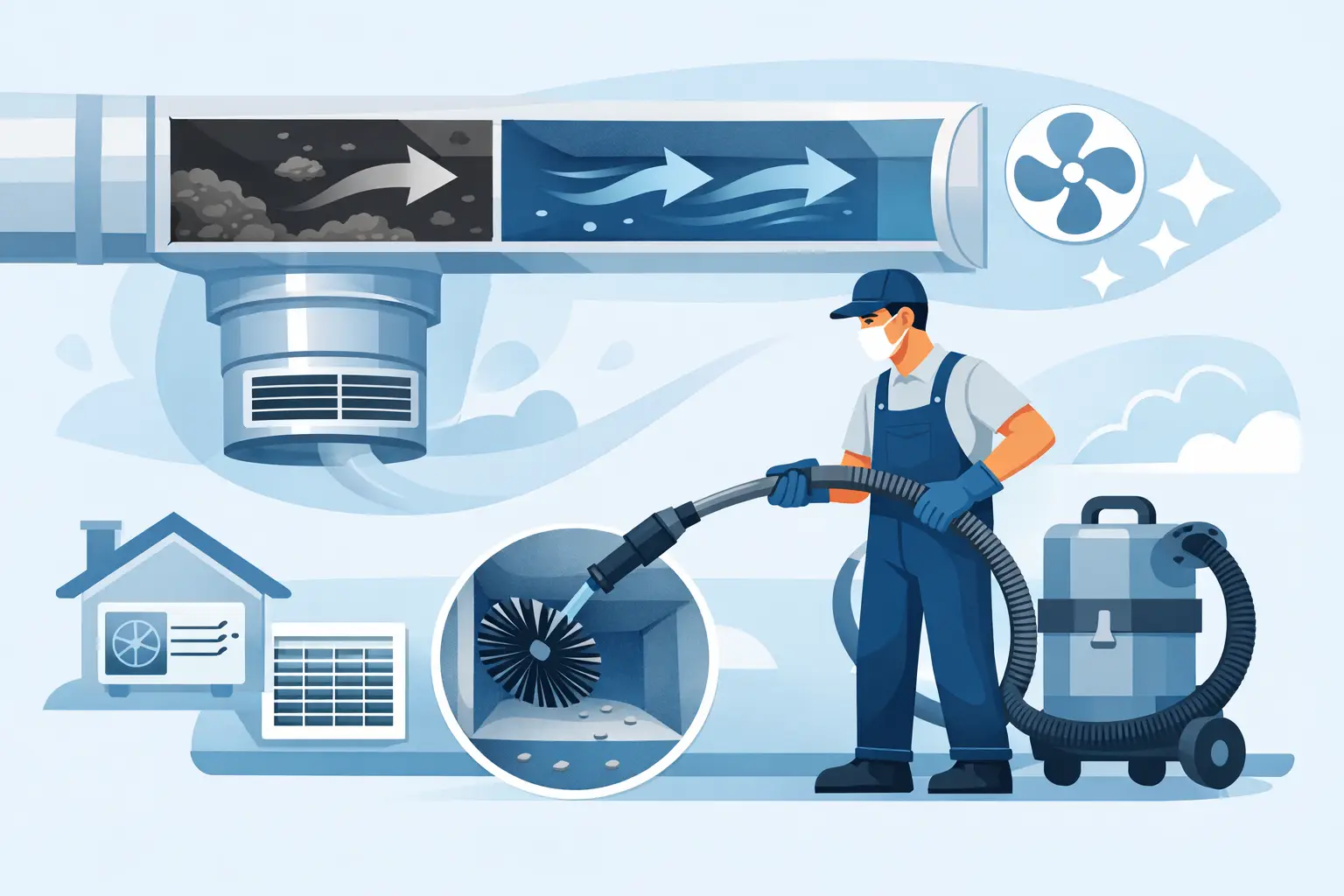
The short answer is simple. Professional technicians place the duct system under strong negative pressure, then loosen debris inside the ductwork with specialized tools so it can be pulled out safely. Instead of blowing dust around the house, the equipment is set up to capture it and remove it from the system.
In most homes, the process starts with an inspection. The crew checks access points, identifies the layout of the duct system, and looks for problem areas like heavy dust buildup, construction debris, pet hair, or signs that a vent has been pulling in extra dirt from gaps or damaged sections. This first step matters because not every system is built the same. A small ranch home, a two-story house, and a light commercial space can all require a different approach.
After that, technicians protect the work area and prepare the system. Vent covers may be removed, access openings may be created where needed, and powerful vacuum equipment is connected to the ductwork. Once the system is under negative pressure, agitation tools are used inside the ducts. These can include brushes, air whips, skipper balls, or compressed air tools that knock debris loose from the walls of the duct. The vacuum then pulls that loosened material into containment.
That is the basic process, but the quality of the result comes down to how complete the cleaning is. A rushed job that only touches the easy-to-reach vents is not the same as a professional cleaning that addresses the full system.
What gets cleaned during the process?
A lot of homeowners assume air duct cleaning only means the visible vents on the wall or floor. Those covers are part of it, but they are just the starting point. A proper cleaning usually includes the supply ducts that deliver conditioned air, the return ducts that pull air back into the system, and the registers and grilles at each opening.
It can also include major HVAC components connected to airflow, such as the blower compartment, the air handler area, and in some cases the evaporator coil area if accessible and appropriate for service. The exact scope depends on the system, the condition of the equipment, and what the cleaning company is contracted to do.
This matters because dust inside a vent is one thing, but buildup around moving components can affect how the system performs. If air is constantly circulating through dirty passages and over dirty parts, the issue does not stop at what you can see from the room.
Why negative pressure matters
If you want the simple version of how does air duct cleaning work, this is the heart of it: controlled suction plus mechanical agitation. The suction side is what keeps the job clean.
Negative pressure means the vacuum system is pulling air inward through the ductwork instead of allowing loosened debris to escape into the house. As tools move through the ducts, dust and particles are directed toward the collection equipment. That is one reason professional cleaning looks very different from trying to vacuum a vent with household equipment. Home tools do not have the reach, sealing ability, or power to clean deep into the system.
It is also why certification and training matter. Duct systems can include flexible ducting, metal trunk lines, branch lines, and different types of vent connections. The wrong method can damage parts of the system or leave a lot of buildup behind.
What the appointment usually looks like
For most homes, the crew will arrive, inspect the system, explain the work, and begin setup. They may cover flooring near work areas, remove and clean vent covers, and connect vacuum equipment to a main access point. Registers are often sealed or managed in stages to keep suction directed where it needs to go.
Then the cleaning itself begins. Technicians work through the system methodically, using agitation tools to dislodge debris from each section while the vacuum removes it. Returns and supplies are both addressed. If the service includes additional HVAC cleaning, those components are handled during the same visit.
The time it takes depends on the size of the property, the number of vents, how dirty the system is, and how accessible the ductwork is. A smaller home may take a couple of hours. A larger home or light commercial property can take longer. If someone promises a whole-house duct cleaning in a very short visit, that is usually a sign to ask more questions.
What comes out of dirty ductwork
In a typical system, technicians may remove household dust, pet dander, hair, lint, pollen, insulation particles, and general debris that has built up over time. In some properties, they also find drywall dust from past remodeling, toy pieces, paper scraps, pest-related debris, or buildup that has been collecting for years.
Not every home has severe contamination. That is part of the honest answer. Some systems need cleaning badly. Others just have moderate buildup. The point is not to scare people. It is to address what is actually in the system and remove what does not belong there.
When air duct cleaning makes the most sense
Air duct cleaning is often a smart move after renovation work, after moving into an older home, when there is visible dust blowing from vents, or when a property has gone too long without HVAC hygiene service. It can also help when there are pets in the home, high dust levels on furniture soon after cleaning, or concerns about stale indoor air.
That said, it is not a cure-all for every air quality issue. If a home has high humidity, active mold growth from moisture problems, poor filtration, or leaking ducts, those issues also need attention. Good companies will tell you that. Cleaning helps remove built-up debris, but long-term results are best when the overall HVAC system is in good shape.
What good results look like
A proper cleaning should leave the duct system visibly cleaner, reduce loose dust and debris in the ventilation path, and improve overall system hygiene. Many homeowners notice less dust settling around the home, cleaner vent covers, and fresher airflow afterward. In some cases, airflow can improve if heavy buildup was restricting movement.
The result should also be a clean work area. Professional service means the mess gets removed from the system, not relocated to your floors and furniture. That is one reason people choose certified technicians instead of the cheapest coupon they see online.
How to tell if the service is being done right
A solid air duct cleaning company will explain the process clearly, clean more than just the visible vents, and use professional negative-pressure equipment. They should be able to tell you what is included, how long the job is expected to take, and whether any parts of the system need special handling.
You should also expect straightforward communication. No vague promises. No mystery pricing. No pressure to add services that do not fit the condition of your system. Companies like Carolinas Air Duct Cleaning Service built their reputation on direct, professional work, and that matters in a service most customers cannot fully inspect on their own.
If you are wondering whether now is the right time, trust what your home is telling you. Heavy dust, dirty vents, stale airflow, and neglected HVAC maintenance usually do not fix themselves. A professional cleaning is a practical step toward a cleaner system and healthier air, and when it is done right, you can feel the difference without having to overthink the process.
Pingback: Does Vent Cleaning Reduce Household Dust? – Carolinas Air Duct Cleaning Service