
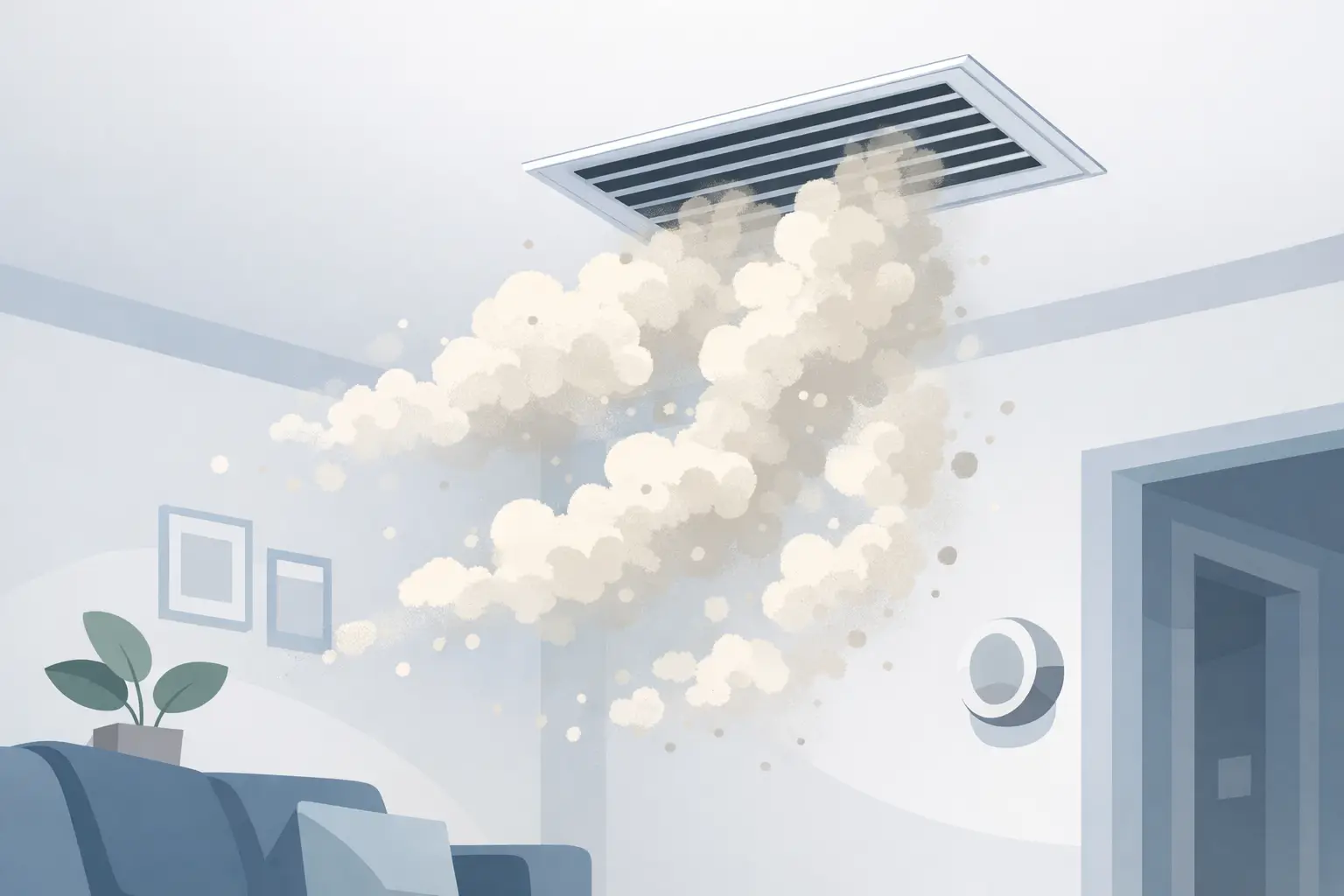
You change the filter, wipe the furniture, and run the AC – then a fresh layer of dust shows up around the supply vents again. If you are seeing dust coming from vents, that is usually a sign that something in the HVAC system is not as clean or sealed as it should be.
Sometimes the fix is simple. Other times, the dust is telling you your ductwork, air filter, or blower area needs real attention. Either way, it is not something to ignore if you want cleaner air, less mess in the house, and a system that is working the way it should.
What dust coming from vents usually means
A little dust near a vent is not unusual. Air moves through the system all day, and some particles can settle around the register. But when you notice visible puffs, repeated buildup, or dust collecting right after cleaning, that points to a bigger issue.
In many homes, the problem starts with normal buildup inside the system. Dust, pet hair, lint, pollen, and other debris get pulled into return ducts over time. If the filter is overdue, low quality, or not fitted correctly, more of that material can move deeper into the system and recirculate back into the living space.
Leaky ductwork is another common reason. Small gaps in ducts can pull in dust from attics, crawl spaces, wall cavities, or utility areas. That means the system is not just moving conditioned air – it may also be dragging in dirty air from parts of the property you do not want mixed into your home.
There is also a timing issue to consider. If dust only seems worse when the heat or AC kicks on for the first time after sitting for a while, you may be seeing settled debris getting pushed out during startup. That can happen seasonally, especially in homes that have gone months without the system running hard.
The most common causes of dust coming from vents
Dirty or poorly fitted air filters
This is the first place to look because it is both common and fixable. A clogged filter can restrict airflow and stop doing its job well. A filter that is the wrong size can leave gaps around the edges, letting dust pass around it instead of through it.
A better filter is not always the answer, though. Some very restrictive filters can reduce airflow if the system is not designed for them. It depends on the unit, the duct design, and how often the filter gets changed. The goal is clean air and proper airflow, not just the highest rating on the shelf.
Dust buildup inside the duct system
Over time, ducts collect debris. In homes with pets, remodeling dust, heavy traffic, or years of neglected maintenance, that buildup can become significant. When airflow picks up, some of it can break loose and move back through the vents.
This tends to be more noticeable in older homes or rental properties where maintenance has been inconsistent. It can also show up after construction work, even small projects, because fine dust travels farther than most people expect.
Leaky return or supply ducts
Leaks let the system pull in dust from unconditioned spaces and can also let conditioned air escape before it reaches the room. That is a double problem – dirtier air and lower efficiency.
This issue is often overlooked because the ducts are hidden. You may not realize there is a leak in an attic or crawl space until the house feels dusty no matter how much you clean.
Dirty blower components
The blower motor and surrounding components move air through the whole system. If those parts are coated in dust, they can contribute to particles circulating through the home. A dirty blower can also affect airflow, which puts more strain on the system.
This is not usually a do-it-yourself cleaning job. These components need to be handled carefully, and a quick wipe-down is not the same as proper system cleaning.
Vent covers and registers
Sometimes the visible dust is concentrated at the vent opening itself. Registers collect debris easily, especially floor vents near entryways, kitchens, and high-traffic rooms. If the register is dirty, each burst of air can stir that dust into the room.
That said, a dirty vent cover may be the symptom, not the root cause. If it gets dusty again right away, the problem is likely farther back in the system.
When it is more than a housekeeping issue
Dust coming from vents is not always just about a cleaner house. For many families, it becomes an indoor air quality issue.
If anyone in the home has allergies, asthma, or other breathing sensitivities, recirculated dust can make the space feel uncomfortable fast. You might notice more sneezing, irritated eyes, or that stale, dusty feeling when the system turns on. In small offices and rental properties, that can also lead to complaints from tenants or staff who notice the air feels dirty.
There is also the wear-and-tear side of it. A dirty HVAC system has to work harder to move air. That does not mean every dusty vent points to major equipment trouble, but it does mean buildup should be taken seriously before it starts affecting performance and efficiency.
What you can check yourself first
Before assuming the worst, there are a few practical things worth checking.
Start with the filter. Make sure it is clean, the right size, and installed correctly. Check the vent covers too. If they are coated with dust, remove and clean them. Look around the vent openings for dark streaks or heavy buildup, which can suggest repeated airflow issues.
Pay attention to patterns. Is the dust worse in one room or throughout the property? Does it happen only when the AC starts, or all the time? Did it begin after remodeling, moving into the home, or turning the system on for the season? Those details help narrow down whether the issue is localized or system-wide.
It is also worth taking a quick look at visible duct connections if you can safely access them. Loose or damaged sections may be obvious. Still, many of the most important parts of the system are out of sight, so a limited visual check only goes so far.
When professional duct cleaning makes sense
If dust keeps coming back, professional cleaning is often the right next step. This is especially true when the system has visible buildup, the property has not had duct cleaning in years, or the dust problem continues despite regular filter changes.
A proper service does more than vacuum a vent opening. The goal is to remove debris from the full duct system and address the buildup that a homeowner cannot reach with basic tools. In many cases, that means a noticeable reduction in dust around vents and a cleaner feel throughout the home.
It is fair to say that not every dusty home needs duct cleaning immediately. Sometimes the bigger culprit is duct leakage, poor filtration, or general housekeeping after a renovation. But if there is real accumulation in the system, cleaning it out is a practical move, not a cosmetic one.
For homeowners and property managers in the Carolinas, this is where working with certified professionals matters. You want a team that knows how to inspect the system properly, clean it thoroughly, and tell you plainly if the issue is dirt, leakage, or both.
How to keep dust from coming back
Once the immediate problem is handled, the focus should shift to keeping the system cleaner going forward.
Regular filter changes make a difference, but the timing depends on the home. A house with pets, kids, or ongoing allergy concerns may need more frequent changes than a smaller, low-traffic home. Duct sealing can also help if leaks are part of the problem. That stops the system from pulling in dust where it does not belong.
Routine HVAC maintenance matters too. A clean, well-running system is less likely to circulate buildup through the house. And if you have had recent remodeling, it is smart to pay extra attention to the system afterward, since construction dust has a way of settling into everything.
The main thing is not to treat repeated vent dust as normal if it clearly is not. A small amount of dust is part of life. Constant dust coming from vents is a sign worth checking before it turns into a bigger comfort, air quality, or maintenance problem.
If your vents keep blowing dust no matter how often you clean, trust what you are seeing. Clean air should look and feel cleaner than that, and the right service can make a real difference.
Pingback: Best Time for Duct Cleaning in the Carolinas – Carolinas Air Duct Cleaning Service
Pingback: Top Causes of Dusty Rooms and How to Fix Them – Carolinas Air Duct Cleaning Service
Pingback: Best Ways to Reduce Indoor Dust for Good – Carolinas Air Duct Cleaning Service