
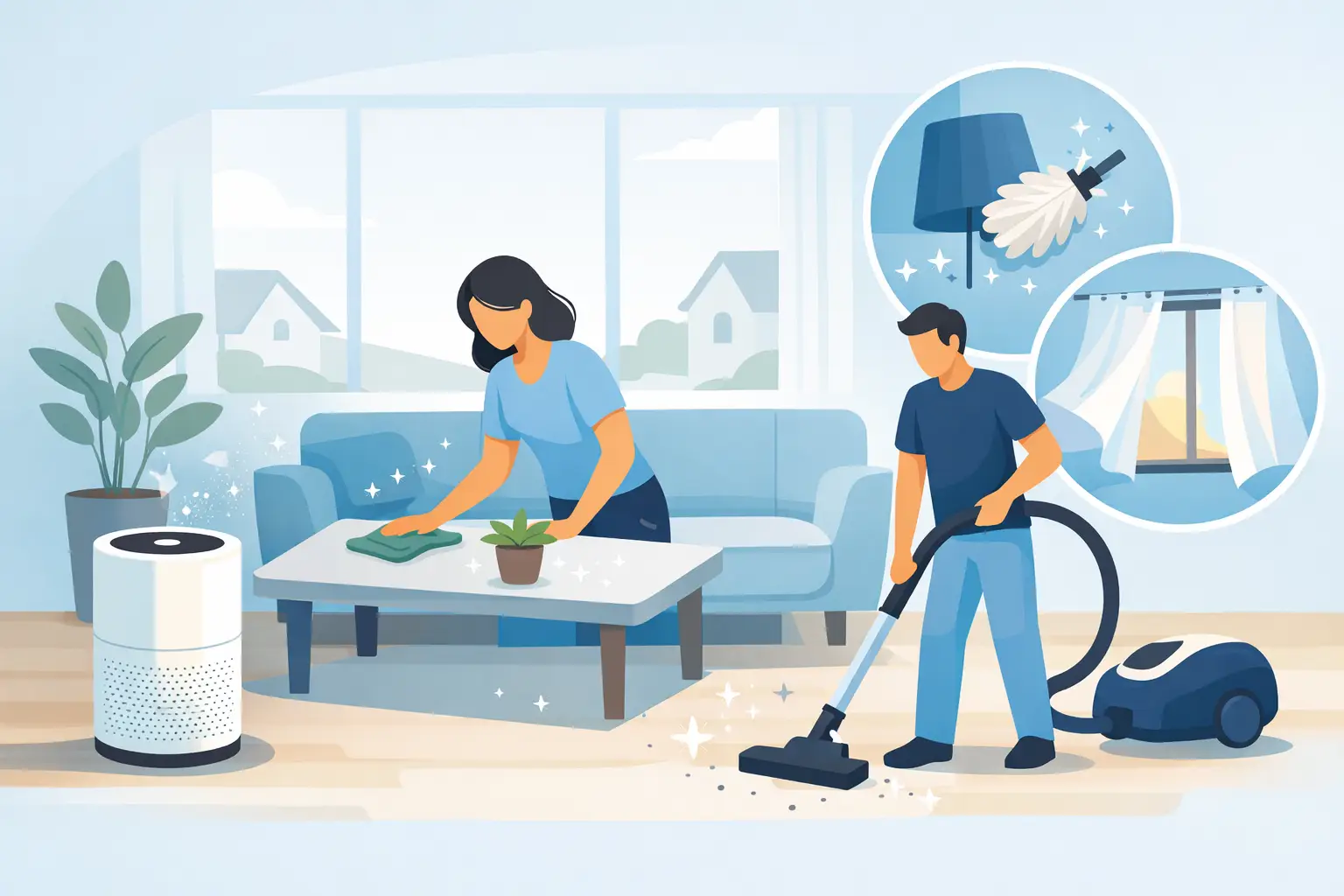
A clean coffee table can look dusty again by the next morning, especially during a dry Carolina spring or when the HVAC system starts running more often. The best ways reduce indoor dust are not about cleaning harder every day. They are about stopping dust at the door, removing it from the air, and keeping it from collecting inside your heating and cooling system.
Start Where Dust Enters the House
A large share of household dust comes in from outside. Pollen, soil, road grit, and tiny bits of plant material ride in on shoes, pets, open windows, and clothes. In Charlotte, Fort Mill, and surrounding areas, seasonal pollen can make this problem feel constant.
Put durable mats outside and inside every main entry. The outside mat loosens dirt before it gets indoors, while the inside mat catches what remains. Vacuum or shake both mats regularly. If your household has children, pets, or frequent visitors, this one habit can make a noticeable difference.
Shoes are another simple source to control. A shoes-off routine near the door reduces tracked-in dirt, allergens, and fine grit that later gets ground into floors and released into the air. It may not be practical for every visitor, but it is an easy standard for the people who live in the home.
Keep windows closed on days with heavy pollen, nearby construction dust, or high winds. Fresh air is pleasant when outdoor conditions are good, but an open window can quickly add a layer of pollen and dust to furniture, floors, and window sills.
Use the Right HVAC Filter and Change It on Time
Your HVAC filter is one of the hardest-working tools in the house. It catches airborne particles before they pass through the equipment and recirculate through your rooms. A filter that is too dirty, too cheap for the job, or improperly installed leaves more dust moving through the system.
For many homes, a quality pleated filter is a practical choice. Check the manufacturer’s recommendation for your equipment before choosing a very high-rated filter. Filters that are too restrictive for certain systems can reduce airflow and make the equipment work harder. The goal is cleaner air without creating an HVAC performance problem.
Check the filter monthly and replace it when it looks loaded with dust or according to the filter schedule. Homes with pets, smokers, renovations, heavy pollen exposure, or several occupants may need more frequent changes than a quiet household. Write the date on the filter frame so there is no guessing later.
Make sure the filter fits snugly. Air can bypass a loose or incorrectly sized filter, carrying dust around its edges instead of through the filter material. That small detail matters.
Clean Floors Without Sending Dust Back Into the Air
Dry sweeping often moves fine dust from one spot to another. A vacuum with a sealed system and HEPA filtration is usually a better choice because it captures small particles instead of blowing some back into the room.
Vacuum high-traffic areas at least once a week, and more often if you have pets or carpet. Do not forget edges, under furniture, upholstered chairs, and entryways. These are the places where dust and pet hair settle first.
Hard floors need a different approach. Vacuum first, then use a damp microfiber mop. The slight moisture grabs fine dust that a dry mop may leave behind. Avoid soaking wood or laminate flooring, since excess water can damage the surface.
Carpet holds dust deep in its fibers, which can be helpful until it becomes overloaded. Regular vacuuming removes much of it. If a carpet looks dull, smells stale, or creates visible dust during cleaning, a professional carpet cleaning may be worth considering.
Dust From the Top Down
Dust settles downward, so the order of cleaning matters. Start with ceiling fan blades, tall shelves, vents, window trim, blinds, and the tops of cabinets. Then clean tables, counters, and furniture. Vacuum or mop the floor last.
Use a damp microfiber cloth instead of a feather duster or dry rag. Microfiber holds particles rather than simply scattering them. Rinse or wash cloths after use so yesterday’s dust does not end up back on the furniture.
Pay special attention to blinds, fabric lampshades, baseboards, and electronics. These areas are easy to miss and often hold more dust than people expect. Electronics can attract dust because of static electricity, so wipe screens and equipment gently with a cloth made for the task.
Wash Fabrics That Hold Dust
Bedding, throw blankets, curtains, upholstered furniture, and pet beds act like dust collectors. Every time they are disturbed, small particles can become airborne again.
Wash sheets weekly in the warmest water safe for the fabric. Wash blankets and pet bedding regularly, especially if pets sleep in bedrooms or on furniture. Vacuum upholstered furniture with the appropriate attachment, including beneath seat cushions.
Curtains can hold pollen and dust for months. If they are washable, clean them according to the label. If not, vacuum them carefully or have them professionally cleaned when needed. For homes with significant allergy concerns, simpler window coverings may be easier to maintain than heavy layered drapes.
Control Pet Hair and Dander
Pets add comfort to a home, but they also add hair, dander, and tracked-in debris. Even short-haired pets can contribute to visible dust buildup.
Brush pets regularly, preferably outdoors, and bathe them as recommended for their breed and skin condition. Wipe paws after walks, especially during wet weather or pollen season. Keep pet beds clean, and vacuum the spots where animals sleep or spend most of their time.
If dust is a major issue in one bedroom, keeping pets out of that room can help. This is a personal decision, but it gives sensitive sleepers a cleaner space and reduces the amount of dander around bedding.
Keep Humidity in a Healthy Range
Very dry air can make dust easier to stir up and move around. Excess humidity creates a different problem by encouraging mold growth and making rooms feel stale. A comfortable target for most homes is roughly 30% to 50% relative humidity.
Use a hygrometer to see what is actually happening in your home rather than guessing. In humid Carolina summers, a properly operating air conditioner or dehumidifier can help. In winter, a humidifier may make sense if the air becomes unusually dry, but it should be kept clean and used carefully. A dirty humidifier can spread mineral residue or microorganisms into the air.
Check Vents, Returns, and the Duct System
Supply vents and return grilles collect dust because air passes through them every day. Vacuum the grilles and wipe them with a damp cloth during regular cleaning. Keep furniture, rugs, and storage boxes away from return vents so the system can pull air freely.
Do not block vents in unused rooms as a shortcut to lower bills. Closing too many vents can affect airflow and put added strain on the system. If some rooms are always dustier than others, the cause may be airflow, duct leakage, an oversized filter gap, a return-air issue, or dust entering from an attic or crawlspace.
Air duct cleaning is not a replacement for changing filters and routine housekeeping. It can be a practical service when ducts contain visible buildup, when dust blows from vents soon after cleaning, after construction work, following a pest issue, or when a property has gone through years of neglected maintenance. A qualified, certified crew should inspect the system and explain what they find instead of making blanket promises.
For property managers and homeowners preparing for a move, professional duct cleaning can also help reset a space that has accumulated debris from previous occupants, pets, or remodeling work. The result should be a cleaner HVAC system, not a sales pitch full of unnecessary add-ons.
Reduce Clutter and Fix Hidden Dust Sources
Stacks of boxes, crowded shelves, stored clothing, and unused décor create places for dust to settle. You do not need an empty house, but reducing clutter makes every cleaning faster and more effective. Use closed storage where possible, particularly in bedrooms and closets.
Look for hidden sources as well. A leaking return duct in an attic, a gap around a utility line, or a damaged door sweep can pull dusty air into the home. If you notice dust building up unusually fast in one area, do not assume it is just a cleaning issue. A basic inspection can reveal a problem worth fixing.
Dryer vents deserve attention too. Lint is not the same as ordinary house dust, but it can spread around the laundry area and create a serious fire risk when buildup is ignored. Clean the lint screen after every load and have the vent path professionally cleaned when airflow weakens, drying takes longer, or the exterior vent flap is not opening properly.
A dust-free home is not realistic, and anyone who promises that is not being straight with you. But a home that stays cleaner longer is realistic when the filter, floors, fabrics, humidity, entryways, and HVAC system are all handled on a regular schedule. Start with the source you can see, then investigate the system behind the walls if the dust keeps coming back.
Pingback: 7 Best Ways to Clean Air Vents Safely at Home – Carolinas Air Duct Cleaning Service