
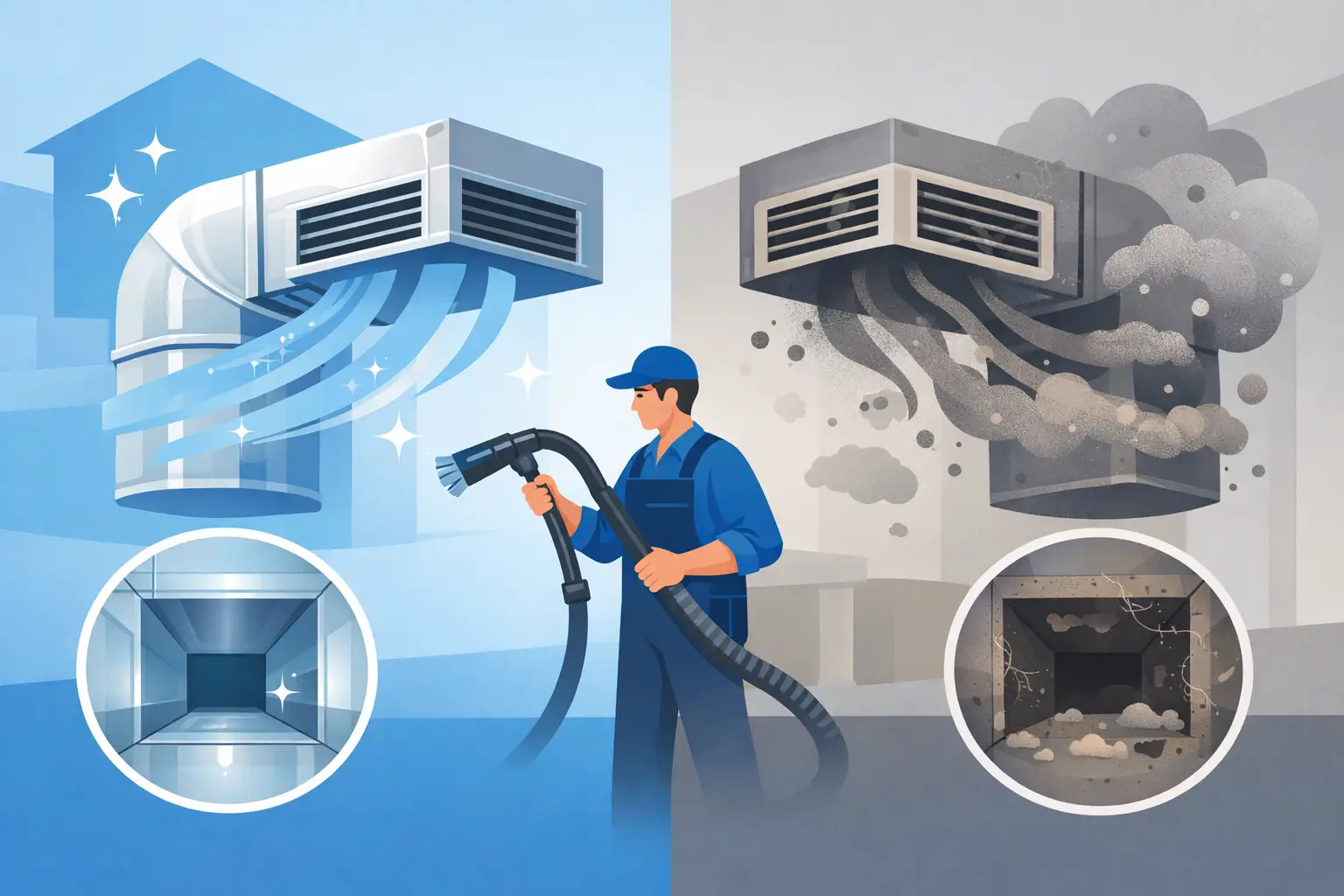
You change the filter, dust the furniture, and still the house feels dusty. That is usually when homeowners start looking for signs your air ducts need cleaning. If dust keeps coming back fast, rooms smell stale, or your vents look dirty, your HVAC system may be moving more than air through the house.
Dirty ductwork does not always announce itself with one obvious problem. More often, it shows up as a pattern. Your home feels harder to keep clean. The air seems heavier. Allergies act up indoors. The system runs, but the results are not what they should be. Here is how to tell when a professional duct cleaning is worth scheduling.
Signs Your Air Ducts Need Cleaning at Home
Dust blows out when the system starts
If you notice a puff of dust coming from supply vents when the heat or AC kicks on, that is one of the clearest warning signs. A little dust around vent covers is common over time, but visible particles blowing into the room suggest buildup inside the duct system.
This is especially noticeable in homes with older systems, recent renovations, pets, or long gaps between cleanings. If the vents are pushing out dust, that debris is not staying inside the ductwork. It is ending up in your living space.
Your home gets dusty again almost immediately
Some dust is part of everyday life. But if you clean on Saturday and by Monday your tables, floors, and return vents already look dirty again, the HVAC system may be recirculating buildup through the house.
This does not always mean the ducts are the only issue. A poor filter fit, leaky returns, or heavy outdoor dust can also play a role. Still, rapid dust buildup is one of the most common signs your air ducts need cleaning, especially when it happens throughout the home and not just in one room.
Musty or stale odors come from the vents
Air coming through your vents should not smell moldy, stale, or dirty. If a musty odor shows up when the system runs, debris inside the ductwork may be holding moisture, dust, or other contaminants.
Sometimes the smell comes from the air handler, insulation near the ducts, or microbial growth in parts of the system. That is why a professional inspection matters. The key point is simple: if the odor starts when airflow starts, your duct system deserves a closer look.
Vents and registers look dirty fast
Take a look at your supply and return vents. If the covers are darkened with dust, fuzz, or grime shortly after cleaning them, that is usually a sign that buildup goes deeper than the surface.
A dirty register alone does not prove the entire duct system is clogged. But when multiple vents show the same issue, it often points to accumulated dust and debris moving through the system. In homes with pets or high foot traffic, this can happen faster than people expect.
Health and comfort clues to watch for
Allergy symptoms feel worse indoors
When people in the home sneeze more, wake up congested, or notice more irritation indoors than outside, indoor air quality becomes part of the conversation. Dust, dander, pollen, and other particles can collect in a ventilation system and continue circulating.
Air ducts are not always the main cause of allergy symptoms, and no honest company should claim duct cleaning solves every health issue. But if symptoms get worse when the HVAC system runs, or if the house has not had duct service in years, cleaning can be a practical step toward a cleaner indoor environment.
One or more rooms feel stuffy or neglected
A room that always feels stale or harder to heat and cool may have an airflow issue. Sometimes that is caused by duct design, dampers, or insulation problems. Other times, dust and debris buildup inside the ducts can restrict airflow enough to affect comfort.
If several rooms feel uneven and the system seems to work harder than it should, it is worth having the ductwork checked. Cleaning may not fix every airflow problem, but it can remove one common source of restriction.
You have pets, recent construction, or a long maintenance gap
Not every sign is dramatic. Sometimes the strongest clue is the home itself. If you have multiple pets, have completed remodeling work, or moved into an older house with an unknown service history, your ducts may already be carrying a heavy load of dust and debris.
Construction dust is a big one. Even when work areas are covered, fine particles often find their way into returns and duct lines. Pet hair and dander build up steadily as well. If none of the ductwork has been professionally cleaned in years, there is a good chance the system is overdue.
System performance signs that should not be ignored
Airflow seems weak from the vents
If certain vents barely push air compared to others, it could mean there is a blockage or buildup affecting flow. Weak airflow can also come from blower issues, closed dampers, crushed ducts, or filter problems, so this is not a one-cause symptom.
Still, dirty ducts are part of the list. When dust and debris collect over time, they can narrow the path air needs to travel. If your filter is fresh and the system still feels weak, a professional evaluation makes sense.
Your HVAC system runs longer than usual
When airflow is restricted, your heating and cooling system may have to work harder to move air through the house. That can mean longer run times, uneven temperatures, and extra wear on equipment.
Duct cleaning is not a cure-all for high energy bills or HVAC strain. Mechanical issues, low refrigerant, dirty coils, and poor insulation can all cause similar symptoms. But if the system seems less efficient and the ductwork has been neglected, cleaning may help restore normal performance.
You see debris around return vents or inside vent openings
You do not need special equipment to spot obvious buildup. Remove a vent cover carefully and look just inside with a flashlight. If you see layers of dust, pet hair, drywall residue, or dark buildup, the system is telling you something.
What you can see at the opening is not always the full picture, but it is enough to know whether further inspection is worth it. In a properly maintained system, you should not find heavy visible debris sitting inside the vents.
When it is time to call a professional
If you are seeing one of these issues once, monitor it. If you are seeing several at the same time, it is probably time to book a professional duct cleaning. The combination matters. Dust blowing from vents, recurring odors, fast surface dust, and indoor allergy flare-ups together paint a stronger picture than any one symptom alone.
This is also a job where quality matters. A quick vacuum at the vent opening is not the same as a thorough cleaning performed by trained technicians using the right equipment. You want the debris removed from the system, not stirred up and left behind. That is why homeowners and property managers in the Carolinas often look for certified service and straightforward pricing instead of the cheapest possible appointment.
At Carolinas Air Duct Cleaning Service, that is the standard – air duct cleaning done right, without the runaround.
What duct cleaning can and cannot do
Good duct cleaning can remove built-up dust, debris, and contaminants from the ventilation system. It can help improve cleanliness in the home, support better indoor air quality, and reduce the amount of material moving through your vents.
What it cannot do is fix every HVAC problem by itself. If a system has leaking ducts, moisture issues, damaged insulation, or mechanical faults, those need to be addressed too. Honest service means looking at the whole situation and telling the customer what cleaning will help and where a repair may be needed.
That is the practical way to think about it. If your home is showing clear signs your air ducts need cleaning, do not wait until the dust gets worse or the system works harder than it should. Clean air starts with a clean system, and a professional inspection can give you a straight answer on what your home needs next.