
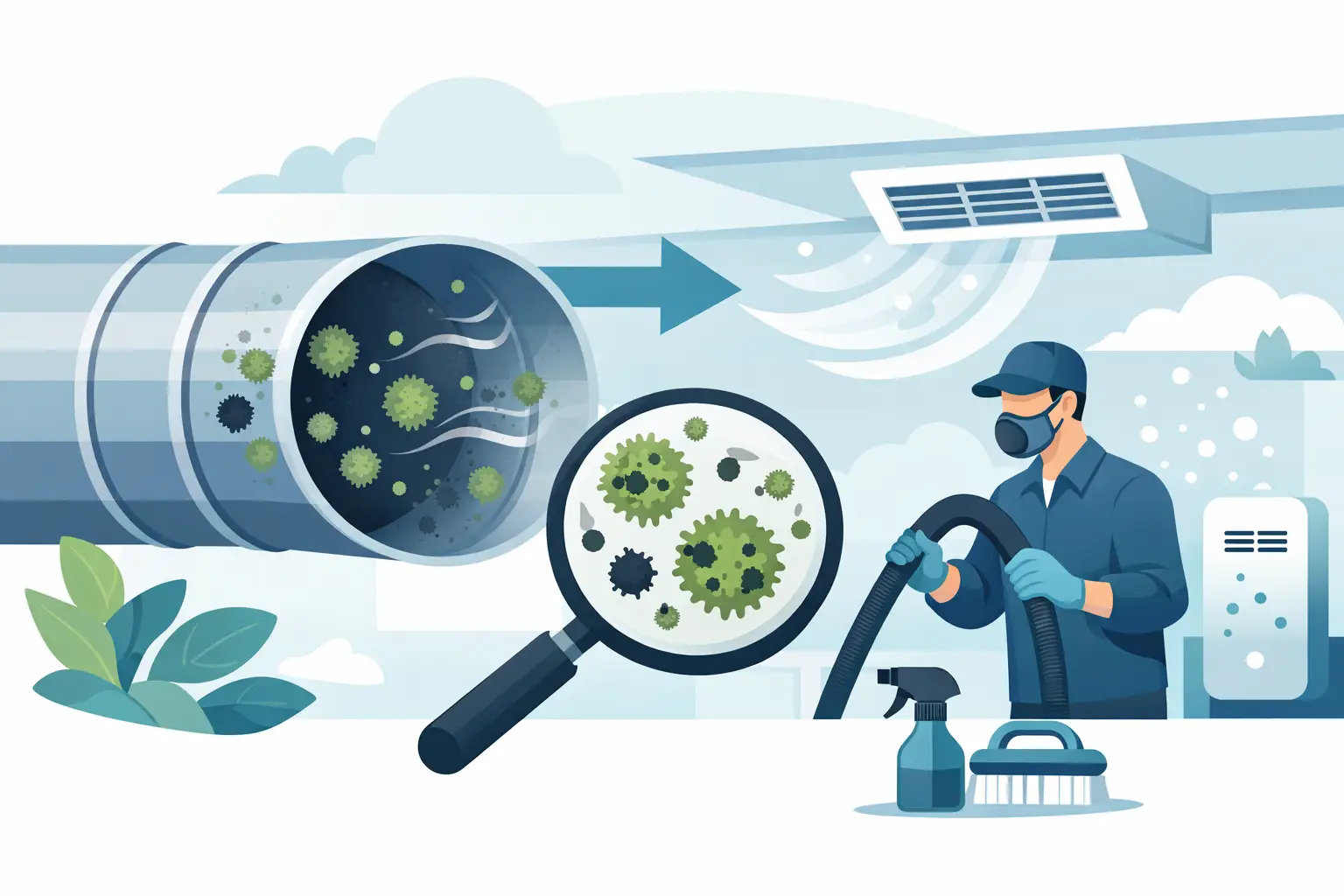
A musty smell that starts when the heat or AC comes on is not something to ignore. Mold inside air ducts can affect the air moving through your home or business, but it is also a sign that moisture is getting where it should not be. The right fix is not just spraying a product into the vents. It means finding the moisture problem, assessing the system, and cleaning it properly when cleaning is appropriate.
For homeowners, landlords, and small business owners around Charlotte and Fort Mill, the goal is simple: get the system clean, keep it dry, and get back to comfortable indoor air.
How Mold Gets Inside Air Ducts
Mold needs moisture, a surface to grow on, and time. Ductwork itself is often metal and does not provide much food for mold. The problem is the dust, skin cells, pet dander, and other organic buildup that can settle inside a neglected HVAC system. When humidity, condensation, or a water issue is added, that buildup can support growth.
A clogged or poorly draining condensate line is one common source. Your air conditioner removes moisture from the air, and that water has to drain safely. If it backs up, leaks, or creates standing water near HVAC components, mold can develop around the air handler and nearby duct connections.
High indoor humidity can also create trouble, especially during long Carolina summers. Ducts running through a hot attic, crawl space, or other unconditioned area may sweat if insulation is damaged or air leaks are present. A roof leak, plumbing leak, flooded crawl space, or wet insulation can create the same issue.
Sometimes the suspected problem is not actually mold in the ducts. Dust, dark marks, and debris around supply registers can look alarming. A professional inspection helps separate a dirty system from an active moisture and mold problem. That distinction matters because cleaning alone will not stop mold from returning if the source of moisture remains.
Signs You Should Take Seriously
A persistent musty or earthy odor when the HVAC system runs is one of the clearest warning signs. The smell may come and go with the system cycle, or it may be stronger in one room than another. It does not automatically prove mold, but it deserves attention.
Visible discoloration around vents, inside accessible duct openings, or near the air handler is another reason to inspect the system. So are repeated condensation problems, water stains around HVAC equipment, a drain pan that overflows, or damp insulation near ductwork.
Some people notice more dust than usual after the system runs. Others report that allergy or asthma symptoms feel worse indoors. Those symptoms can have many causes, including pollen, pets, dust mites, or ordinary indoor dust. Do not use symptoms alone to diagnose mold. Instead, look at the condition of the equipment, the presence of moisture, and any visible buildup.
If you have had recent water damage, do not wait for a smell to develop. Have the affected HVAC areas checked. Wet materials and hidden moisture can create problems before they become visible at the registers.
Why a Quick Spray Is Not a Real Fix
It is tempting to buy a fogger, disinfectant, or air freshener and call the job done. That may cover an odor for a short time, but it does not remove the dirt and debris that can hold moisture inside the system. It also does not repair leaking ducts, poor drainage, wet insulation, or high humidity.
Chemical treatments are not automatically necessary for every dirty duct system. In fact, they should not be used as a substitute for physical cleaning or moisture control. The best approach depends on what is found during inspection. If growth is limited and the moisture source has been corrected, thorough cleaning of accessible components may be the right next step. If there is widespread contamination, damaged porous materials, or an ongoing water issue, mold remediation and HVAC repair may be needed before duct cleaning can deliver lasting results.
That is why honest assessment matters. A company that promises to solve every mold concern with one fast spray is not giving you the full picture.
What Professional Duct Cleaning Can Do
When ducts and HVAC components are dirty, professional cleaning removes accumulated dust, debris, and buildup from the system. This can improve system cleanliness, reduce the material that mold can feed on, and help restore cleaner airflow after the moisture issue is addressed.
A proper service should focus on the full accessible system, not just the vent covers you can see. Supply and return ducts, registers, grilles, and accessible HVAC components all deserve attention. The work should be contained so loosened debris is collected rather than pushed back into the home.
Professional duct cleaning is especially useful after construction work, a renovation, a pest issue, long-term neglect, or water-related repairs. It can also make sense when there is visible dust buildup, poor airflow caused by debris, or a confirmed need to clean the system after a moisture problem has been fixed.
It is not a replacement for an HVAC service call when the equipment is leaking, not draining, or failing to control humidity. Think of it as one part of getting the system back in shape. Fix the cause first, then clean the system thoroughly.
The Right Steps When You Suspect Mold Inside Air Ducts
Start by checking the obvious areas safely. Look around the indoor HVAC unit for standing water, rust, wet insulation, drain pan overflow, and signs of a leaking condensate line. Check visible registers for unusual buildup, but avoid disturbing suspected growth or reaching deep into ducts yourself.
Next, address active moisture. A qualified HVAC professional may need to repair drainage, seal leaks, improve insulation, or correct airflow problems. If your home feels consistently damp, humidity control may be part of the solution. In many homes, keeping indoor humidity at a reasonable level makes a real difference.
Then schedule an inspection and cleaning plan based on the actual condition of the system. Ask what areas will be cleaned, whether the technician found an active moisture source, and whether any materials need separate remediation or replacement. Clear answers are a good sign that the work is being handled correctly.
Carolinas Air Duct Cleaning Service provides certified, thorough air duct cleaning for homeowners and light commercial properties that need a cleaner ventilation system without unnecessary runaround. The job should leave the system visibly cleaner, not leave you guessing what was done.
Preventing the Problem From Coming Back
Once the system is clean and dry, regular maintenance helps protect your investment. Change HVAC filters on schedule using the filter type recommended for your equipment. A severely clogged filter can reduce airflow and contribute to performance problems, while an overly restrictive filter can also create issues in some systems. When in doubt, ask your HVAC technician what fits your unit.
Keep supply and return vents open and clear of furniture, rugs, and stored items. Restricted airflow can contribute to uneven temperatures and condensation concerns. Have the air conditioner serviced regularly, particularly before heavy cooling season, and make sure the condensate drain is inspected.
Pay attention to crawl spaces, attics, and utility areas. These spaces often reveal moisture problems first. Repair plumbing leaks promptly, correct drainage issues around the home, and replace water-damaged insulation when needed. If you see condensation on ducts, that is a signal to investigate rather than ignore.
For rental properties and small commercial spaces, documented maintenance is worth the effort. Regular filter changes, HVAC service records, and timely response to leaks can prevent a small problem from turning into a disruptive cleanup.
A clean duct system is valuable, but a dry system is what keeps it that way. If an odor, leak, or visible buildup has you concerned, get it checked early. A straightforward inspection and the right professional work can prevent a moisture problem from settling into your air system.