
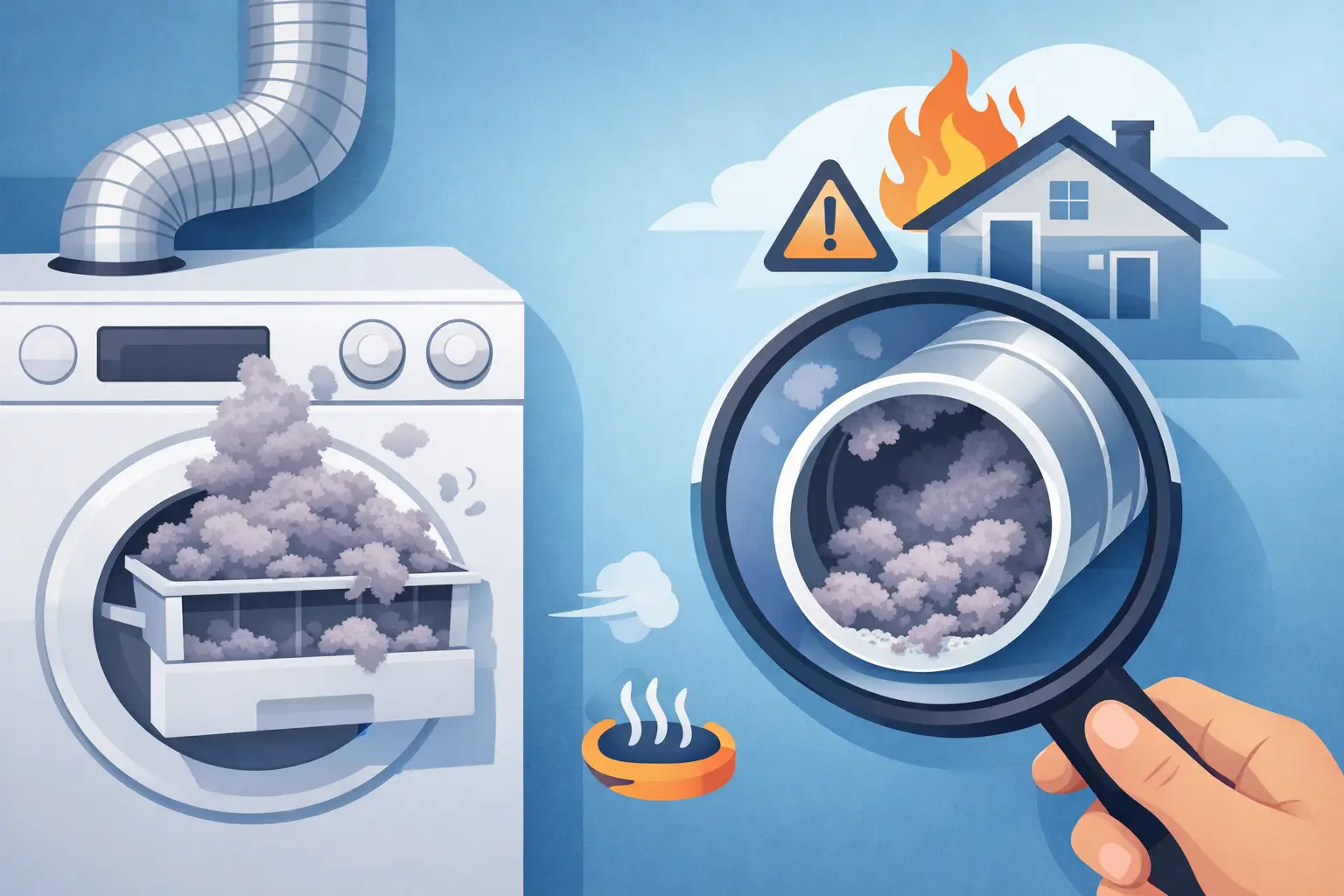
A dryer that suddenly takes two cycles to dry a normal load is not just frustrating. It is one of the clearest signs of restricted airflow. Knowing how to spot dryer lint buildup gives you time to correct a problem before it leads to higher utility bills, worn-out clothing, equipment damage, or a preventable dryer fire.
The lint screen catches a lot, but it does not catch everything. Fine fibers move past the screen and settle inside the vent hose, wall duct, exterior hood, and sometimes behind the dryer itself. Over time, that material narrows the path that hot, moist air needs to escape.
How to Spot Dryer Lint Buildup: The Main Warning Signs
Lint buildup rarely announces itself all at once. Most homeowners notice small performance changes first. Pay attention when your dryer starts behaving differently than it did a few months ago.
Clothes need more than one cycle
A properly vented dryer should dry a typical load in one normal cycle. Heavy towels, blankets, and jeans may take longer, but everyday clothing should not routinely need a second cycle.
When lint blocks the vent, moisture cannot leave the dryer efficiently. The machine keeps producing heat, but the damp air stays trapped. Running repeated cycles may get clothes dry, but it also increases energy use and puts extra strain on the dryer.
The dryer or laundry room feels unusually hot
Some warmth is normal during operation. Excess heat is not. If the top, sides, or front of the dryer feel hotter than usual, or the laundry room becomes hot and humid, airflow may be restricted.
A clogged vent causes heat to back up into the appliance and room instead of moving safely outside. Do not dismiss this as a normal part of doing laundry, especially if the problem is new or getting worse.
You smell something burning
A burning smell is a stop-and-check warning. Lint is highly flammable, and a hot dryer can ignite lint when airflow is severely restricted. The odor may be faint at first, similar to scorched fabric or dust getting too hot.
Turn the dryer off if you smell burning. Let it cool, remove the load, clean the lint screen, and inspect the visible vent connection. If the smell returns or you see signs of overheating, do not keep using the dryer until the vent has been professionally inspected and cleaned.
The lint screen is full after every load – or strangely clean
A full lint screen is normal and should be cleaned before every load. But heavy lint production combined with slow drying can mean more lint is collecting farther down the system.
A nearly clean lint screen can also be a concern when your clothes are clearly shedding fibers. Some lint may be bypassing the screen or sticking to a damp, clogged vent path. Either situation calls for a closer look.
The outside vent flap does not open properly
While the dryer is running, go outside and check the exterior vent hood. You should feel a steady stream of warm air, and the flap should open freely. Weak airflow, no airflow, or a flap that barely moves can point to a blockage.
Lint is not the only possible cause. Bird nests, leaves, pest screens, crushed vent hoses, and damaged exterior hoods can restrict the outlet too. The result is the same: the dryer cannot exhaust air the way it should.
Lint is collecting around the dryer or exterior vent
Visible lint around the back of the dryer, near the floor, or outside at the vent opening is a sign worth taking seriously. It may mean the transition hose is loose, torn, crushed, or clogged.
Check behind the dryer only when the appliance is off and cool. Do not pull the dryer hard against the wall when putting it back. A crushed hose can create a restriction quickly, even after a professional cleaning.
Why Dryer Vent Buildup Is a Safety Issue
Dryer lint is made from tiny, dry textile fibers. It burns easily. When the vent is blocked, the dryer must work harder and runs hotter for longer periods. That combination of lint and heat creates a real fire risk.
The danger is not limited to older dryers or large households. A newer dryer can still overheat if the vent path is blocked. Homes with long vent runs, multiple bends, second-story laundry rooms, or roof exits often need more attention because lint has farther to travel before it reaches the outside.
Restricted airflow also affects the dryer itself. Longer dry times can wear out heating elements, thermostats, belts, and other components sooner. Cleaning the vent is usually far less expensive than replacing a dryer that has been pushed beyond its normal workload.
Simple Checks You Can Do Safely
Start with the basic maintenance that belongs on every laundry routine. Clean the lint screen before each load, not just when it looks full. Wash the screen occasionally with warm water and mild dish soap, especially if you use dryer sheets or fabric softener. A coating on the screen can reduce airflow even when it appears clean.
Next, check the exterior vent while the dryer is running. You are looking for warm air moving freely outside. If the airflow seems weak, the flap stays closed, or lint is packed around the outlet, schedule a proper vent cleaning rather than trying to force the blockage out from one end.
You can also inspect the short vent connection behind the dryer. Look for sharp bends, kinks, loose clamps, foil-style ducts that sag, or a hose flattened against the wall. Keep the area around the dryer free of boxes, clothing, and stored items that can block airflow or add fuel if a problem develops.
Avoid using leaf blowers, plumbing snakes, or improvised tools to clear a dryer vent. These methods can compact lint deeper into the line, disconnect the duct inside a wall, or damage the vent. A vent that looks clear at the dryer connection may still have heavy buildup farther along the run.
When It Is Time for Professional Dryer Vent Cleaning
A homeowner can clean the screen and inspect visible areas. The full vent system is another job. Professional cleaning reaches the ductwork from the dryer connection to the exterior outlet, removing lint and debris that basic cleaning cannot reach.
It is time to schedule service when dry times increase, airflow outside is weak, the dryer is overheating, or you smell burning. Landlords and small property operators should also pay close attention between tenants. A dryer vent can become neglected quickly when several people use shared laundry equipment.
As a general rule, many homes benefit from dryer vent cleaning about once a year. The right schedule depends on how often you do laundry, the length and layout of the vent, whether you dry pet bedding or heavy fabrics, and how well the system has been maintained. Large families and high-use properties may need service sooner.
Carolinas Air Duct Cleaning Service provides professional dryer vent cleaning for homeowners and property managers who want the job handled thoroughly. A trained technician can remove built-up lint, check the vent path for restrictions, and help identify conditions that could keep the problem coming back.
Keep Buildup From Returning Too Quickly
The best prevention is simple and consistent. Clean the lint screen before every load, avoid overloading the dryer, and make sure the outside vent hood remains clear. If your exterior cover has a screen, ask a qualified technician whether it is appropriate for a dryer outlet. Fine screens can trap lint and create a blockage.
Do not ignore a change in drying performance just because the machine still runs. A dryer can continue operating while its vent becomes progressively more restricted. Addressing the first warning sign is safer, easier, and usually less costly than waiting for the problem to become urgent.
Your dryer should move warm air outside efficiently, dry clothes in a normal cycle, and operate without excess heat or unusual odors. If it is no longer doing those things, treat it as a maintenance issue that deserves prompt attention.