
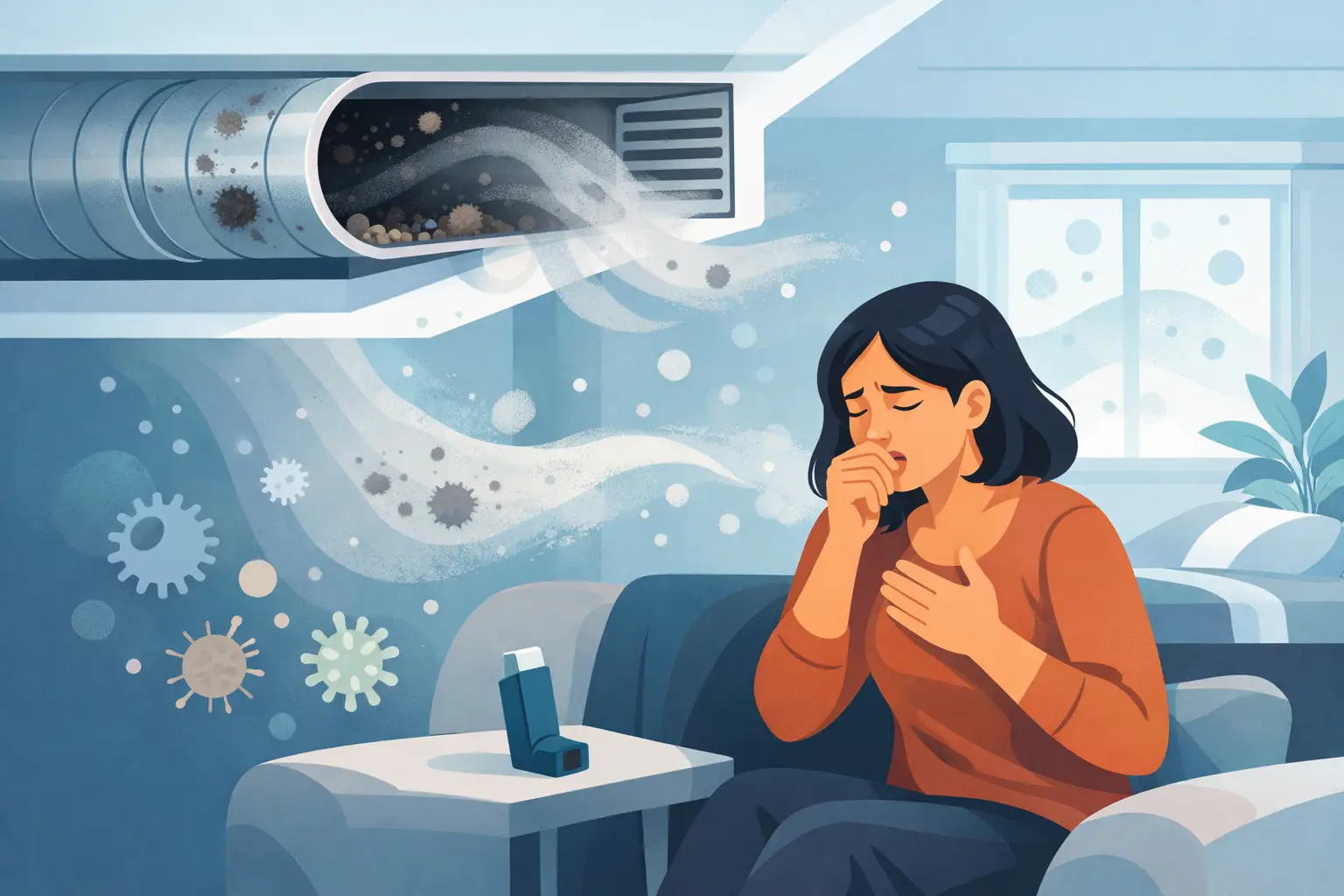
If coughing, wheezing, or chest tightness seems worse when the heat or AC kicks on, it is fair to ask: can dirty ducts worsen asthma symptoms? They can contribute to the problem in some homes, especially when dust, pet dander, pollen, or moisture-related buildup is being moved through the HVAC system. But dirty ducts are rarely the only cause, and duct cleaning is not a replacement for asthma care.
The practical goal is simple: reduce avoidable irritants inside the home. A clean, properly maintained HVAC system can be one part of that plan.
Can Dirty Ducts Worsen Asthma Symptoms?
Asthma airways are sensitive. Small particles and strong irritants that may only be annoying to one person can trigger coughing, shortness of breath, wheezing, or nighttime symptoms for someone with asthma.
Your ducts do not create asthma. They can, however, collect material that is already in the home: ordinary household dust, pet hair and dander, pollen tracked in from outdoors, construction debris, and sometimes signs of moisture or microbial growth. When the system runs, air passes over the equipment and through the ductwork. If there is heavy buildup, loose debris can circulate back into occupied rooms.
Whether that makes a real difference depends on the home. A newer, well-sealed system with clean filters may have little duct buildup. A home with several pets, recent remodeling, visible dust blowing from vents, water damage, or years of neglected maintenance is more likely to have an indoor air quality issue worth addressing.
The key is not to assume. Look for clear signs, then take practical steps.
Signs Your HVAC System May Be Adding Irritants
You may not see the inside of your ductwork, but the home often gives you clues. Dust collecting quickly on furniture after cleaning is one sign. Dirty or dark vent covers, debris visible just inside supply registers, and an HVAC filter that becomes clogged unusually fast can point to a system carrying more dust than it should.
Pay attention to timing as well. If asthma symptoms flare when the blower starts, in one room more than another, or after a renovation, it may be worth checking the HVAC system along with other common triggers. Musty odors deserve attention, particularly after a leak, crawlspace moisture issue, or AC drain problem. Moisture should be fixed at the source before cleaning is scheduled. Cleaning a duct without correcting the moisture problem will not prevent it from returning.
Other warning signs include uneven airflow, a visible layer of debris near vents, and a system that has not been professionally cleaned in many years. For landlords and small property managers, these issues can also lead to tenant complaints about dust, odors, and stale air.
What Duct Cleaning Can and Cannot Do
Professional air duct cleaning removes accumulated dust and debris from accessible HVAC ductwork, registers, returns, and related system components. When the ducts are genuinely dirty, this can help lower the amount of loose material sitting in the system and improve overall cleanliness.
For a household managing asthma, that may mean fewer particles being stirred up when heating or cooling cycles begin. It can be especially helpful after construction work, a move into a previously occupied home, a pest issue that has been resolved, or a long period of poor filter maintenance.
Still, honest expectations matter. Air duct cleaning does not cure asthma, and it cannot remove every trigger from a home. Dust mites in bedding, pet dander in carpet and upholstery, smoke, scented sprays, outdoor pollen, and mold from active moisture problems can all affect symptoms. A thorough cleaning works best as part of a larger home maintenance routine, not as a one-time fix for every breathing concern.
If someone is having severe breathing trouble, frequent rescue inhaler use, or worsening asthma attacks, contact a medical provider right away. Home maintenance can reduce environmental triggers, but medical treatment should guide asthma management.
Start With the Filter and the Source of the Dust
Before focusing only on ducts, check the basics. The HVAC filter is the first line of defense against airborne dust moving through the system. A filter that is clogged, too weak for the household’s needs, or installed incorrectly can allow more debris to collect inside the equipment and ductwork.
Use the filter type recommended for your HVAC system and replace it on schedule. Homes with pets, allergy concerns, heavy HVAC use, or renovation dust may need more frequent changes. A higher-rated filter can capture smaller particles, but an overly restrictive filter may reduce airflow if the system is not designed for it. When in doubt, ask an HVAC professional which filter is appropriate.
Then look for the source. Seal up obvious gaps around doors and windows, vacuum regularly with a quality vacuum, control indoor humidity, and avoid smoking indoors. If there is a roof leak, plumbing leak, wet insulation, or standing water near HVAC components, get it repaired. Removing dust from ducts is valuable, but stopping new contamination is what helps keep the system cleaner longer.
Why Professional Cleaning Matters
A proper duct cleaning job is more than running a brush through a vent opening. The work should be done carefully, with the right equipment to contain and remove debris instead of spreading it into the home. Technicians should inspect accessible areas, protect the work space, clean supply and return ducts, and address the components included in the service scope.
Be cautious of too-good-to-be-true offers that promise whole-home cleaning for a price that barely covers a service call. Low advertised prices can lead to rushed work, surprise charges, or a surface-level cleaning that does not address the system. Ask what is included, whether technicians are trained and certified, and how the company handles visible buildup or signs of moisture.
Carolinas Air Duct Cleaning Service provides straightforward, professional cleaning for homeowners, landlords, and light commercial properties that need a cleaner HVAC system without unnecessary runaround. The goal is a thorough job, clear communication, and cleaner air moving through the space.
When Cleaning Makes the Most Sense for Asthma Households
There is no single calendar schedule that fits every home. Some homes may benefit from cleaning after several years, while others may need attention sooner because of pets, remodeling, occupants with respiratory sensitivities, or heavy dust entering from outdoors.
It makes sense to consider professional service when there is visible debris in the ducts, dust is repeatedly blowing from vents, a major remodeling project has just ended, or an inspection finds buildup. It is also reasonable when you move into a home with an unknown maintenance history.
On the other hand, if the ducts appear clean, the filter is changed regularly, and symptoms are mostly tied to seasonal pollen or known pet exposure, cleaning may not be the first priority. Start with the most likely trigger. That approach saves money and gives your family a more useful result.
Keep the Whole Home Working Together
Cleaner ducts work best alongside basic asthma-friendly home habits. Keep return vents unblocked, vacuum and dust regularly, wash bedding often, and keep humidity under control. Avoid covering vents or closing too many registers, which can interfere with normal airflow and strain the system.
If you use portable air cleaners, place them where the person with asthma spends the most time, such as a bedroom. They can help reduce airborne particles in that specific area, but they do not replace filter changes, moisture control, or professional cleaning when the HVAC system has real buildup.
A home does not have to be spotless to be healthier. It needs fewer avoidable irritants, a clean system that moves air properly, and a maintenance plan that deals with problems before they build up. If your vents are dusty, your system smells stale, or asthma symptoms seem connected to HVAC use, a professional inspection is a sensible next step.