
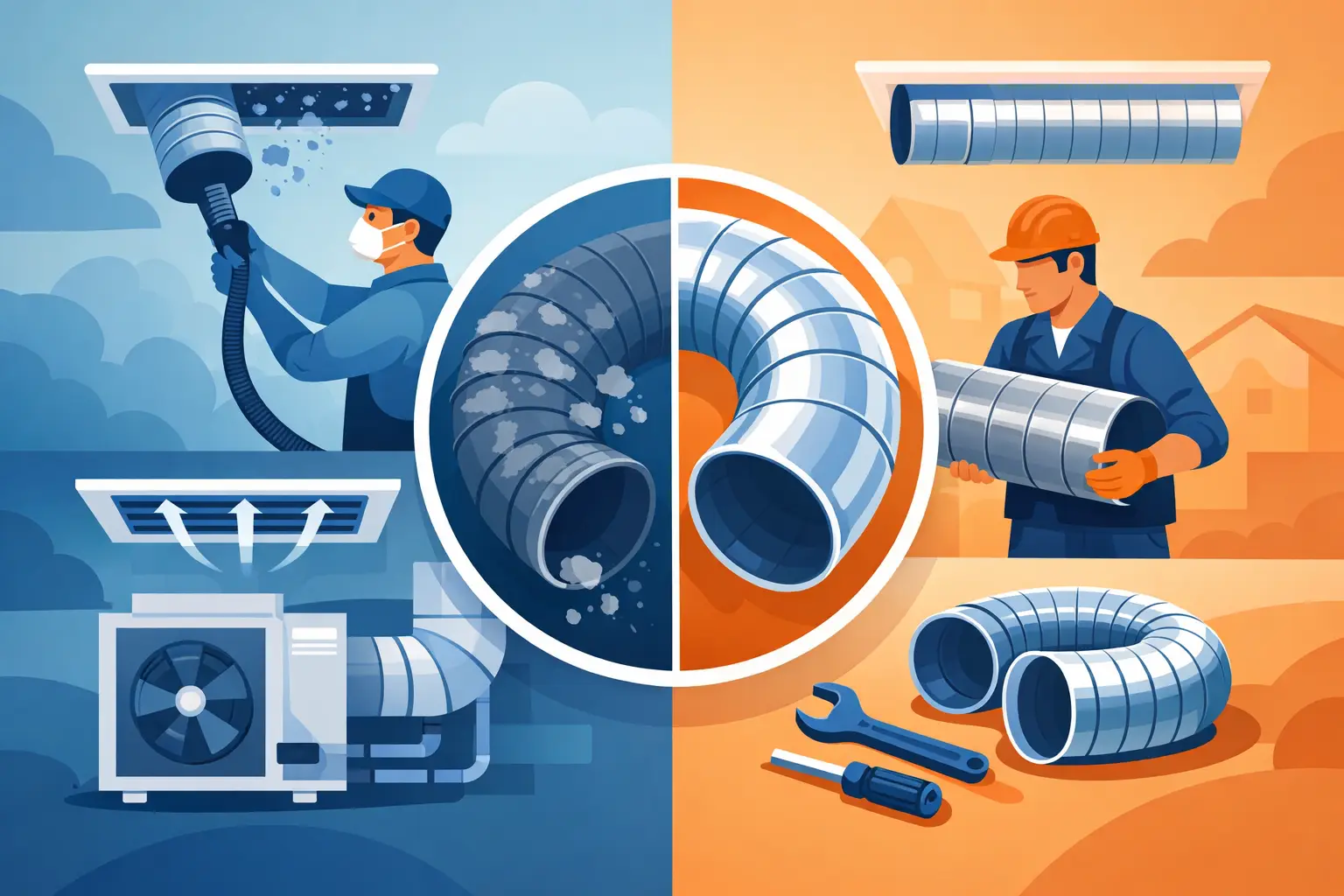
A dusty home, weak airflow, or musty smell can make any homeowner wonder whether the ductwork needs a serious fix. With air duct cleaning vs replacement, the right answer depends on what is actually inside and around your ducts. Many systems need a thorough professional cleaning, not a full replacement. But when ducts are damaged, poorly designed, or contaminated beyond a reasonable cleanup, replacement may be the smarter investment.
The goal is not to sell more work than you need. It is to get your HVAC system cleaner, your air moving properly, and your home feeling more comfortable.
Air Duct Cleaning vs Replacement: Start With the Duct Condition
Duct cleaning removes the dust, debris, pet hair, construction residue, and other buildup that can collect inside a ventilation system over time. A professional cleaning also addresses the supply vents, return vents, and main trunk lines where debris often settles.
Replacement means removing existing duct sections and installing new ones. That is a bigger job, usually needed when the duct material itself has failed or cannot be cleaned effectively.
The difference matters because dirty ducts are not automatically bad ducts. If the ductwork is intact, properly connected, and free from major contamination, cleaning is usually the practical first step. It costs less, creates less disruption, and can make a noticeable difference in system cleanliness.
On the other hand, no cleaning process can repair crushed flex duct, rusted metal, disconnected joints, or insulation that has been soaked by water. Those are repair or replacement issues.
When Professional Air Duct Cleaning Is the Right Call
For most homes in the Charlotte and Fort Mill area, duct cleaning is the better fit when the system is structurally sound but overdue for maintenance. Homes collect plenty of dust from normal daily living, and that buildup can increase after remodeling, moving, adopting pets, or running the HVAC system heavily through pollen season.
Cleaning is often a good choice when you notice visible dust coming from vents, dust building up quickly on furniture, or debris around return grilles. It also makes sense after construction or renovation work. Drywall dust, sawdust, and other fine materials can travel farther through a home than most people expect.
A professional cleaning may also help when a home has had smokers, multiple pets, or long periods without regular filter changes. These conditions can leave the system carrying more dust and odor than normal.
The key is proper equipment and a thorough process. A quick vacuum at the vent opening is not the same as cleaning the duct system. Certified technicians should use professional tools to remove debris from the accessible ductwork rather than simply pushing it farther down the line.
Cleaning Makes Sense When Ducts Are Still Sound
Cleaning is generally the practical option if the ducts are sealed, connected, and in decent physical condition. The insulation around the ducts should be dry, and there should be no serious corrosion, collapse, or visible deterioration.
It is also a sensible choice when the main concern is cleanliness rather than airflow design. If your system has worked well in the past and you are mainly dealing with dust, debris, or stale odors, a professional cleaning can help restore a cleaner starting point.
Cleaning your ducts does not replace routine HVAC maintenance. You should still change filters on schedule, keep return vents clear, and have heating and cooling equipment serviced as needed. Those simple habits help keep a freshly cleaned system cleaner for longer.
Signs Your Ductwork May Need Replacement
Replacement is not a routine cleaning upgrade. It is a solution for ducts that are damaged, failing, or no longer serving the home properly.
Older ductwork can develop problems that affect both comfort and efficiency. Leaks at joints can send conditioned air into an attic, crawl space, or wall cavity instead of the rooms where you need it. Crushed or kinked flex duct can restrict airflow. Loose sections can pull apart. In some older homes, duct sizing may not match the current HVAC equipment or the way the house has been remodeled.
Water damage is another major warning sign. If ducts or insulation have been wet from a roof leak, plumbing leak, flooding, or ongoing moisture issue, the material may need to be removed. Moisture can damage insulation and create conditions where microbial growth becomes a concern. The source of the moisture must be fixed first, or new ducts can end up with the same problem.
Consider a replacement assessment if you have any of these issues:
- Duct sections are torn, crushed, sagging, or disconnected.
- There is rust, persistent water damage, or deteriorated duct insulation.
- Airflow is consistently weak in certain rooms despite HVAC service.
- The duct system is poorly sized or was altered during an addition or renovation.
- Contamination has affected porous duct material that cannot be effectively cleaned.
If the ductwork is hidden in an attic or crawl space, these problems may not be obvious from inside the home. That is why an honest visual inspection matters. You need to know whether the issue is dirt inside the ducts or a physical problem with the duct system itself.
Cost: Cleaning Is Usually the More Affordable First Step
Air duct replacement costs more because it involves new materials, labor, access work, and sometimes repairs to ceilings, walls, or insulation. The final price depends on the size of the home, the layout of the system, how accessible the ducts are, and whether only a few sections or the full system need replacement.
Cleaning is usually far more affordable when the ducts are in good shape. It is also faster and less disruptive for occupied homes, rental properties, and small businesses. For a landlord preparing a unit between tenants or a homeowner getting ready for a move, cleaning can be a straightforward way to remove built-up debris and improve the overall condition of the ventilation system.
That said, choosing cleaning only because it costs less can be a mistake if the ducts are leaking badly or falling apart. Dirty ducts can be cleaned. Broken ducts need repair. Paying for a cleaning when replacement is clearly necessary may only delay the real fix.
Do Not Confuse Duct Problems With HVAC Problems
Not every comfort complaint starts in the ductwork. A dirty filter, failing blower motor, refrigerant issue, thermostat problem, or undersized HVAC unit can also cause poor airflow and uneven temperatures. Air duct cleaning will not repair mechanical equipment, and duct replacement will not fix a failing air conditioner.
This is where a practical inspection protects your budget. A qualified service provider should explain what they see, identify whether the problem is buildup, damage, airflow design, or HVAC equipment, and recommend the work that fits the condition of the system.
Be cautious with anyone who claims every home needs new ducts after a quick look. The same goes for anyone promising that cleaning will solve every allergy, odor, or comfort issue. Good service is specific. It addresses the real problem instead of offering a one-size-fits-all answer.
A Simple Way to Make the Decision
If the ducts are intact and the concern is dust, debris, pet hair, or post-renovation buildup, schedule a professional duct cleaning. It is the direct, affordable way to improve system cleanliness.
If ducts are wet, damaged, disconnected, heavily deteriorated, or unable to deliver proper airflow, ask for a replacement or repair evaluation. In many cases, only certain sections need to be replaced rather than the entire system.
For homeowners and property managers, the best next step is a clear assessment from professionals who will tell you what the system needs and what it does not. Carolinas Air Duct Cleaning Service focuses on thorough cleaning performed by certified technicians, with straightforward recommendations based on the condition of your ducts. A cleaner, properly maintained system starts with solving the right problem the first time.