
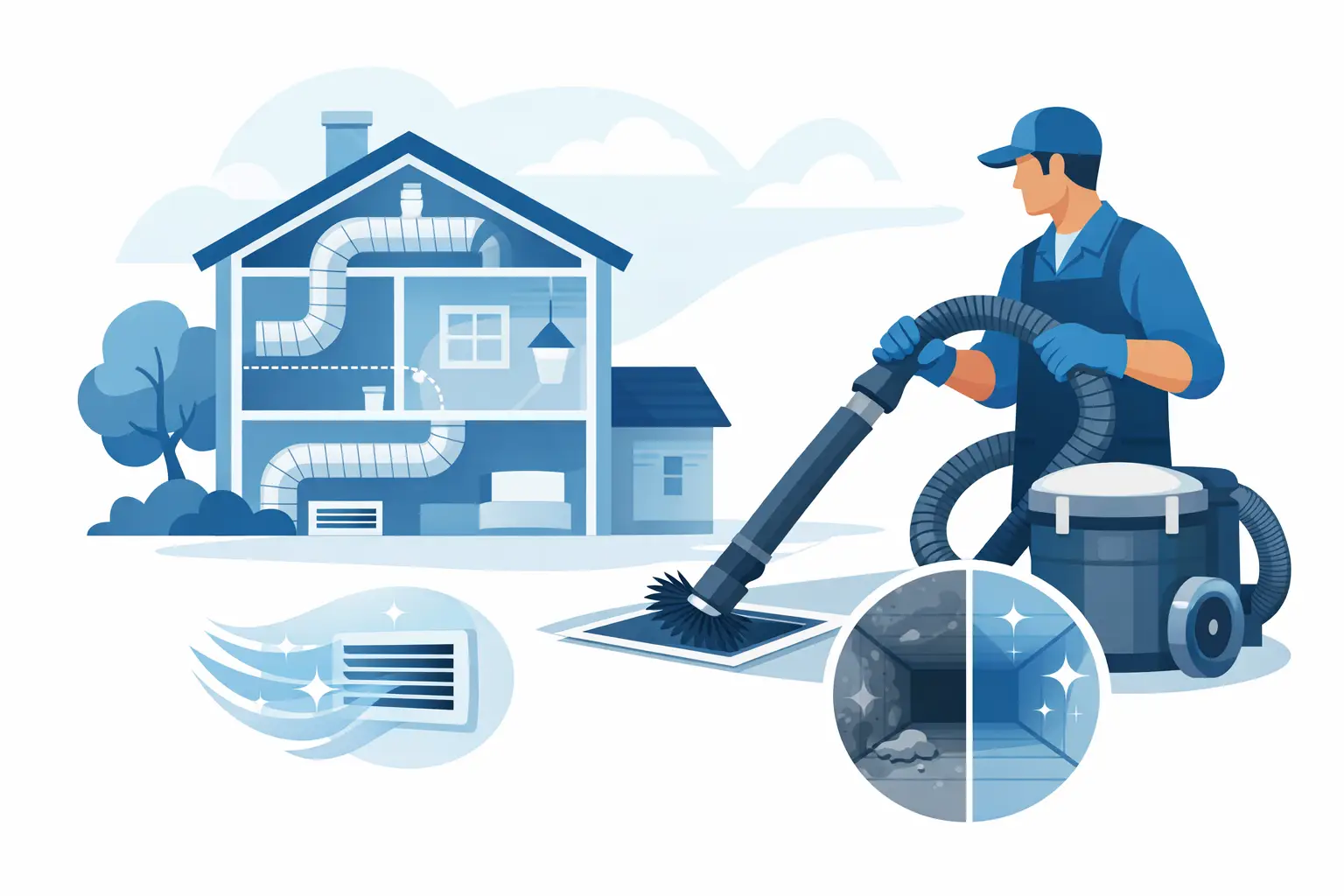
Dust on the furniture two days after cleaning is frustrating. Musty air when the heat or AC starts is worse. This residential air duct cleaning guide gives Carolina homeowners a practical way to decide when their HVAC system needs attention, what a proper cleaning looks like, and how to avoid a rushed, low-quality job.
Your ductwork is out of sight, but it moves the air your family breathes every day. Over time, dust, pet hair, pollen, construction debris, and other buildup can collect inside the system. A professional cleaning is not a cure-all for every indoor air problem, but when the system is dirty, it is a straightforward way to improve cleanliness where it counts.
What Residential Air Duct Cleaning Actually Does
Professional air duct cleaning removes accumulated debris from the parts of your HVAC system that carry and circulate air. That can include supply ducts, return ducts, registers, grilles, and accessible components around the air handler.
A qualified crew uses proper containment, negative-air equipment, and agitation tools to loosen debris and collect it rather than simply blowing it farther through the house. The goal is a visibly cleaner ventilation system and less loose dust circulating through your home.
This service works best when there is a real reason for it. If your system is clean, your filters are changed regularly, and there are no odor or dust concerns, an immediate cleaning may not be necessary. Honest service means looking at the condition of the system first, not selling work your home does not need.
Signs Your Home May Need Duct Cleaning
There is no one calendar date that fits every house. A home with several pets, recent remodeling, smokers, allergy concerns, or a busy household may need service sooner than a lightly used home with good filtration.
Pay attention to what you can see and smell. Dust blowing from registers, dark buildup around vent covers, stale odors when the system runs, or a heavy layer of dust returning quickly after housekeeping can point to debris inside the system. A visible buildup around return vents is especially common because those openings pull air and dust back into the HVAC system.
Recent construction is another clear reason to inspect the ductwork. Drywall dust, sawdust, insulation fibers, and other job-site debris can enter vents even when contractors try to cover them. New flooring, major repairs, and renovations often leave more behind than homeowners expect.
You may also want service after moving into a previously owned home. You do not know the former owner’s filter habits, pet history, or whether the ducts were ever cleaned. Starting with a clean system gives you a better baseline for ongoing maintenance.
When Duct Cleaning May Not Be the Main Fix
Dirty ducts are only one possible source of poor air quality or HVAC trouble. If airflow is weak in one room, the issue may be a closed damper, a disconnected duct, an undersized return, or a mechanical problem with the equipment. If you smell mildew, the source could be a drain line, coil, crawlspace moisture, or another area that needs separate attention.
Cleaning does not replace filter changes, HVAC maintenance, or moisture control. A high-quality filter that fits properly and is changed on schedule is one of the simplest ways to keep your system cleaner after service. If there is active mold growth, water damage, pest activity, or damaged ductwork, those problems should be identified and corrected, not covered up with a quick cleaning.
The right approach is practical: clean what is dirty, repair what is broken, and address the cause of recurring buildup.
What a Proper Residential Air Duct Cleaning Visit Includes
A thorough job begins with an inspection and a clear explanation of the work. The technician should identify accessible supply and return lines, assess the condition of registers and vents, and let you know if they find unusual debris, damage, or areas that need follow-up.
During cleaning, the crew should protect floors and nearby surfaces, access the system carefully, and use professional equipment designed to capture debris. A simple shop vacuum at each vent is not a complete duct cleaning. Good service addresses the main trunk lines and returns, not just the easiest openings to reach.
The exact process depends on the layout of your home. Older homes, multi-story homes, flex duct systems, and systems with limited access may take more planning. That is normal. The work should be done carefully without damaging duct material, registers, or HVAC components.
Before the crew leaves, you should have a clean work area and a straightforward answer about what was found. Carolinas Air Duct Cleaning Service focuses on certified service, thorough results, and practical recommendations without making the process harder than it needs to be.
How to Choose an Air Duct Cleaning Company
Price matters, but the lowest advertised price can become expensive if it only covers a few vents or leads to pressure for unnecessary add-ons. Ask what is included before you book. A clear quote should explain whether the service covers supply ducts, return ducts, the main lines, and accessible system components.
Look for a company that can explain its equipment and process in plain language. You should not need a technical sales pitch to understand what is being cleaned. Professional technicians should respect your home, protect the work area, and take the time needed to complete the agreed scope of work.
Be cautious when a company promises a whole-house cleaning at an unusually low price without asking about your home’s size, number of systems, or duct layout. Also be wary of claims that duct cleaning alone will solve every allergy, health, or HVAC issue. Good companies make reasonable recommendations based on what they can actually see.
A dependable provider will answer direct questions about pricing, timing, preparation, and whether dryer vent cleaning can be completed during the same visit. That kind of clarity is usually a good sign before anyone arrives at your door.
Do Not Forget the Dryer Vent
Your dryer vent is separate from your HVAC ductwork, but it deserves the same attention. Lint can build up in the vent line and reduce airflow, leaving clothes damp, making drying cycles longer, and forcing the dryer to work harder.
More importantly, lint is combustible. A restricted dryer vent is a preventable fire risk. If clothes take more than one cycle to dry, the laundry room feels unusually hot, or you notice a burning smell, stop using the dryer until the vent can be checked.
For many homeowners, scheduling dryer vent cleaning with air duct cleaning is a sensible way to handle two important maintenance jobs at once.
How to Prepare for Your Appointment
You do not need to do much. Clear a path to supply and return vents, move fragile items away from work areas, and make sure the crew can reach the thermostat and HVAC equipment. If you have pets, keep them secure during the visit so doors can be opened and equipment can be moved safely.
Let the technicians know about rooms with limited access, recent renovations, known duct damage, or concerns such as odors and excessive dust. Those details help the crew focus on the areas that matter most to you.
After cleaning, keep up with regular filter changes and watch how the system performs. A clean duct system stays cleaner longer when filters fit correctly, return vents are kept clear, and household dust is controlled at the source.
Clean air starts with a system that is not carrying yesterday’s dust through every room. If your vents show buildup, your home has been renovated, or your dryer is taking too long to dry clothes, a professional inspection can give you a clear next step and peace of mind.