
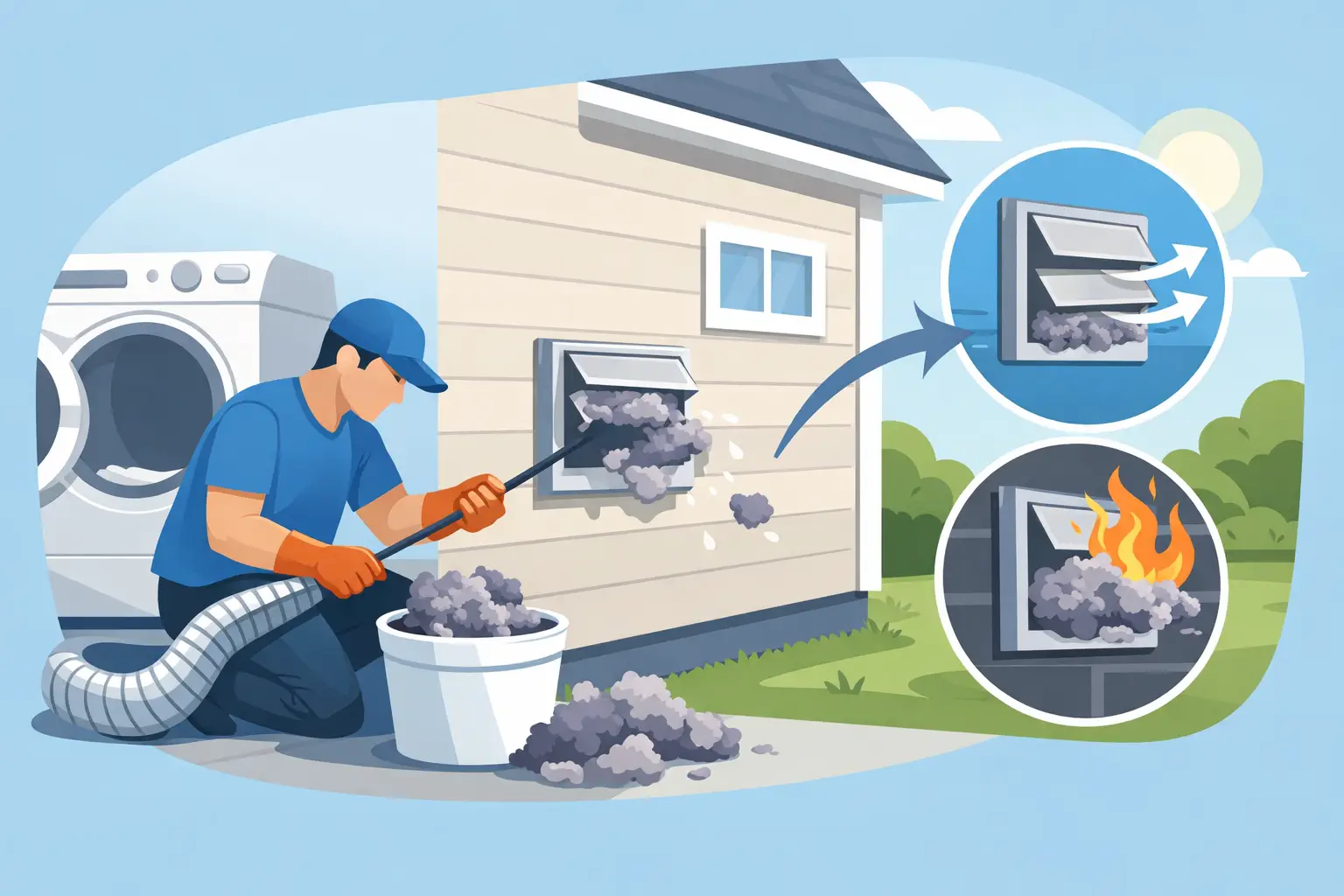
A dryer that suddenly takes two or three cycles to dry a normal load is not just frustrating. It can be a warning that lint is collecting where you cannot see it. Knowing how to prevent lint vent buildup helps protect your home, keeps laundry moving, and reduces unnecessary wear on your dryer.
Lint is highly flammable. A little on the lint screen is expected. Lint packed inside the vent pipe, behind the dryer, or around the outside vent hood is a different problem. The good news is that routine habits and professional cleaning can keep buildup under control.
Why lint buildup happens
Every load of laundry sheds fibers. Towels, fleece, flannel, pet bedding, and older clothes tend to produce even more lint than smooth, lightweight fabrics. The dryer lint screen catches much of it, but not all of it. Fine fibers can get past the screen and travel into the dryer vent.
As air moves through the vent, lint can cling to bends, seams, damp spots, and rough surfaces inside the duct. A long vent route or one with several turns gives lint more places to settle. Over time, the opening gets narrower, airflow drops, and the dryer has to work harder to push hot, moist air outside.
Poor airflow is often the real issue. A crushed transition hose behind the dryer, a stuck exterior vent flap, or a bird nest at the outlet can all trap lint inside the system. Even a newer dryer can develop a vent problem if the airflow path is restricted.
How to prevent lint vent buildup with every load
The simplest habit is also the most effective: clean the lint screen before every drying cycle. Pull the screen out, remove the lint by hand, and put it back in place before starting the dryer. Do not wait until the screen looks completely covered. A thin layer can still reduce airflow.
Once a month, wash the lint screen with warm water and mild dish soap. Dryer sheets, fabric softener, and detergent residue can leave a nearly invisible coating on the mesh. That coating blocks air even when the screen appears clean. Let the screen dry fully before reinstalling it.
Avoid overloading the dryer. Large, tightly packed loads create more lint and make it harder for air to circulate through the drum. Clothes may stay damp longer, which means the dryer runs longer and sends more lint through the vent system. Two reasonable loads are safer and usually faster than one overloaded load.
It also helps to shake out towels, blankets, and pet bedding before putting them in the dryer. This will not eliminate lint, but it can reduce the loose fibers entering the machine. If you regularly wash items covered in pet hair, remove as much hair as possible first. Hair combines with lint and can create dense clogs that are harder to remove.
Keep the dryer vent path clear
The short duct that connects the dryer to the wall is easy to overlook. It should be as short and straight as the installation allows, without sharp kinks or a crushed section behind the appliance. If the dryer is pushed too close to the wall, it can flatten the connection and severely limit airflow.
A rigid or semi-rigid metal transition duct is generally the right choice for most dryer connections. Thin plastic or foil-style ducts can sag, tear, and catch lint in their ridges. They also present a greater fire risk. If you are unsure what is behind your dryer, have a qualified technician inspect it rather than trying to redesign the connection yourself.
Check the outside dryer vent hood every few months. When the dryer is running, the flap should open freely and release warm air outside. If the flap barely moves, lint may be clogging the line. Remove visible lint around the hood carefully, but do not reach deep into the vent with improvised tools that may compact the blockage or damage the duct.
Keep landscaping, mulch, storage items, and snow away from the exterior outlet. The vent needs open space to exhaust properly. For homes in the Carolinas, seasonal pollen, leaves, insects, and nesting materials can also collect around the exterior hood. A quick visual check can prevent a small obstruction from turning into a major airflow problem.
Watch for signs that your vent needs cleaning
Dryer vent buildup does not always announce itself with a visible pile of lint. More often, the warning signs show up in your laundry routine. If clothes take longer than usual to dry, do not ignore it. A healthy dryer should dry a typical load in one normal cycle, depending on fabric type and load size.
Other warning signs include a dryer that feels unusually hot, a burning smell, a laundry room that becomes humid during a cycle, or an exterior vent flap that does not open. You may also notice lint collecting behind the dryer or on clothing after the cycle is finished.
These signs do not automatically mean the dryer itself has failed. In many cases, restricted vent airflow is the cause. Continuing to run the dryer with poor airflow can raise energy use, shorten the appliance’s life, and increase the chance of overheating.
Set a realistic cleaning schedule
For most households, professional dryer vent cleaning once a year is a practical baseline. That schedule may need to be more frequent if you have a large family, wash several loads a week, own pets, or run a home-based business that involves frequent laundry.
Vent design matters too. A short, straight vent may stay cleaner longer than a system that runs through an attic, crawl space, or multiple walls before reaching the exterior. Homes with long vent runs, several elbows, or roof exits should be checked more closely because those systems collect lint faster and are harder to clean thoroughly without the right equipment.
Landlords and small property operators should make dryer vent service part of regular property maintenance. Tenants may clean the lint screen, but the full vent route is usually out of sight and out of reach. Regular service helps prevent avoidable disruptions, protects equipment, and gives residents a safer laundry area.
Do not rely on quick fixes
A vacuum attachment or dryer vent brush can remove some lint near the opening, but it may not reach the full length of the duct. This is especially true in homes with long or winding vent lines. Pushing a brush too aggressively can disconnect a duct joint, tear flexible material, or pack lint farther into the line.
The same goes for repeatedly running the dryer on high heat to “burn off” a problem. Heat does not remove lint buildup. It can make an already restricted system more dangerous. If drying times are increasing or you suspect a blockage, stop treating it as a minor inconvenience.
Professional dryer vent cleaning uses purpose-built equipment to remove lint from the full vent path, not just the visible sections. A trained technician can also identify crushed ducts, damaged connections, blocked exterior hoods, and other conditions that routine cleaning alone will not fix.
Make prevention part of home maintenance
Preventing lint vent buildup is not complicated, but it does require consistency. Clean the lint screen every load, keep the outside vent open, avoid overfilling the dryer, and pay attention when drying times change. Those small actions protect airflow between professional cleanings.
When the vent has not been cleaned in a year, the dryer is overheating, or clothes are taking too long to dry, it is time for a thorough inspection and cleaning. Carolinas Air Duct Cleaning Service provides professional dryer vent cleaning with the direct, dependable service homeowners and property managers expect.
A clean dryer vent lets your dryer do its job without working overtime. Give the system regular attention now, and you can spend less time waiting on damp laundry and more time knowing your home is safer.