
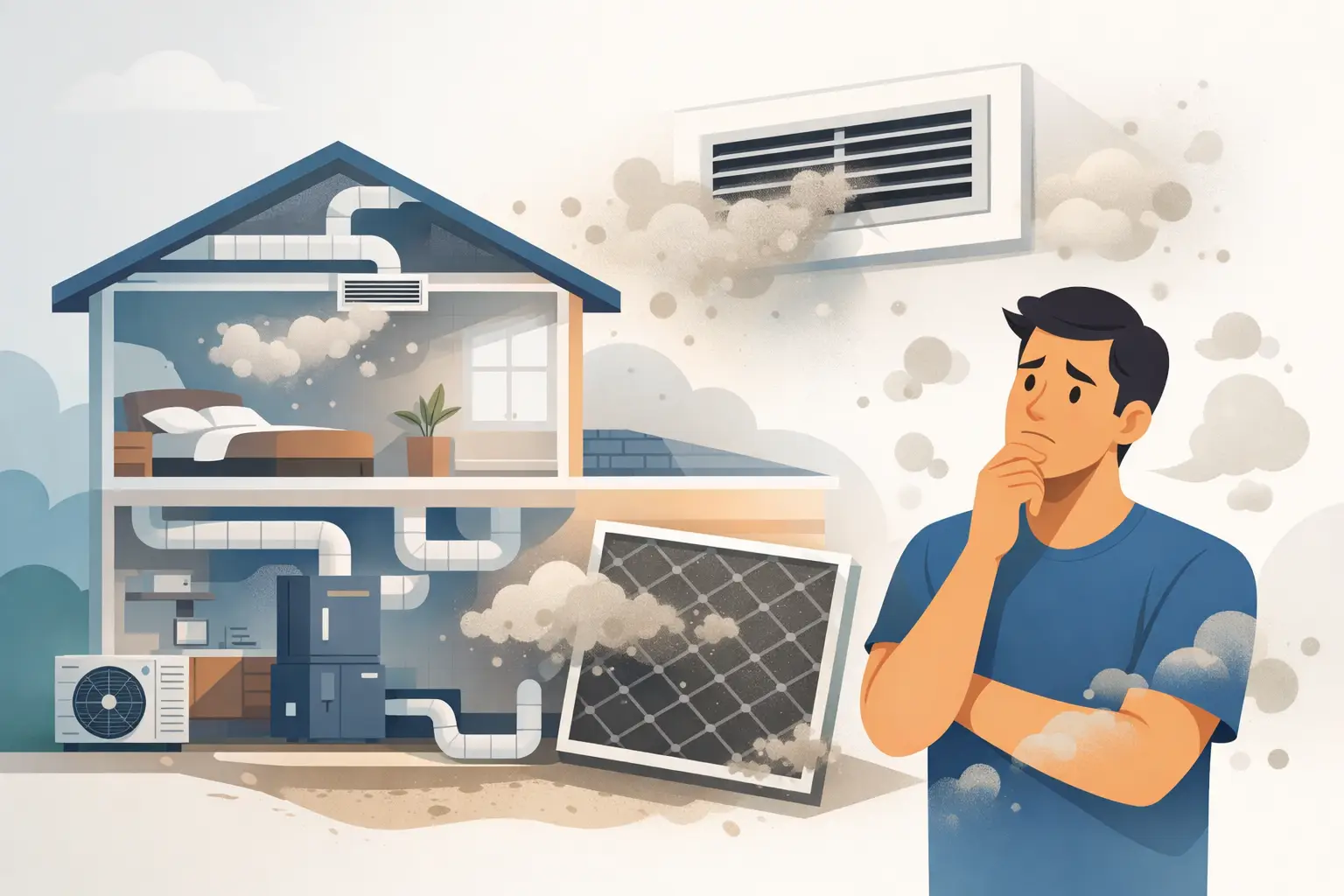
You clean the furniture on Saturday, and by Tuesday there is a fresh layer of dust on the TV stand, window sills, and floors. If you have a dusty house from vents, the HVAC system may be moving more than conditioned air. It can circulate everyday household dust, but it may also pull in debris from attics, crawl spaces, wall cavities, or neglected ductwork.
The good news is that heavy dust is usually a problem you can narrow down. The right fix depends on where the dust is coming from. Replacing a filter can help in some homes. In others, dirty return ducts, air leaks, or construction debris are the real issue.
Why a Dusty House From Vents Happens
Your HVAC system moves a large volume of air every day. That air passes through return vents, a filter, the indoor equipment, supply ducts, and finally the registers in each room. If any part of that path is dirty, poorly sealed, or not filtering correctly, dust can keep making its way back into your living space.
A common cause is a filter that is overdue for replacement, installed backward, or too thin for the amount of dust in the home. A filter cannot catch what air bypasses around it, either. Gaps around a poorly fitted filter can allow unfiltered air and debris to enter the system.
Return-side duct leaks are another frequent problem. Return ducts pull air back to the HVAC unit. If they have loose connections or gaps in an attic, crawl space, garage, or basement, they can pull dusty air from those areas into the system. That dust may include insulation fibers, dirt, pet hair, and construction material.
Dirty ducts can also contribute, especially after remodeling, a move, water damage, pest activity, or years of missed maintenance. Duct cleaning is not a cure for every dust problem. But when there is visible buildup, debris, or contamination inside the system, leaving it there allows the HVAC equipment to keep moving particles through the home.
Signs the Dust Is Actually Coming From Your HVAC System
Dust near a vent does not automatically mean the ducts are dirty. Air movement can make nearby surfaces collect dust faster, and some supply registers naturally create a small dust pattern around the grille. What matters is whether the problem is widespread, persistent, or clearly linked to system operation.
Start by paying attention to timing. If dust becomes noticeably worse when the heat or air conditioning runs, that is a useful clue. You may also see dust collecting around multiple supply registers, find debris inside return vents, or notice that rooms get dusty quickly even after a thorough cleaning.
Look at the filter before you make assumptions. A filter covered in gray material, pet hair, or fine dust may be overdue. Check that it fits securely and that the airflow arrow points toward the HVAC equipment. Most homes need a filter change every one to three months, but homes with pets, active families, renovations, or heavy seasonal pollen may need more frequent changes.
Also inspect accessible vent covers. Remove a supply register and use a flashlight to look just inside. A light coating of dust is normal. Heavy clumps, drywall dust, loose insulation, insect remains, or visible debris are not signs to ignore. Avoid reaching deep into the duct with household tools, which can damage flexible ductwork or push debris farther into the system.
Common Sources of HVAC Dust
Dirty return vents and return ducts
Return vents collect air from your rooms, so they often show the first evidence of a dust problem. Their grilles can become coated with lint, pet hair, and fine debris. When the return duct system itself is dirty, it can keep feeding buildup toward the air handler and blower.
Return ducts deserve special attention because they operate under negative pressure. Even a small unsealed gap can draw in dusty air from places you do not want mixed with your household air.
Leaks around ducts and equipment
A duct leak does not have to be large to matter. Leaks near the air handler, filter cabinet, return plenum, or attic duct connections can allow dirt into the system before air reaches the filter. Supply duct leaks can also stir up dust in cavities and reduce the amount of conditioned air reaching your rooms.
Sealing leaks is a repair job, not a cleaning job. A thorough inspection can help separate a duct-cleaning need from a duct-repair need. Doing the right service first saves money and prevents the same dust issue from returning.
Remodeling and construction dust
Drywall sanding, flooring work, cabinet installation, and other projects create fine particles that travel easily. Even when contractors cover furniture, dust can find its way into returns and settle inside ductwork. Newer homes may also contain leftover construction debris if the system was run before the building was fully cleaned.
If your dust problem began after a project, it is reasonable to inspect the HVAC system. A standard filter change may not be enough when fine dust has settled throughout the return and supply ducts.
Everyday dust, pets, and Carolina pollen
Some dust is simply part of living in a home. Pet dander, fabric fibers, skin cells, outdoor soil, and seasonal pollen all enter the mix. In the Carolinas, pollen seasons can be especially tough, and open doors, windows, shoes, and busy households bring more particles inside.
Air duct cleaning will not stop new dust from entering your home. What it can do is remove accumulated debris already inside the ventilation system, so your HVAC equipment starts from a cleaner point.
What You Can Do Before Scheduling Service
Begin with the simple maintenance items. Replace the filter with the correct size and type for your system. Vacuum the return grilles and the surface of supply registers. Keep furniture, rugs, and curtains from blocking returns, since restricted airflow can make the system work harder.
Use a quality filter that your HVAC system can handle. A very high-rated filter may capture finer particles, but it can also restrict airflow if the equipment was not designed for it or if it is not changed regularly. If you are unsure which filter is right, ask an HVAC professional rather than choosing the highest number on the shelf.
Check for obvious trouble around the air handler. Dusty insulation, loose duct connections, a filter door that does not close properly, or visible gaps around return ductwork are worth addressing. Do not use duct tape as a permanent repair. It often fails in hot attics and humid crawl spaces.
Keep expectations realistic. Cleaning registers and changing filters are good habits, but they do not remove buildup from the full duct system. They also will not fix a return leak that is pulling dirty air from outside the living area.
When Professional Air Duct Cleaning Makes Sense
Professional cleaning is a practical choice when the system has visible debris, heavy dust buildup, post-construction dust, pest-related contamination, or a long history of neglected maintenance. It may also make sense after a home purchase, particularly when you do not know how the previous owner maintained the HVAC system.
A proper service should address the duct system, returns, supply vents, and accessible HVAC components as appropriate. The goal is not just to make vent covers look clean. It is to remove built-up dust and debris from the pathways where your system moves air.
Be careful with bargain offers that promise whole-house cleaning at an unrealistically low price and then add charges after arriving. Ask what areas are included, whether the technicians are trained and certified, and whether they will explain what they find. Straight answers matter when someone is working inside your home’s ventilation system.
Carolinas Air Duct Cleaning Service provides professional cleaning for homeowners, landlords, and light commercial properties that need a cleaner HVAC system without unnecessary complications. A qualified technician can help determine whether duct cleaning, a repair, or basic filter maintenance is the right next step.
Keep Dust From Building Up Again
After the source is handled, regular maintenance keeps the improvement going. Change filters on schedule, vacuum return grilles, and keep the area around the indoor HVAC unit clean. During renovations, cover returns when work is actively creating dust, then remove the covers before operating the system so airflow is not restricted.
If you have pets or high foot traffic, clean more often than a low-activity household. If you notice dust returning quickly after professional cleaning, do not assume the cleaning failed. That is often the sign of an unsealed return, an equipment issue, a poor filter fit, or an ongoing source of dust in the home.
A clean home should not feel like a daily losing battle. Start with the filter, watch how your system behaves, and have the ductwork checked when the signs point beyond normal household dust.