
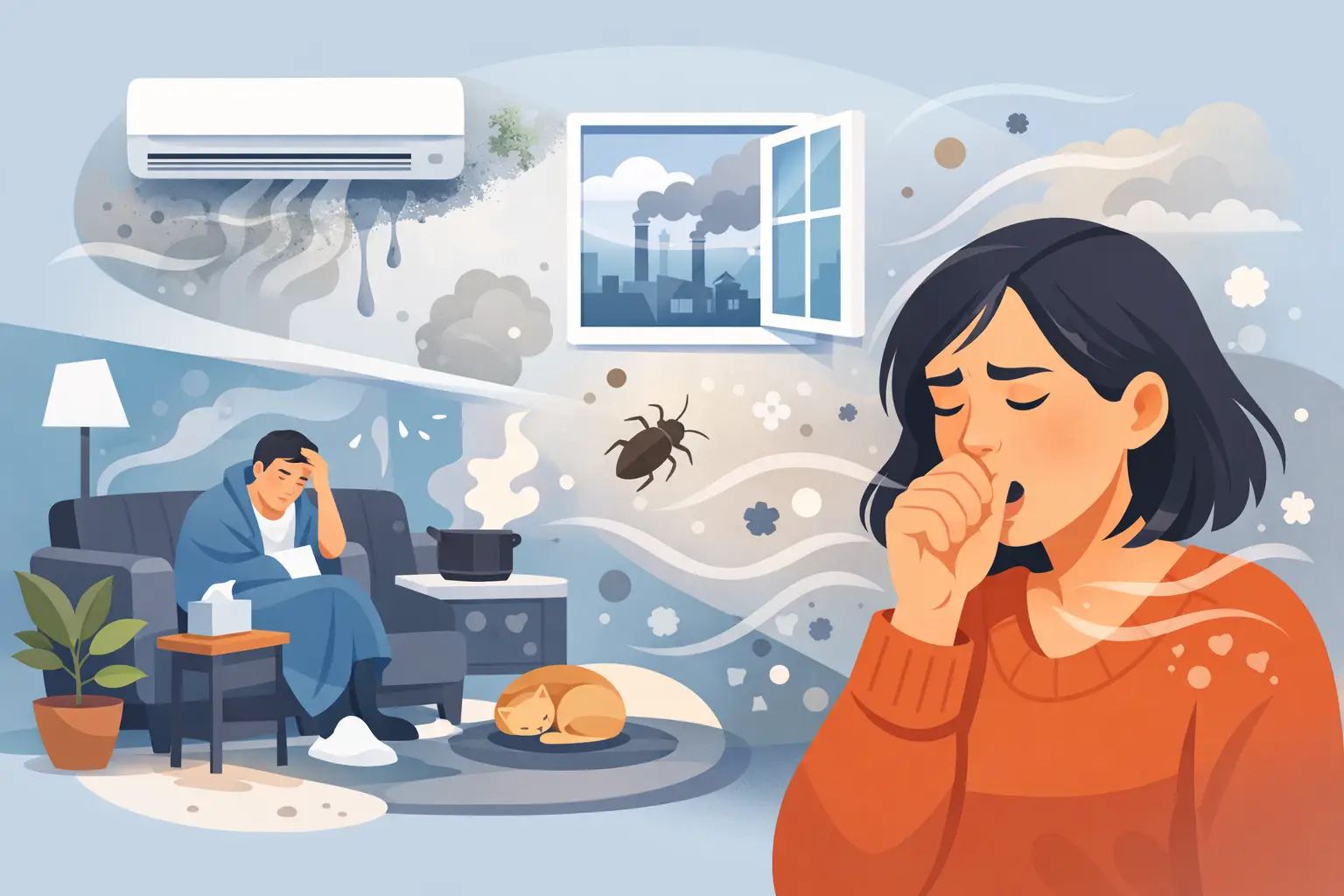
You change the filter, wipe the furniture, and still the house feels dusty, stuffy, or off. That is often how the warning signs of poor indoor air show up – not as one dramatic problem, but as a steady pattern that gets harder to ignore.
For homeowners, renters, landlords, and small business operators, indoor air problems usually start small. A room smells musty. Dust builds up faster than it should. Someone in the house keeps waking up congested. When that keeps happening, it is worth paying attention. Poor indoor air is not just unpleasant. It can point to buildup in the duct system, weak airflow, excess moisture, or other issues that affect comfort, cleanliness, and HVAC performance.
Why poor indoor air often gets missed
Most people expect bad air to be obvious. Sometimes it is. More often, it blends into everyday life. You get used to the smell. You assume the dust is normal. You blame allergy season, pets, or the weather.
The problem is that indoor air quality tends to decline gradually. If your ductwork has collected dust and debris over time, or your vents are moving contaminated air through the home, the signs can look minor on their own. Taken together, they usually tell a clearer story.
1. Dust comes back almost right away
A little household dust is normal. Dust covering surfaces again a day or two after cleaning is not. If you wipe down shelves, tables, and vents and the layer returns quickly, your HVAC system may be circulating dust through the home.
That does not automatically mean the ducts are the only cause. Leaky windows, old filters, renovation debris, and high foot traffic can all contribute. Still, when the dust is constant and seems to settle everywhere, the ventilation system is one of the first places to look.
2. Your house smells stale, musty, or dirty
Indoor air should not smell heavy. If you notice a stale odor that lingers even after cleaning, there may be contaminants moving through the system or trapped inside it. Musty smells can point to moisture issues. Dirty or burnt smells can come from buildup around vents and HVAC components.
Odors matter because they often signal that the air is carrying more than it should. Air fresheners may cover the smell for a while, but they do not fix the source. If the same odor returns when the system kicks on, that is a strong clue the issue is tied to airflow or ductwork.
3. Allergy and sinus symptoms get worse indoors
One of the clearest warning signs of poor indoor air is this simple pattern: people feel worse inside than outside. Sneezing, itchy eyes, sinus pressure, coughing, headaches, or morning congestion can all be linked to what is circulating indoors.
This is especially common in homes with pets, older duct systems, recent remodeling, or long gaps between cleanings and filter changes. To be fair, symptoms alone do not prove the air is the problem. Seasonal pollen, mold, humidity, and other health factors can overlap. But if relief comes when you leave the building and returns when you come back, indoor air deserves a closer look.
4. Vents look dirty around the edges
Take a look at the supply and return vents. If you see dark streaks, dust mats, or buildup around the covers, air is likely pushing particles in and out on a regular basis. That visible dirt is often only part of what is sitting deeper inside the system.
This is one of those signs people overlook because the vent still seems to be working. Airflow may be happening, but clean airflow is a different standard. When vent covers collect grime fast, it usually means the system needs more attention than a quick wipe-down.
5. Some rooms feel stuffy or harder to breathe in
Not every indoor air problem affects the whole property the same way. Sometimes one bedroom feels stale, an office gets stuffy every afternoon, or a back room always seems heavier than the rest of the house.
That can happen because of restricted airflow, debris in parts of the duct system, poor circulation, or a ventilation imbalance. It can also point to room-specific moisture issues. The main point is this: when certain rooms consistently feel uncomfortable for no clear reason, the air delivery system may not be performing the way it should.
6. You notice more pet hair, debris, and lint moving through the house
Homes with pets naturally deal with more airborne particles. The same goes for properties near construction, busy roads, or high-pollen areas. But when pet hair, lint, and fine debris seem to travel from room to room, the HVAC system may be helping spread it.
This matters for comfort, but also for cleanliness. If the system is pulling in and recirculating buildup, it can keep the indoor space from ever really feeling clean. That is frustrating for families, tenants, and business owners alike, especially when they are already doing regular housekeeping.
7. The HVAC system seems to run, but the air still feels dirty
A working system is not always a clean system. Heating and cooling can still happen while the air quality remains poor. In fact, some property owners assume everything is fine because the house reaches the set temperature.
Temperature control and indoor air quality are related, but they are not the same thing. If the system runs often, yet the home still feels dusty, stale, or irritating to breathe in, there may be buildup affecting what the system is moving through the vents.
8. Recent renovation or construction left behind fine dust
Even a small remodeling project can create a lot of airborne dust. Drywall particles, sawdust, insulation fibers, and other debris have a way of getting into vents and settling inside the system. Once that happens, the material may continue circulating long after the work is done.
This is a common issue in both homes and light commercial spaces. You finish the project, clean up the visible mess, and expect things to return to normal. Then the dust keeps showing up. That is often a sign that the cleanup needs to go beyond floors and countertops.
9. You cannot remember the last time the ducts were cleaned
Sometimes the biggest red flag is simple neglect. If the system has gone years without professional attention, there is a good chance dust and debris have had plenty of time to build up. That does not mean every older system is in bad shape, but it does increase the odds.
It depends on the property. A newer home with good filtration may stay cleaner longer. A house with pets, smokers, past water issues, or heavy system use may need attention sooner. The point is not to guess. The point is to stop assuming the system is clean just because it is out of sight.
What causes these warning signs of poor indoor air?
In many properties, the issue comes down to a mix of everyday buildup and limited maintenance. Dust, dander, pollen, lint, and debris collect over time. Moisture can add another layer of trouble. Once those materials settle in the duct system or around air-moving components, they can keep cycling through the space.
Poor filtration, clogged vents, old return grilles, and neglected dryer vents can also affect the overall environment. Not every air quality complaint has the same root cause, which is why quick fixes do not always solve it. Replacing a filter helps. Opening a window helps. But if the system itself is dirty, those steps only go so far.
When it is time to stop guessing
If you are seeing one of these problems once in a while, it may not mean much. If you are seeing several at the same time, it is worth taking seriously. Fast dust buildup, stale odors, visible vent dirt, and worsening indoor symptoms usually do not correct themselves.
This is where a professional inspection and cleaning can make a real difference. A certified crew can tell the difference between a minor issue and a system that needs a thorough cleaning. That saves time, cuts down on trial and error, and gives you a clearer path forward.
For property owners in the Carolinas, this is not about overthinking air quality. It is about noticing what your home or building is already telling you. When the air feels dirty, the dust will not quit, or the vents look overdue, getting the system cleaned is often the most practical next step.
Clean air should not be a guessing game. If your space has been showing these signs for a while, trust what you are seeing and deal with it before it becomes your new normal.
Pingback: Can Dirty Ducts Worsen Asthma Symptoms at Home? – Carolinas Air Duct Cleaning Service