
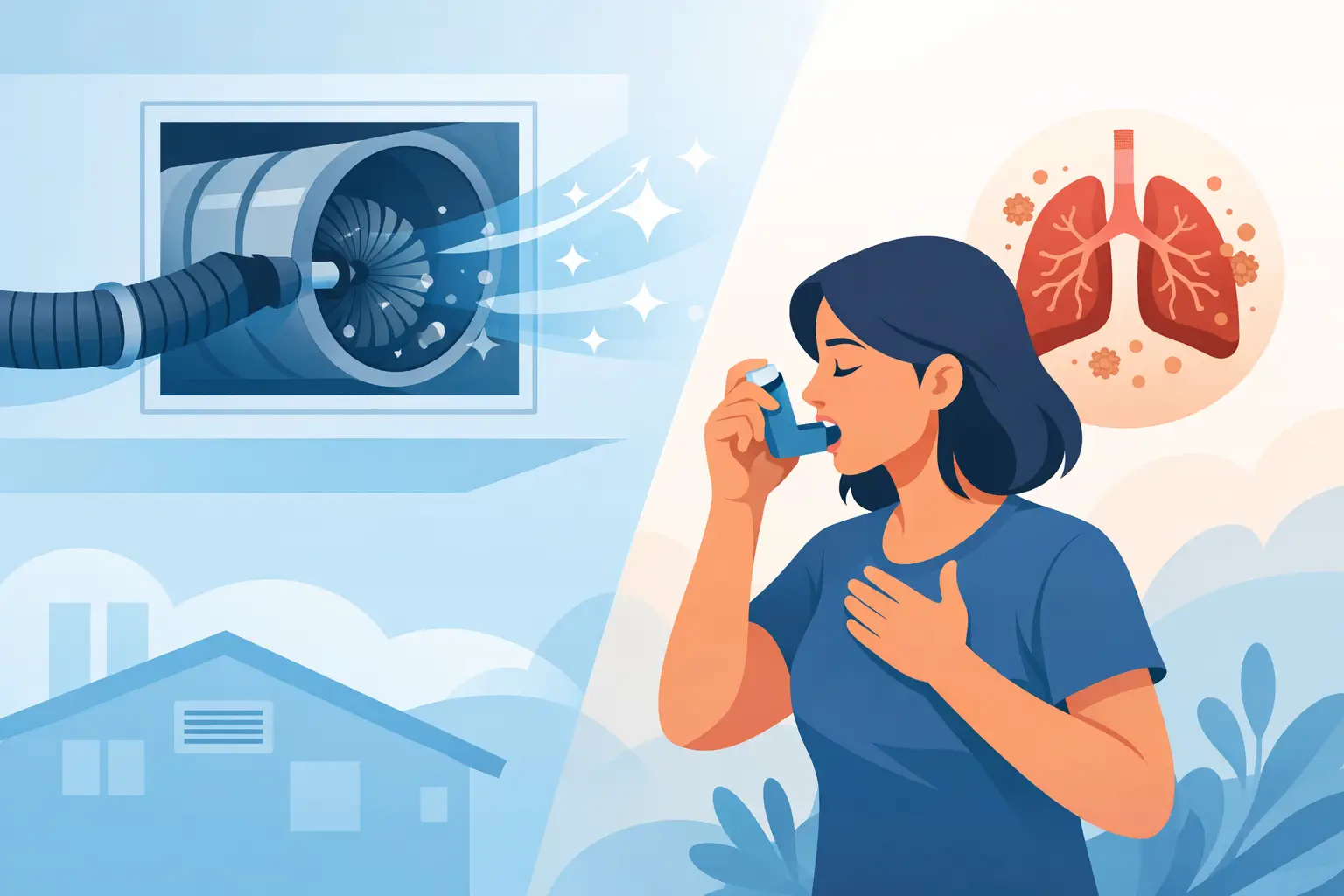
If someone in your home has asthma, you notice the small things fast. A room that feels dusty. Vents that push out stale air. More coughing at night. More irritation when the heat or AC kicks on. That is why many homeowners ask about air duct cleaning for asthma and whether it can make a real difference.
The honest answer is simple. Sometimes yes, sometimes no.
Air duct cleaning is not a cure for asthma. It is not a replacement for medical care, medication, or a full plan to control triggers in the home. But if your ductwork is holding heavy dust, debris, pet dander, or other buildup, cleaning it can be one practical step toward a cleaner indoor environment. For some households, that matters.
When air duct cleaning for asthma can help
Asthma symptoms can be triggered by a range of indoor irritants. Dust is a common one. So are pet dander, pollen, mold particles, and dirty air moving through an HVAC system. If those materials are sitting inside the duct system and being pushed through the house, every heating or cooling cycle can add to the problem.
That does not mean the ducts are always the main source. In many homes, the bigger issues are old carpet, clogged filters, humidity, pet hair, or dust collecting on furniture and around return vents. Still, dirty ductwork can be part of the picture, especially in homes that have gone years without service, homes with recent remodeling work, or properties where the system was neglected by previous owners or tenants.
In those cases, a professional cleaning may help reduce the amount of loose debris circulating through the system. The goal is straightforward. Remove the buildup so the system is not constantly moving it back into the living space.
What air duct cleaning can and cannot do
This is where homeowners need straight answers.
Air duct cleaning can remove dust, dirt, and debris from the duct system. It can help clean out contamination left behind by construction, long-term neglect, pest issues, or heavy household dust. It may also improve how clean the home feels, especially when vents have visible buildup and rooms seem to get dusty again right after cleaning.
What it cannot do is guarantee that asthma symptoms will disappear. Asthma is complex. One person may react strongly to dust mites. Another may be more affected by mold, smoke, cleaning chemicals, or outdoor allergens coming inside. Even in a very clean home, flare-ups can still happen.
So the better way to look at it is this. Air duct cleaning for asthma is a support step, not a magic fix. If your HVAC system is dirty, cleaning it is a practical move. If the system is already clean and the real issue is moisture, filtration, or another indoor trigger, duct cleaning alone may not change much.
Signs your duct system may be making things worse
A lot of homeowners are not sure when duct cleaning is actually worth scheduling. There are usually a few clear clues.
If you see dust blowing from supply vents when the system starts, that is a warning sign. If vent covers are dark, dirty, or coated with buildup, the inside of the system may need attention too. The same goes for homes with musty odors when the air runs, heavy dust settling soon after cleaning, or a history of renovations that likely sent drywall dust and debris into the system.
Older homes and rental properties can be especially unpredictable. A family may move in and never realize the ducts have not been cleaned in many years. The HVAC system still runs, but the air quality feels off. For households managing asthma, that is not something to ignore.
Why professional service matters
Not all duct cleaning is the same. A rushed, low-cost job that only touches the vent covers is not going to do much. If the system is going to be cleaned, it needs to be done right.
That means using proper equipment, reaching the full duct system, and removing debris rather than just stirring it up. It also means working with certified technicians who know how to handle residential HVAC systems without causing damage or leaving a mess behind.
For homeowners in the Carolinas, that matters for another reason. Seasonal pollen, humidity, and year-round HVAC use can all add to indoor air quality concerns. A professional crew should understand how local conditions affect system cleanliness and know when a home needs more than a quick surface clean.
A dependable company will also be honest about what they see. If the ducts are dirty, they should show you. If the problem looks bigger than ductwork alone, they should say that too. Straight answers build trust.
Air duct cleaning for asthma works best with other steps
A clean duct system helps most when it is part of a bigger indoor air quality plan.
If asthma is a concern in your home, start with the basics. Change HVAC filters on schedule. Use the right filter for your system. Keep return vents clear. Control humidity. Vacuum with a quality machine that captures fine particles. Stay on top of dust, especially in bedrooms. If there is a moisture issue, fix it fast.
This is where some homeowners get disappointed. They schedule duct cleaning but leave an old filter in place, ignore visible mold around windows, or keep running a system with poor airflow and high humidity. The home still feels unhealthy, and they assume the cleaning did not work. Often the real issue is that several smaller problems are stacking up at once.
Duct cleaning is one step that can help reduce what is moving through the system. It just works better when the rest of the home is being managed properly too.
What to expect from a proper cleaning
A professional visit should feel organized and straightforward, not confusing.
The technicians should inspect the system, explain what they found, and clean the ductwork thoroughly. The work should focus on removing built-up dust and debris from the HVAC system, not masking odors or pushing unnecessary add-ons. When the job is done, the home should be left clean, and you should have a clearer sense of the condition of your system.
If you are hiring specifically because of asthma concerns, ask direct questions. Has the company handled homes with indoor air quality issues before? Are the technicians certified? Will they clean the full system instead of just the visible vents? Those are fair questions, and a good company will answer them without dancing around the details.
Carolinas Air Duct Cleaning Service builds its work around that kind of direct service – certified technicians, thorough cleaning, and no unnecessary runaround.
When it may not be the first thing to do
There are times when air duct cleaning is not the top priority.
If asthma symptoms are clearly tied to pets sleeping in the bedroom, indoor smoking, damp crawl space conditions, or poor filter maintenance, those issues may have a bigger impact than the ductwork. The same goes for homes where the ducts are relatively clean but the HVAC unit itself has drainage or moisture problems that need service.
That does not make duct cleaning a bad idea. It just means the best answer depends on the home. A trustworthy service provider should be willing to tell you when cleaning makes sense now, when it can wait, and when another issue should be addressed first.
How often should ducts be cleaned?
There is no one-size-fits-all schedule. Some homes can go years without needing service. Others should be cleaned sooner because of pets, renovations, heavy dust, allergies, smoking, or long-term neglect.
For households dealing with asthma, it makes sense to pay closer attention to warning signs instead of waiting for a set timeline. If the system is visibly dirty, if the home always feels dusty, or if indoor air seems worse when the HVAC runs, it is worth having the ductwork checked.
The key is not to overdo it or ignore it. Clean when there is a reason.
A cleaner HVAC system will not solve every asthma trigger in a home. But when dust and debris are sitting in the ductwork, removing them is practical, sensible maintenance. For families trying to make the air inside feel cleaner and easier to live with, that is often reason enough to take the next step.