
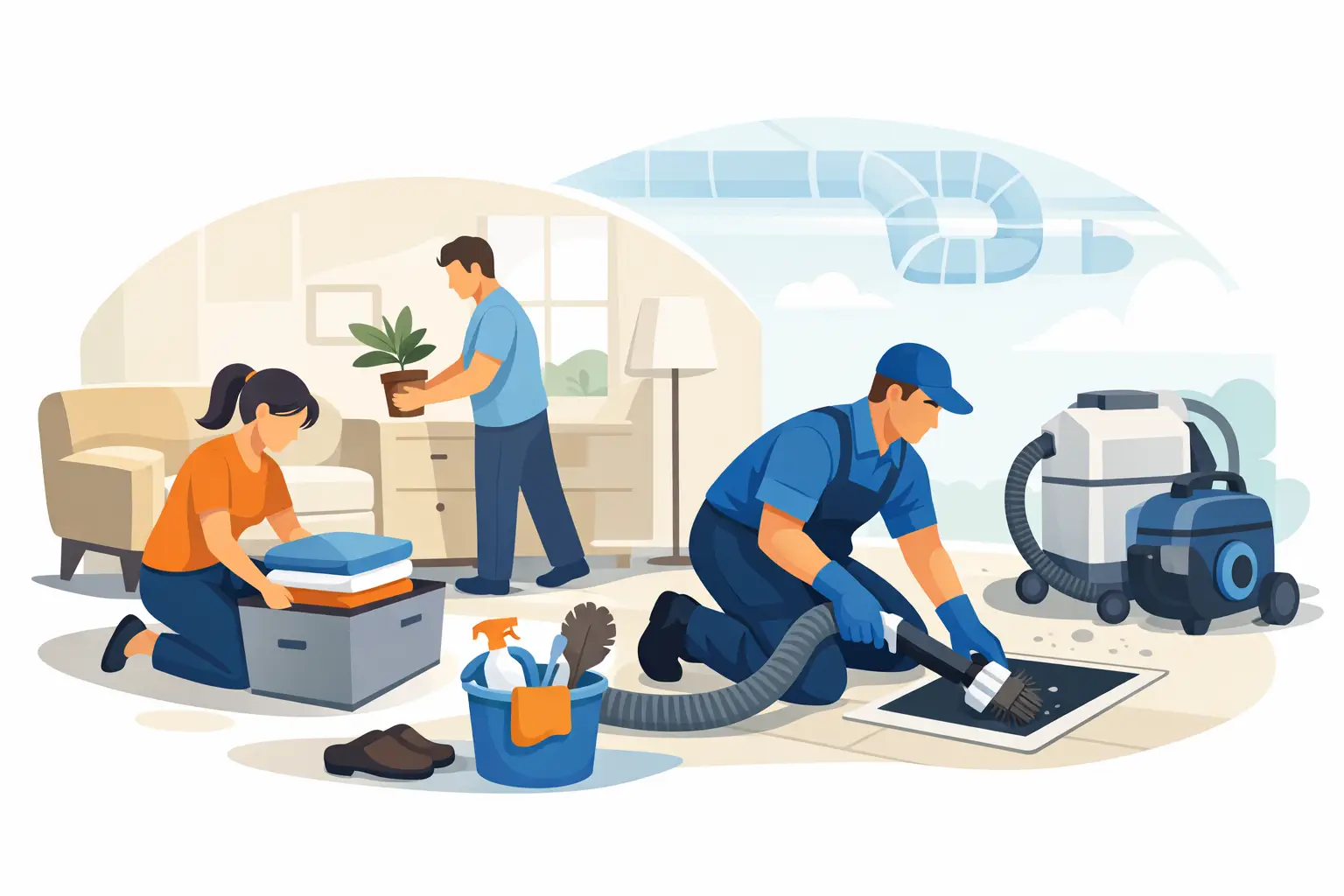
When your technician shows up, the last thing you want is to spend the first half hour moving furniture, clearing closets, or figuring out where the vents are. If you are wondering how to prepare for air duct cleaning, the good news is that it does not take much. A little prep makes the visit faster, easier, and cleaner from start to finish.
Most homeowners do not need to do anything complicated before a duct cleaning appointment. You are not taking apart vents or servicing the HVAC system yourself. Your job is simply to make the work area accessible, protect a few personal items, and make sure the crew can move through the home without delays. That is it.
Why preparation matters
Air duct cleaning is straightforward, but it is still a whole-home service. Technicians need access to supply vents, return vents, and the main HVAC components. If those areas are blocked by furniture, storage bins, rugs, or breakables, the job slows down. In some homes, limited access can also make it harder to clean every part as thoroughly as planned.
Preparation also helps protect your home. Moving a few fragile items ahead of time is easier than doing it in a rush when equipment is already coming through the door. And if you have kids, pets, or a work-from-home setup, thinking ahead keeps the appointment from disrupting your day more than necessary.
How to prepare for air duct cleaning before the crew arrives
The best approach is simple. Clear access, secure the home, and be ready to answer a few basic questions about your HVAC system.
Start by making sure every vent is reachable. That includes vents on the floor, wall, or ceiling, along with larger return air grilles. If a couch, bed, dresser, or table is covering a vent, move it enough to give the technician room to work. It does not have to be perfect. A few feet of space is usually enough.
Next, check the area around your furnace, air handler, or utility closet. This part gets overlooked all the time. If your HVAC unit is surrounded by boxes, cleaning supplies, holiday storage, or laundry items, clear it out before the appointment. The technician will likely need room for tools and direct access to the system.
If you have attic or crawlspace access tied to the duct system, it helps to make those entry points easy to reach too. Not every cleaning requires attic or crawlspace access, but in some homes it does. If there is a hatch in a closet or garage, clear the area so no time is lost.
Move fragile and valuable items out of the way
Professional crews work carefully, but air duct cleaning still involves hoses, equipment, tools, and movement from room to room. It is smart to move anything delicate that sits near vents, tight hallways, or work areas.
That may include floor lamps, small decor pieces, glass frames, ceramic items, or low furniture that tips easily. If you have expensive rugs near heavily used walkways, you may want to roll them back. If not, that is usually fine, but it depends on the layout of your home and how much equipment needs to come through.
This is also a good time to put away loose paperwork, jewelry, or personal items if the crew will be working in bedrooms, offices, or closets. Not because there is a problem, but because a tidy work area keeps everything simple.
What to do with pets and kids
If you have dogs, cats, or small children, plan ahead. Air duct cleaning equipment can be noisy, and exterior doors may open and close during setup. A nervous dog or curious toddler can turn a routine appointment into a stressful one fast.
The easiest fix is to keep pets in a secure room away from the main work zones or arrange for them to be out of the house during the cleaning. For kids, especially younger ones, it helps to keep them clear of the equipment and hoses. This is not a dangerous service when handled by trained professionals, but it is active work, and less foot traffic makes it easier for everyone.
If you work from home, think about noise too. You may want to shift calls or meetings away from the cleaning window, especially if the vents in your office are being serviced that day.
Should you dust or vacuum first?
This depends on what bothers you more, cleaning before the service or cleaning once after everything is done. In most cases, light housekeeping before the appointment is enough. You do not need to deep clean your house before professionals clean the ductwork.
If there is heavy dust around vents or returns, wiping that area down can help. It makes access easier and keeps loose debris from getting disturbed when vent covers are removed. But there is no need to overdo it.
A better move is to plan for a quick touch-up after the service if needed. Certified technicians should leave the work areas clean, but homeowners sometimes want to wipe surfaces or vacuum around vent locations afterward for peace of mind. That is normal.
Check your thermostat and HVAC access
One of the simplest parts of how to prepare for air duct cleaning is making sure the technician can access the thermostat and HVAC controls if needed. You do not need to know anything technical. Just make sure the path is clear and let the crew know if your system has any quirks.
For example, if the breaker panel is hard to find, if the utility closet sticks, or if one room has airflow issues you want checked, mention that at the start of the appointment. These details help the crew work more efficiently.
It also helps to replace any locked doors, gate codes, or alarm instructions with clear access ahead of time. For landlords and property managers, this matters even more. If a maintenance room or vacant unit is part of the job, confirm access before the technicians arrive.
Don’t forget the vents hidden by everyday living
In many homes, at least one or two vents are covered without anyone noticing. Area rugs, toy bins, dog beds, dressers, and shoe racks are common culprits. Walk room to room before the appointment and look for anything sitting directly over or in front of a vent.
This is especially common in bedrooms, bonus rooms, and home offices where furniture gets arranged for comfort, not service access. Moving those items in advance saves time and helps the cleaning go as planned.
Questions worth asking before the appointment
You do not need a long checklist, but a few quick questions can help avoid surprises. Ask how long the cleaning is expected to take, whether someone over 18 needs to be home the whole time, and whether the crew needs access to the attic, crawlspace, or exterior doors.
If you are scheduling service for a rental property or small commercial space, ask whether all vents and HVAC zones will be included. Different properties have different layouts, and it is better to clarify that before the work begins.
For Carolinas homeowners dealing with older houses, renovations, recent move-ins, or heavy dust buildup, it is also fair to mention that upfront. Older systems and post-construction dust can change how much cleaning is needed.
What not to do before air duct cleaning
There are a few things you should skip. Do not try to clean deep inside the duct openings yourself. Do not remove vent covers unless the company specifically asks you to. And do not spray cleaners, fragrances, or store-bought treatments into the vents before the appointment.
Those quick fixes do not replace a proper cleaning, and in some cases they just add residue or odors to the system. The better move is to leave the actual ductwork to certified professionals.
You also do not need to shut down your entire day preparing. This is not a remodel. It is a service call. Basic access and a clear path are usually all it takes.
How to know you are fully ready
If technicians can reach every vent, get to the HVAC unit, move safely through the home, and work without pets or clutter in the way, you are prepared. That is the standard. No complicated checklist. No guesswork.
A good air duct cleaning appointment should feel organized from the moment the crew arrives. When the home is ready, the work goes faster, the process stays cleaner, and the results are easier to see. If you want air duct cleaning done right, a little prep on the front end helps the whole job go smoother.