
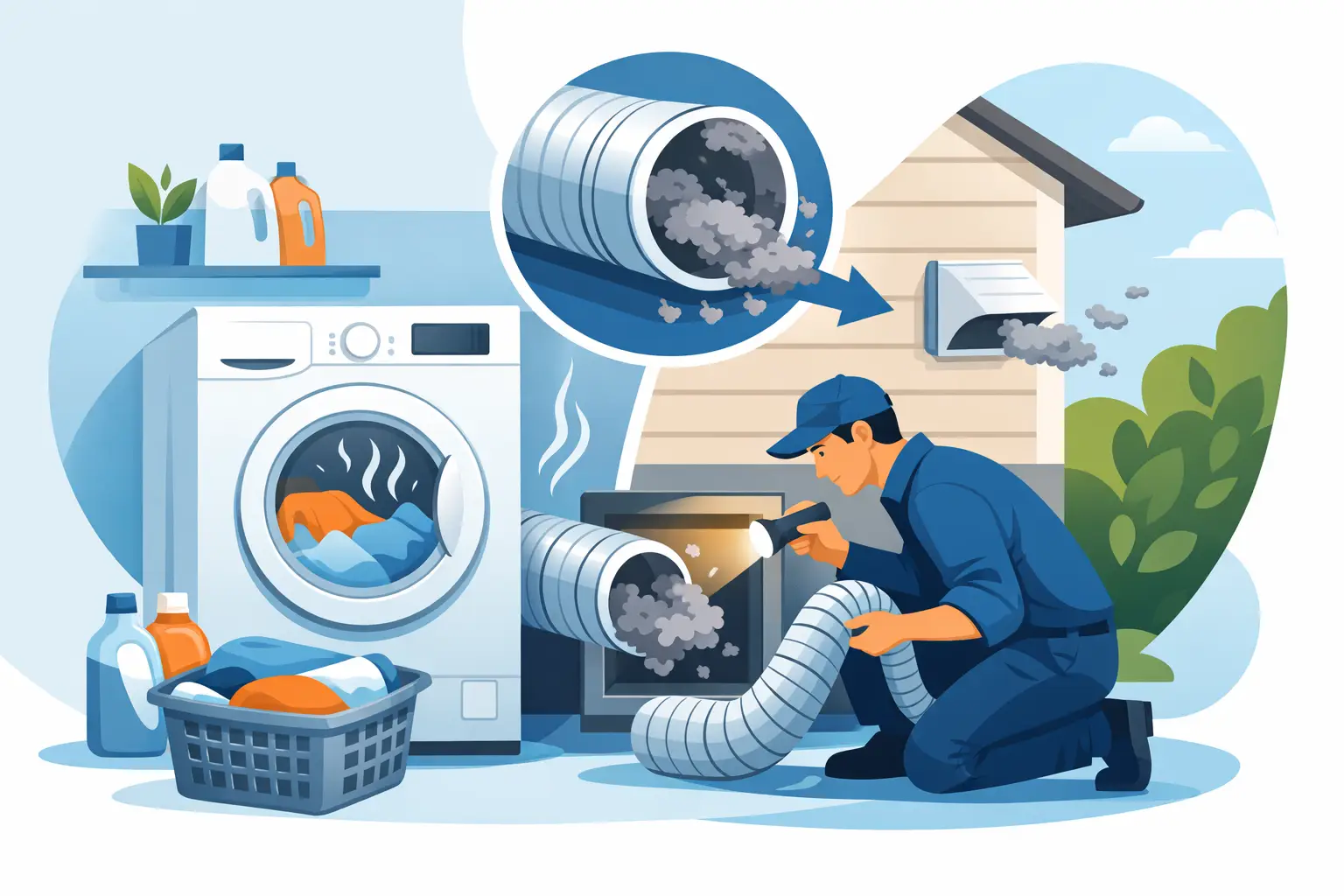
Laundry should not take two or three cycles to dry. A slow dryer drying clothes is more than an inconvenience – it can be a warning that heat and moisture are not leaving the dryer the way they should. In many homes, the problem is not the dryer itself. It is restricted airflow in the dryer vent.
When warm, damp air cannot move outdoors, clothes stay wet longer, the dryer runs hotter, and lint can build up where you cannot see it. For homeowners, landlords, and small property operators, this is a maintenance issue worth handling before it becomes a costly repair or a fire risk.
Why Is Your Slow Dryer Drying Clothes So Poorly?
A clothes dryer works by pulling in air, heating it, tumbling your laundry, and pushing moist air through the exhaust vent to the outside. Anything that slows that exhaust path makes the dryer work harder. The machine may still turn and produce heat, but it cannot remove enough moisture to finish the job efficiently.
The most common cause is lint buildup in the vent line. Even if you clean the lint screen after every load, fine lint passes through the screen and collects inside the ductwork over time. It can stick to bends, joints, and the exterior vent hood. Bird nests, pest debris, crushed vent tubing, and a stuck exterior damper can create the same problem.
Long vent runs are also more likely to develop airflow restrictions. This matters in multi-story homes, townhomes, condos, and commercial laundry areas where the vent may travel a long distance before it reaches an outside wall.
A clogged lint screen can also restrict airflow
The screen may look clean but still have a coating from dryer sheets, fabric softener, or detergent residue. That film blocks airflow through the mesh. Run water over the screen. If water pools on top instead of flowing through, wash the screen with warm water, dish soap, and a soft brush. Let it dry fully before putting it back.
This is a simple step, but it does not replace cleaning the vent behind the dryer. The screen only catches part of the lint.
The dryer itself may need service
Not every slow-drying problem is a vent problem. A failing heating element, thermostat, moisture sensor, blower wheel, or door seal can affect performance. An electric dryer with a tripped breaker may tumble without producing enough heat. A gas dryer may have an ignition or burner issue.
Here is the practical difference: if the dryer gets hot but clothes still take too long, airflow is often the first place to look. If it does not get warm at all, an appliance issue becomes more likely. Either way, do not keep running load after load hoping the problem will clear on its own.
Signs Your Dryer Vent Needs Attention
Drying time is the biggest clue, but it is not the only one. Pay attention to changes in how the laundry room feels and how the dryer behaves. A properly vented dryer should dry a normal load in about one cycle, although heavy towels, bedding, and large loads can naturally take longer.
Common warning signs include:
- Clothes need more than one cycle to dry, especially lightweight items.
- The dryer or laundry room feels unusually hot during use.
- You notice a burning smell, musty odor, or excess lint behind the dryer.
- The outside vent flap barely opens or has little airflow while the dryer runs.
- The top of the dryer feels excessively hot to the touch.
- Your utility bill increases without a clear reason.
A blocked vent can also cause moisture to collect in the laundry area. That extra humidity may contribute to odors or mildew around nearby walls, floors, and cabinets. In a rental property or shared laundry space, that can quickly turn into a maintenance complaint that costs more than a routine cleaning.
What You Can Safely Check First
Start with the simple items you can inspect without taking apart the appliance. Clean the lint screen before every load. Check the exterior vent hood while the dryer is running. You should see the flap open and feel a steady stream of warm air. If the flap does not open, airflow may be restricted, or the hood may be blocked.
Pull the dryer forward carefully and look at the transition duct behind it. This is the short connection between the dryer and the wall vent. It should not be crushed, sharply kinked, loose, or torn. A crushed flexible duct can choke airflow just as much as lint buildup.
If you have flexible plastic or foil-style vent material behind the dryer, consider replacing it with properly installed metal venting. Plastic and thin foil materials can sag, collect lint, and are not the safest choice for dryer exhaust. Metal venting provides a smoother, more durable path for air to move outside.
Do not try to solve a deep blockage by forcing a household vacuum hose into the vent or using an untrained brush kit. It is easy to push lint farther down the line, disconnect a joint inside a wall, or damage a vent run you cannot see. That can leave the dryer vent in worse condition than before.
When Professional Dryer Vent Cleaning Makes Sense
Professional cleaning is the right call when you have persistent long drying cycles, weak exterior airflow, visible lint buildup, or no idea when the vent was last serviced. It is especially worthwhile for homes with long or complicated vent routes, roof exits, multiple bends, or dryer vents that are difficult to access.
A thorough service should address more than the area directly behind the dryer. The technician should clean the vent path from the dryer connection through the full run to the exterior termination point, removing built-up lint and debris that ordinary cleaning cannot reach. The exterior hood should be checked so it can open and close correctly.
For most households, annual dryer vent cleaning is a sensible maintenance schedule. You may need it sooner if your household does frequent laundry, has pets that shed heavily, uses dryer sheets regularly, or has a long vent run. Property managers should also make dryer vent cleaning part of turnover and preventive maintenance planning, particularly where tenants share laundry equipment.
Carolinas Air Duct Cleaning Service provides professional dryer vent cleaning for homeowners and light commercial properties that need the job handled thoroughly and without guesswork. Certified technicians can help restore airflow, reduce unnecessary dryer strain, and leave the system cleaner from end to end.
Do Not Ignore a Dryer That Is Overheating
A dryer that runs too hot deserves prompt attention. Lint is highly flammable, and restricted airflow allows heat to build inside the dryer and vent system. While a slow dryer does not automatically mean there is an immediate emergency, continuing to use a machine with poor airflow increases the risk.
Stop using the dryer and arrange service if you smell something burning, see smoke, find scorched lint, or notice the dryer shutting off before the cycle ends. These are not issues to troubleshoot through repeated use. A qualified appliance technician may be needed if the dryer has a mechanical or electrical fault, while a dryer vent cleaning professional can address the airflow side of the problem.
Keep Drying Times Short Between Cleanings
Good habits help, but they work best alongside professional vent maintenance. Clean the lint screen every time. Avoid overloading the dryer, since tightly packed laundry needs more time for air to circulate. Check the exterior vent cover a few times each year for nests, leaves, or accumulated lint.
Also give the dryer enough room behind it. Pushing the appliance too close to the wall can crush the transition duct and create a restriction overnight. If you recently moved the dryer, remodeled the laundry room, or installed a new machine, check that connection before the next load.
A dryer should do its job in one normal cycle, not turn laundry day into an all-day project. If drying times keep climbing, treat it as a clear signal to check the vent and restore the airflow your home depends on.