
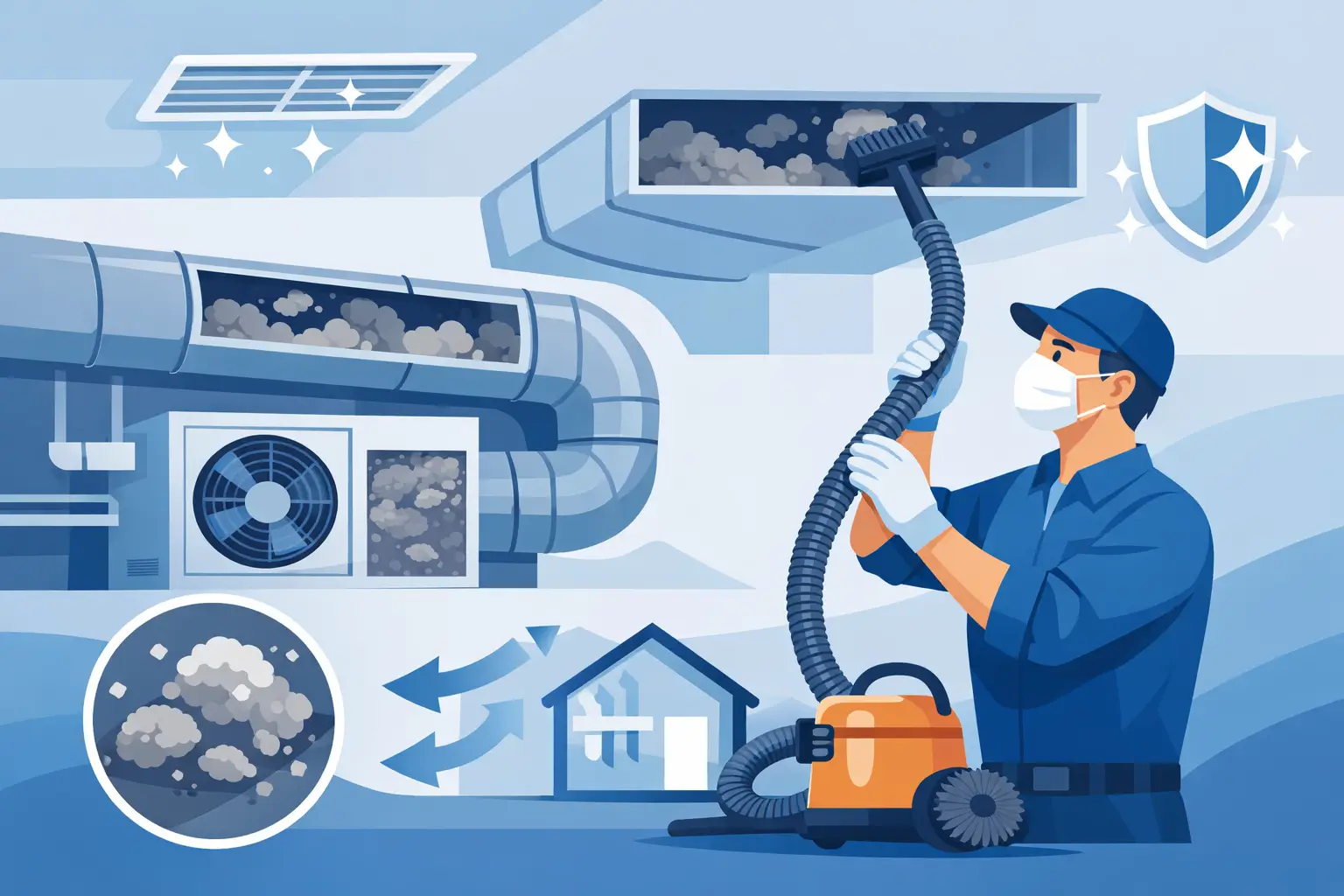
Dust on a supply vent is easy to see. Dust deeper inside the ductwork is harder to judge – and harder to remove without pushing it farther into your HVAC system. If you are looking for how to remove dust from ductwork, the right approach depends on where the dust is, how much buildup is present, and whether there are signs your system needs a professional cleaning.
A light layer around registers is normal home maintenance. Heavy buildup inside multiple vents, dust blowing out when the system starts, stale odors, or a home that seems dusty again right after cleaning are different problems. Those signs call for a closer look at the full ventilation system, not just the vent cover.
Start With the Dust You Can Reach
For routine upkeep, turn off the HVAC system at the thermostat before removing vent covers. This keeps the blower from pulling loose dust through the system while you work. Let the system sit for a few minutes, then remove the supply and return register covers you can safely access.
Wash metal covers with warm water and mild dish soap. Dry them completely before reinstalling them. For fixed covers or grilles that cannot be removed easily, use a vacuum with a soft brush attachment, followed by a damp microfiber cloth. Avoid soaking painted surfaces, ceiling registers, or wood trim.
Use a vacuum hose to remove loose dust just inside the opening. Work slowly around the first few feet of visible ductwork. A vacuum with a HEPA filter is preferable because it captures fine dust instead of sending some of it back into the room.
Do not force a long tool deep into the duct. Flexible ducts can tear, insulated ducts can be damaged, and rigid metal ducts may have sharp screws or seams. More importantly, a household vacuum cannot create the controlled negative pressure needed to pull debris from an entire duct system.
Gather the Right Basic Supplies
For surface-level cleaning, you generally need:
- A vacuum with a hose and soft brush attachment
- Microfiber cloths
- Mild dish soap and warm water
- A screwdriver for removable register covers
- A new HVAC filter in the correct size
This work can make a noticeable difference at the vents, especially after a remodeling project or a dusty season. It should not be mistaken for full air duct cleaning.
How to Remove Dust From Ductwork Without Making It Worse
The biggest DIY mistake is stirring up dust without collecting it. Compressed air, leaf blowers, shop vacs with weak filtration, and long brushes can loosen debris, but they often scatter it deeper through the ductwork or into the living space.
If you clean the accessible sections yourself, vacuum as you go. Keep the brush or cloth close to the vacuum opening so dust is captured immediately. Never spray water, disinfectant, air freshener, or chemical cleaner inside ducts unless a qualified technician has identified a specific need. Moisture inside ductwork can create new problems, particularly around insulation and areas with poor drainage or existing condensation.
Be careful around return vents. Return ducts carry air back to the HVAC equipment, so they often collect more lint, pet hair, and larger debris than supply ducts. Clean the grille and the accessible opening, but do not reach past bends or push objects toward the air handler.
Changing the HVAC filter is one of the most useful steps you can take after cleaning vent covers. A clogged or poorly fitted filter lets more dust circulate and puts extra strain on the system. Check the filter size printed on the frame, install it in the direction of the airflow arrow, and replace it on the schedule recommended for your household. Homes with pets, allergies, or frequent HVAC use may need more frequent changes.
Know When Surface Cleaning Is Not Enough
A few dusty vents do not automatically mean the whole system needs professional service. Dust is part of daily life, especially in the Carolinas where pollen, humidity, open windows, pets, and seasonal HVAC use all play a role.
Still, certain conditions point to buildup that extends beyond the reach of a homeowner’s vacuum. Pay attention if dust visibly blows from registers, rooms collect dust unusually fast, vents have a musty smell, or you see debris inside the duct opening beyond the first accessible section. Recent construction, drywall work, water damage, pest activity, or a long period without maintenance can also leave a system with more than ordinary household dust.
For rental properties and small commercial spaces, it is also worth checking for uneven maintenance. One neglected unit, a clogged return, or construction debris left behind after a tenant turnover can affect comfort and cleanliness throughout the space.
Professional duct cleaning uses specialized equipment to agitate debris and capture it under negative pressure. The goal is not simply to make the register look clean. It is to remove accumulated dust and debris from the accessible duct system while protecting the equipment and keeping contaminants from being released into the building.
What a Thorough Duct Cleaning Should Include
A proper service should be clear about what is being cleaned. That includes supply and return ducts, registers, grilles, and key components that can collect dust around the HVAC system. The exact scope depends on the layout of the home, the type of ductwork, and the condition of the equipment.
Certified technicians should inspect the system before starting, use equipment designed for duct cleaning, and protect floors and surrounding work areas. They should also be able to explain what they found without trying to pressure you into unnecessary add-ons.
Be cautious of bargain offers that promise to clean an entire home for an unrealistically low price, then raise the cost after arrival. A thorough job takes the right tools, enough time, and trained people who know how to work around HVAC components. Cheap shortcuts can leave debris behind or damage flexible ductwork, vent covers, and equipment connections.
Carolinas Air Duct Cleaning Service focuses on certified, professional cleaning for homeowners, landlords, and light commercial properties that need the job handled correctly. The value is simple: cleaner ductwork, less buildup in the system, and a clear view of what is being done in your home or property.
Reduce Dust Between Cleanings
Once the ducts and vents are clean, everyday habits help keep them that way. Start with the HVAC filter. A quality filter that fits properly is one of the most practical defenses against dust recirculating through the system. Do not choose the highest-rated filter automatically, though. Very restrictive filters can reduce airflow in some systems. Follow your HVAC manufacturer’s guidance or ask a qualified technician what works for your equipment.
Keep supply and return vents open and free of furniture, rugs, and storage boxes. Restricted airflow can make rooms less comfortable and encourage dust to settle around grilles. Vacuum and dust regularly, especially around return vents, pet sleeping areas, and entryways where dirt comes in from outside.
If you are renovating, seal off work areas as much as possible and change the HVAC filter after dusty work is complete. Fine drywall dust and construction debris can travel quickly through a running system. It is often better to keep the HVAC off during the dustiest parts of a project when weather and safety allow.
Humidity matters, too. High indoor humidity can make a home feel stale and can contribute to moisture-related HVAC concerns. Use bathroom and kitchen exhaust fans, address leaks quickly, and make sure the system is draining properly. Dust and moisture are separate issues, but together they can make ducts and vents feel neglected fast.
A Cleaner System Starts With the Right Level of Service
Cleaning vent covers and accessible openings is a worthwhile home-maintenance task. It keeps visible dust down and helps you spot problems early. But when the dust is deep in the ductwork, keeps returning, or comes with odors and debris, professional equipment and trained cleaning make the safer, more effective choice.
Take a look at your vents the next time you change the filter. A clean grille may be all you need, or it may be the first sign that your ductwork deserves a thorough cleaning.