
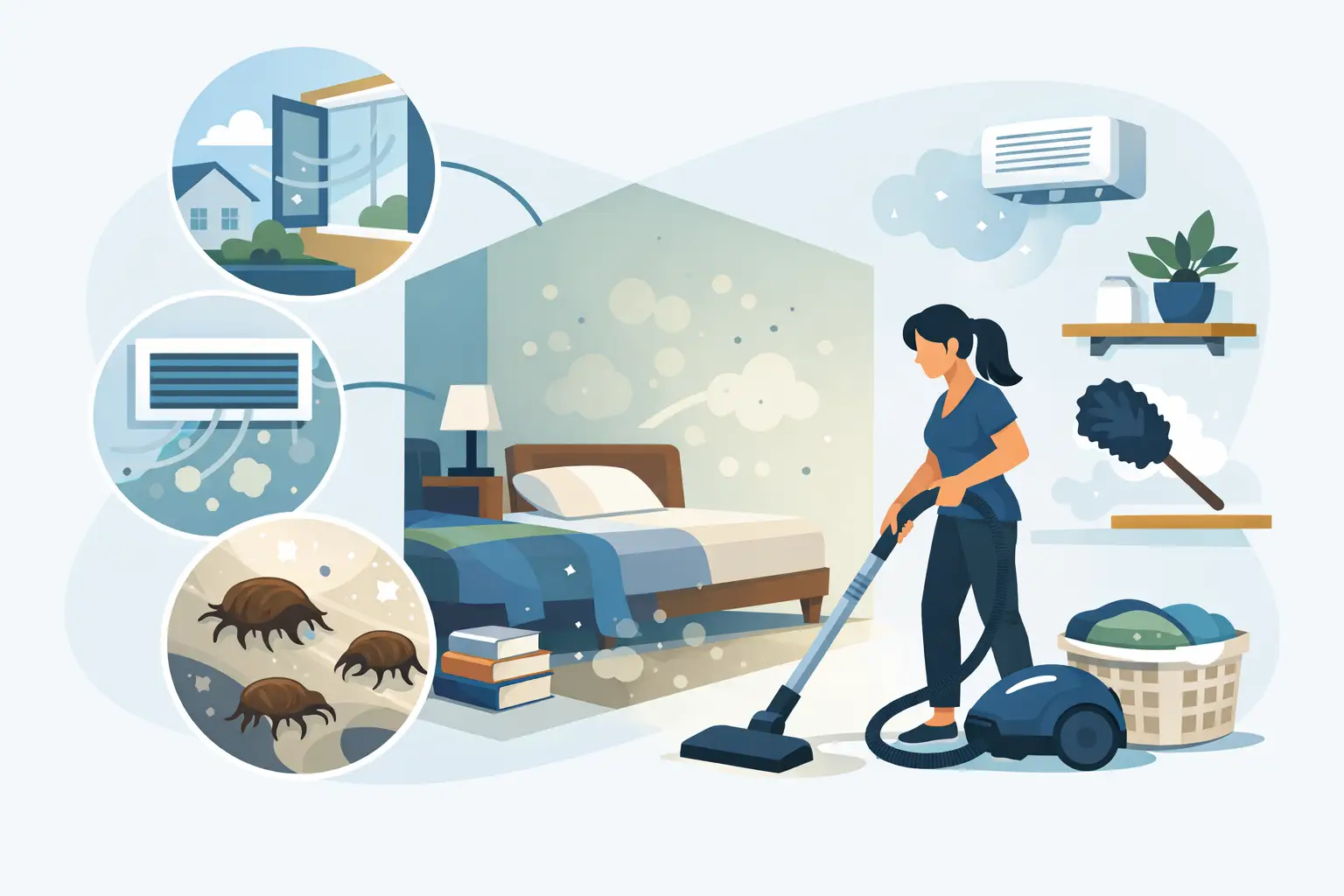
A room can look clean in the morning and have a fresh layer of dust on the furniture by dinner. If that sounds familiar, the top causes of dusty rooms are usually working together – not coming from one obvious place. Your HVAC system, outdoor air, fabrics, pets, and everyday activity can all keep dust moving through the home.
A little household dust is normal. A heavy buildup that returns quickly is a sign that something needs attention. The good news is that most causes are manageable with the right maintenance and cleaning plan.
Top Causes of Dusty Rooms in Your Home
Dirty HVAC filters
Your air filter has one simple job: catch airborne particles before they move through the HVAC system. When the filter is full, damaged, or the wrong size, it cannot do that job well. Dust keeps circulating through the supply vents and settles on floors, shelves, blinds, and furniture.
Check the filter every month, especially during hot Carolina summers and colder months when your system runs more often. Many homes need a replacement every 30 to 90 days. Homes with pets, allergies, construction nearby, or several occupants may need changes more often.
A high-quality filter can help, but do not choose the most restrictive filter without checking what your system can handle. Too much resistance can reduce airflow and put unnecessary strain on the equipment. The right filter is one that captures particles effectively while allowing proper airflow.
Dust and debris inside air ducts
Air ducts collect dust over time. They can also hold pet hair, insulation fibers, drywall dust, and debris left behind after remodeling or construction. Every time the system starts, some loose material can move through the ductwork and into living areas.
Duct cleaning is not a cure for every dusty room. If the source is an old filter, open windows, or a shedding pet, cleaning ducts alone will not solve it. But when dust returns quickly, vents blow visible debris, the home has recently been renovated, or the ducts have gone years without professional service, a thorough cleaning can make a real difference.
Certified technicians can remove buildup from the duct system instead of just cleaning the vent covers. Carolinas Air Duct Cleaning Service focuses on the full job: cleaner ducts, cleaner airflow, and less debris circulating through the home.
Leaky or poorly sealed ductwork
Duct leaks are one of the most overlooked causes of persistent dust. Ducts running through attics, crawl spaces, garages, and wall cavities can pull in dusty air through small gaps. That unfiltered air then gets delivered to the rooms where your family works, sleeps, and relaxes.
Leaks may also make certain rooms harder to heat or cool. If one area is always dusty, stuffy, or noticeably less comfortable than the rest of the house, the ductwork deserves a closer look. Sealing and repairing leaks can improve both indoor cleanliness and HVAC efficiency.
Pet dander and tracked-in debris
Pets bring a lot of good things into a home. They also bring dander, fur, outdoor pollen, dirt, and fine debris. Even short-haired pets shed skin cells that become part of household dust.
Regular grooming helps, but it does not eliminate the issue. Vacuuming rugs, upholstery, and pet bedding with a HEPA-filtered vacuum is more effective than sweeping alone. Wipe paws after time outside, particularly after rain or when pollen levels are high. These small habits can reduce how much dirt ends up in the air and in the HVAC return vents.
Carpets, rugs, upholstery, and bedding
Soft surfaces hold dust until movement sends it back into the room. Walking across carpet, sitting on a fabric sofa, pulling back bedcovers, or opening curtains can release fine particles that were trapped in the fibers.
Carpet is not automatically a problem, but it needs regular care. Vacuum high-traffic areas at least once or twice a week and have carpets professionally cleaned when they begin to hold odors or look dull. Wash bedding weekly in hot water when possible. Curtains, throw pillows, and upholstered furniture also need occasional cleaning, even if they do not look visibly dirty.
Hard flooring is easier to wipe clean, but it still collects dust along baseboards and under furniture. A dry mop may move particles around. Damp mopping or using a microfiber mop does a better job of picking them up.
Open windows, doors, and outdoor conditions
Fresh air can be welcome, but open windows give pollen, road dust, soil, and outdoor pollution a direct path inside. In the Carolinas, spring pollen can coat outdoor surfaces quickly. Dry weather, nearby roadwork, landscaping, and construction can add even more fine particles.
If your rooms become dustier after leaving windows open, keep them closed during high-pollen days and run the HVAC system with a clean filter. Check weatherstripping around windows and exterior doors as well. Gaps do not have to be large to let in dust.
This does not mean you can never open a window. It simply means the trade-off is real. On mild, low-pollen days, airing out the house may be worthwhile. During pollen season or near active construction, it is usually better to keep the home sealed and filtered.
Clutter and hard-to-clean surfaces
Dust settles everywhere, but clutter gives it more places to hide. Stacks of papers, open shelving, decorative items, stored boxes, and crowded closets make regular cleaning harder. They also allow dust to build up undisturbed.
You do not need a bare home to control dust. The practical goal is to reduce surfaces that cannot be wiped or vacuumed easily. Store seasonal items in closed bins instead of cardboard boxes when possible. Keep frequently used shelves simple enough to clean in a few minutes.
Use a slightly damp microfiber cloth for dusting. Feather dusters and dry rags can push fine dust back into the air, where it settles again soon after. Start with high surfaces, then vacuum or mop the floor last.
Dryer lint and laundry-room buildup
Dryer lint is not the main reason a bedroom gets dusty, but it can add to household debris and create a serious safety concern. A clogged dryer vent restricts airflow, makes the dryer work harder, and allows lint to collect where it should not.
Clean the lint screen after every load, but remember that this is only the first step. Lint can build up in the vent line behind the dryer and at the exterior exhaust point. If clothes take longer to dry, the laundry room feels unusually warm, or you notice a burning smell, stop using the dryer and have the vent inspected and cleaned promptly.
How to Tell if Your Dust Problem Needs Professional Help
Start with the basics: replace the HVAC filter, clean return and supply vent covers, vacuum soft surfaces, and dust with microfiber cloths. Give those changes a few weeks. If dust still returns rapidly, look for signs that the issue runs deeper.
Professional attention is worth considering when you see dust blowing from vents, notice debris around registers soon after cleaning, smell stale or musty air when the system runs, or have completed remodeling work. It is also a practical step after moving into an older home with an unknown maintenance history.
For landlords and small business property operators, recurring dust complaints can affect comfort, tenant satisfaction, and the condition of the HVAC equipment. Routine attention is often easier and less costly than waiting until buildup becomes a bigger problem.
A Cleaner Room Starts With the Air Moving Through It
Dust control works best as a routine, not a one-time deep clean. Keep filters fresh, reduce outdoor debris coming in, clean fabrics and floors regularly, and pay attention to what comes from the vents. When the dust keeps coming back despite your efforts, have the ventilation system checked by qualified professionals. Clean air should not be something you have to dust off the furniture every day to find.
Pingback: How to Tell Vents Are Clogged in Your Home – Carolinas Air Duct Cleaning Service